About Me

Ithaca, New York
MWF, now officially 42, loves long walks on the beach and laughing with friends ... oh, wait. By day, I'm a mid-level university administrator reluctant to be more specific on a public forum. Nights and weekends, though, I'm a homebody with strong nerdist leanings. I'm never happier than when I'm chatting around the fire, playing board games, cooking up some pasta, and/or road-tripping with my family and friends. I studied psychology and then labor economics in school, and I work in higher education. From time to time I get smug, obsessive, or just plain boring about some combination of these topics, especially when inequality, parenting, or consumer culture are involved. You have been warned.
Showing posts with label rural. Show all posts

Wednesday, October 17, 2012

#88: The Quickening

The Quickening, by Michelle Hoover
(New York: Other Press, 2010)
Summary:
"Enidina Current and Mary Morrow live on neighboring farms in the flat, hard country of the upper Midwest during the early 1900s. This hardscrabble life comes easily to some, like Eddie, who has never wanted more than the land she works and the animals she raises on it with her husband, Frank. But for the deeply religious Mary, farming is an awkward living and at odds with her more cosmopolitan inclinations. Still, Mary creates a clean and orderly home life for her stormy husband, Jack, and her sons, while she adapts to the isolation of a rural town through the inspiration of a local preacher. She is the first to befriend Eddie in a relationship that will prove as rugged as the ground they walk on. Despite having little in common, Eddie and Mary need one another for survival and companionship. But as the Great Depression threatens, the delicate balance of their reliance on one another tips, pitting neighbor against neighbor, exposing the dark secrets they hide from one another, and triggering a series of disquieting events that threaten to unravel not only their friendship but their families as well."

Opening Line:
"My boy, you might think an old woman hasn't much to say about the living, but your grandmother knows when a person does right by her and when they don't."

My Take:
Lovely, lyrical language, but I felt like I missed something here. Maybe it's just that the characters and plot, like the setting and Hoover's writing, is spare -- so much so that it was hard to get much of a sense of Mary or of how the relationship between the two women evolved over time (though Eddie did feel authentic and likeable, at least where I was concerned). I've read books like this before, where we need to draw our own conclusions about characters' relationships based on a handful of events with many years in between, but here it just felt like there wasn't enough to go on to let me connect the dots. Eddie's eagerness to reconnect with her departed daughter and never-seen grandchild is compelling, but not given quite enough airtime (unless it was just too subtle and understated for me to appreciate) to fully draw me in. Might be better on a second reading, or with a group, but for now -- just OK.

Saturday, July 28, 2012

#66: Winter's Bone

Winter's Bone, by Daniel Woodrell
(New York: Back Bay Books, 2007)
 Summary:
"The sheriff's deputy at the front door brings hard news to Ree Dolly. Her father has skipped bail on charges that he ran a crystal meth lab, and the Dollys will lose their house if he doesn't show up for his next court date.

"Ree's father has disappeared before. The Dolly clan has worked the shadowy side of the law for generations, and arrests (and attempts to avoid them) are part of life in Rathlin Valley. But the house is all they have, and Ree's father would never forfeit it to the bond company unless something awful happened. With two young brothers depending on her and a mother who's entered a kind of second childhood, Ree knows she has to bring her father back, dead or alive, or else see her family turned out into the unforgiving cold.

"Sixteen-year-old Ree, who has grown up in the harsh poverty of the Ozarks, learns quickly that asking questions of the rough Dolly clan can be a fatal mistake. She perseveres past obstacles of every kind and finally confronts the top figures in the family's hierarchy.

"Along the way to a shocking revelation, Ree discovers unexpected depths in herself and in a family network that protects its own at any cost."

Opening Line:
"Ree Dolly stood at break of day on her cold front steps and smelled coming flurries and saw meat. "

My Take:
This was a Winter's Bone day. It's a short book, and I read it all on my Kindle today -- part in my apartment after polishing off the less-than-satisfying An Inconvenient Woman, and most at the Summer Arts Festival in Copley Square while waiting for the Low Anthem set. (I'd hoped to stick around for Suzanne Vega but the weather had other plans.)

Another review I found online while looking for a synopsis to steal called Woodrell's use of language "spare and judicious," which seems pretty accurate. If you've seen the acclaimed indie movie, it actually follows the book pretty closely (except for having changed Ree's youngest sibling to a sister, which hardly matters). If anything, the movie depicts a slightly-less-hardscrabble home for Ree and her family than I'd envisioned, though the relatives' homes are pretty much as I'd pictured them. I'm not sure whether to think depiction of the rural, southern Missouri Ozarks setting is too over-the-top (again, in a spare and judicious way), or if I'm just too sheltered here on the east coast, and there really is that big a difference between central New York-style Appalachia and the Central South/ Ozark variety.

Then again, I remember driving a short 20 minutes into the backcountry with Mr. Hazel a few years ago for a hike in a state forest, and being stunned just at the shanties I could see from the road and the fact that this particular flavor of poverty existed so close to my own, smug-college-town backyard. In other words, strike the question about whether there are really Ozark communities this poor and off-grid, because there probably are.

Anyway, a good book and a good movie. I'd recommend both, if you're up for something more than a little on the dark and gritty side and aren't looking for a magical happy ending.

Monday, October 18, 2010

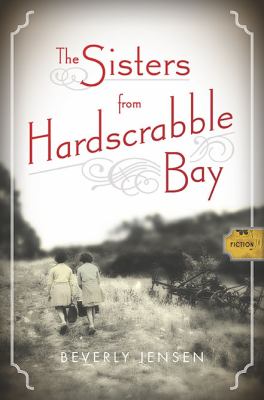
#73 - The Sisters from Hardscrabble Bay

The Sisters from Hardscrabble Bay, by Beverly Jensen (New York: Viking, 2010).

Summary: "In 1916, Idella and Avis Hillock live on the edge of a chilly bluff in New Brunswick -- a hardscrabble world of potato farms and lobster traps, rough men, hard work, and baffling beauty. From 'Gone,' the heartbreaking account of the crisis that changed their lives forever, through 'Wake,' a darkly comic saga of funeral plans gone awry, The Sisters from Hardscrabble Bay chronicles their trials, adventures, loves, and losses over seven decades. The lively supporting cast includes the unforgettable 'Wild Bill' Hillock; Idella's philandering husband Eddie; Avis's string of ne'er-do-well men; and a collection of locals whom Idella entertains at her small Maine General Store. Beverly Jensen has fashioned a richly textured and vivid record of a bygone era, a classic American tale of resilience and the strength of family ties."


Opening Line: "They had strung their shoes by the laces from a solitary elm before entering the woods edging the back field."


My Take: A nice, old-fashioned, make-you-feel-good story that I enjoyed much more than I'd expected. The book is essentially a collection of vignettes, most of which would stand quite well on their own as independent short stories. While I'm not usually a short-story fan, and tend to prefer a bit more plot in my novels, Jensen's approach works here -- probably because it's so well-suited to her understated but complex character sketches.

"Gone," the first chapter, was absolutely devastating. Set at the Hillocks' isolated home on the eve of World War I, it opens with eight-year-old Idella and little sister Avis scouring a nearby wood for mayflowers, secretly planning to pick a nosegay for their very pregnant mother for Mayday. However, that very night, Mom's water breaks. With the aid of her neighbors and a country doctor, she gives birth at home to another daughter, disappointing husband Bill, who'd hoped for a second son. The delivery is quick and smooth, but the following day, she inexplicably begins to hemorrhage. Within hours, she is dead. Gradually, Idella, who's been quietly sitting outside her parents' bedroom watching the commotion, comes to understand that there's been a grave mistake: the pills the doctor gave her mother to promote uterine cramping were the wrong kind. Together with the neighbor ladies, she keeps this information secret from her father, knowing it can only do more harm than good.

Subsequent chapters provide a window into what it's like for Idella and Avis to grow up motherless and poor in this stark landscape, with a stoic and heartbroken father. Baby Emma is sent off to be raised by an aunt and uncle, and teenaged brother Dalton mostly fends for himself while he's not out helping Dad with the lobstering, leaving the two middle sisters to torment a series of short-term French-Canadian housekeepers/ nannies. Then comes Maddie, a large, homely refugee from the lobster cannery who seems ... different, somehow. Anne of Green Gables she ain't, but slowly, Avis and then the rest of the Hillocks become fond of her. Unfortunately, though, all good things must end (though not, in this case, for the reason you'd expect), and ultimately, Maddie is packed off to another job, and Idella and Avis sent to live with relatives in Maine. Surprisingly, they thrive here, and Idella proves to be an outstanding student when given the chance. But this is not to be her lot; on the heels of her eighth grade graduation, Bill is injured in a hunting accident, and summons his girls home to keep house and care for him.

In these conditions, both girls grow up quickly. Idella becomes a skilled but resentful housekeeper, while the flashier and wilder Avis is her father's pet. Years later, the 19-year-old Idella decides she's had enough, catches a ride on the mail truck, and returns to Maine, where she takes a job as a live-in housekeeper, and ultimately falls in love with and marries the charming if not always faithful Eddie Jensen. Avis's path is both more exciting and more difficult; left alone with her father and the increasingly-remote Dalton, she grows closer to Bill in ways that spark ugly rumors among the neighbors. Eventually, she, too, leaves, becomes a hairdresser, and runs through a string of lively but unreliable beaux -- one of whom manages to land her in jail.

We get a much clearer picture of Idella's adult life than we do of Avis's: her struggles with Jessie, Eddie's awful mother; the tireless but satisfying process of building and maintaining her store; her recognition of Eddie's fling with Iris; an ordinary but memorable drive in the country with daughter Barbara and Avis. Avis, by contrast, offers only one chapter, in which she briefly sketches her views on men and hints at her experience in jail (which Idella's letters always called "the hotel.") It didn't escape my notice that one of Idella and Ed's four daughters is named Beverly Jensen, just like the author -- making me wonder if the book was inspired at least in part by what she knew of her mother's or grandmother's life.

One of the things I most appreciated about this book was Jensen's refusal to reduce her characters to stereotypes. Bill drinks heavily and demands too much of his young daughters, yes -- but he also tries, in his fashion, to be a loving father, and is clearly if undramatically shattered by the death of his beloved wife. Eddie is unfaithful to Idella, but is portrayed as more PITA than monster; the mix of drive-each-other-crazy tics and fond, sweet memories the couple share will ring true for anyone who's been married a while. The final chapters, in which we attend Bill's baroque-meets-maritime wake and then peek at the last days of Idella, Eddie, and Avis's lives, provide a fitting, satisfying conclusion to the collection. A simple, gentle, and memorable book, well worth your time.

Wednesday, March 10, 2010

#14 - Jim the Boy

My 14th book of the year was Jim the Boy, by Tony Earley (Boston, 2000).

Summary: "Tony Earley made his debut with Here We Are in Paradise, a superbly understated collection of (mostly) small-town vignettes. He returns to the same terrain in his first novel, Jim the Boy, setting this coming-of-age story in a remote North Carolina hamlet. The year is 1934, and like the rest of the country, Aliceville is feeling the pinch of the Great Depression. Yet neither Jim nor his mother nor his three uncles -- who have split the paternal role neatly among themselves since the death of Jim's father a decade earlier -- are feeling much in the way of economic pain. Indeed, if you stuck a satellite dish on the front lawn, the story might be taking place in the New South rather than the older, bucolic one.This isn't to suggest that Earley is deaf to social detail. Indeed, there are all sorts of wonderful touches, like the decor in Jim's classroom,with its 'large, colorful maps of the United States, the Confederacy, and the Holy Land during the time of Jesus.' But Jim the Boy is very much the tale of a 10-year-old's expanding consciousness, which at first barely extends beyond the family property. Earley has a real gift for conveying childhood epiphanies, like Jim's sudden apprehension of the wider world during a trip in Uncle Al's truck: 'Two thoughts came to Jim at once, joined by a thread of amazement: he thought, People live here, and he thought, They don't know who I am. At that moment the world opened up around Jim like hands that, until that moment, had been cupped around him; he felt very small, almost invisible, in the open air of their center, but knew that the hands would not let him go. It was almost like flying.' The simple lyricism and anti-ironic sweetness work mostly to the book's advantage. There are times, it's true, when Earley sands his prose down to an unnatural smoothness, and we seem to be edging toward the sentimental precincts of a young-adult novel. But on the whole, Jim the Boy is a lovely, meticulous work--a song of innocence and (eventually) experience, delivered with just a hint of a North Carolina accent."

My reaction, in a nutshell: Appreciated it on a literary level, in that it was well-written with (cough) luminous prose and what have you, and much of the description, both of landscape and emotional states, was understated and lovely. Not enough of a plot for me to really love it, though.