About Me

Ithaca, New York
MWF, now officially 42, loves long walks on the beach and laughing with friends ... oh, wait. By day, I'm a mid-level university administrator reluctant to be more specific on a public forum. Nights and weekends, though, I'm a homebody with strong nerdist leanings. I'm never happier than when I'm chatting around the fire, playing board games, cooking up some pasta, and/or road-tripping with my family and friends. I studied psychology and then labor economics in school, and I work in higher education. From time to time I get smug, obsessive, or just plain boring about some combination of these topics, especially when inequality, parenting, or consumer culture are involved. You have been warned.
Showing posts with label pioneer. Show all posts

Sunday, November 28, 2010

#84 - Half Broke Horses

Aah, Thanksgiving weekend. Plenty o' reading happening @ Cafe Hazelthyme this week, but precious little blogging -- you can guess the story, but in brief, I was too busy hosting the in-laws and wrangling a big ornery ole turkey. Hence, the next few updates will come like gangbusters, but be fairly brief.

Half Broke Horses
, by Jeannette Walls (New York: Scribner, 2009)

Jacket Summary: "'Those old cows knew trouble was coming before we did.' So begins the story of Lily Casey Smith, Jeannette Walls's no-nonsense, resourceful, and spectacularly compelling grandmother. By age six, Lily was helping her father break horses. At fifteen, she left home to teach in a frontier town -- riding five hundred miles on her pony, alone, to get to her job. She learned to drive a car ('I loved car even more than I loved horses. They didn't need to be fed if they weren't working, and they didn't leave big piles of manure all over the place') and fly a plane. And, with her husband, Jim, she ran a vast ranch in Arizona. She raised two children, one of whom is Jeannette's memorable mother, Rosemary Smith Walls, unforgettably portrayed in The Glass Castle.

"Lily survived tornadoes, droughts, floods, the Great Depression, and the most heartbreaking personal tragedy. She bristled at prejudice of all kinds -- against women, Native Americans, and anyone else who didn't fit the mold. Rosemary Smith Walls always told Jeannette that she was like her grandmother, and in this true-life novel, Jeannette Walls channels that kindred spirit. Half Broke Horses is Laura Ingalls Wilder for adults, as riveting and dramatic as Isak Dinesen's Out of Africa or Beryl Markham's West with the Night. It will transfix readers everywhere."


Opening Line: "Those old cows knew trouble was coming before we did."

My Take: A danged good book, though far better approached as a novel than as an accurate biography of the author's grandmother. Walls' describes Lily a wee bit too perfectly for my tastes (on the first page, she saves herself and two younger siblings from a flash flood by ordering them up a cottonwood tree and keeping the three of them talking and awake all night), but a few of her flaws do manage to come through, and she's a sufficiently likable and compelling character that this is slightly annoying but not fatal. (Besides, who doesn't create some sort of semi-mythical story about their grandparents?) I enjoyed the supporting characters, too -- especially Lily's strong but gentle (and no, that's not the cliche I make it sound like) husband, Jim. Certainly intrigued me enough to make me want to read The Glass Castle and see how Rosemary and eventually Jeannette turn out.

Wednesday, July 7, 2010

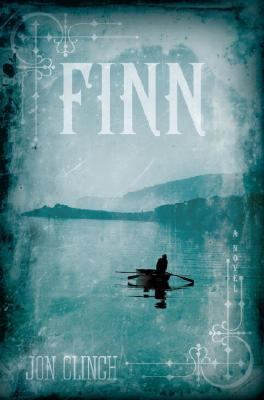
#54 - Finn

Finn, by John Clinch (New York: Random House, 2007).

Summary: "In this masterful debut by a major new voice in fiction, Jon Clinch takes us on a journey into the history and heart of one of American literature's most brutal and mysterious figures: Huckleberry Finn's father. The result is a deeply original tour de force that springs from Twain's classic novel but takes on a fully realized life of its own. Finn sets a tragic figure loose in a landscape at once familiar and mythic. It begins and ends with a lifeless body -- flayed and stripped of all identifying marks -- drifting down the Mississippi. The circumstances of the murder, and the secret of the victim's identity, shape Finn's story as they will shape his life and his death. Along the way Clinch introduces a cast of unforgettable characters: Finn's terrifying father, known only as the Judge; his sickly, sycophantic brother, Will; blind Bliss, a secretive moonshiner; the strong and quick-witted Mary, a stolen slave who becomes Finn's mistress; and of course young Huck himself. In daring to recreate Huck for a new generation, Clinch gives us a living boy in all his human complexity -- not an icon, not a myth, but a real child facing vast possibilities in a world alternately dangerous and bright. Finn is a novel about race; about paternity in its many guises; about the shame of a nation recapitulated by the shame of one absolutely unforgettable family. Above all, Finn reaches back into the darkest waters of America's past to fashion something compelling, fearless, and new."

Opening line: "Under a low sun, pursued by fish and mounted by crows and veiled in a loud languid swarm of bluebottle flies, the body comes down the river like a deadfall stripped clean."

My take: I usually enjoy books that offer a different take on a familiar story, but this one was just so-so. Maybe it's because Twain was never one of my favorites; too many bad "required reading" associations from high school, I s'pose. Maybe it's because the story jumped all over the place temporally, which made it a bit confusing. Maybe it's because the title character was so over-the-top awful (in short, he's a mean, violent drunk and a thief, with a guilty passion for women of color) that it was hard to care much about or believe in what he did. Or maybe it's just because the book's Big Shocking Reveal (Clinch envisions Huck as biracial) just wasn't that big a surprise to me. The writing itself was first-rate, but that alone wasn't enough to get me past not caring much one way or the other about Clinch's subject.

Monday, February 9, 2009

Old Favorites

There's been a dearth of reading at Hazel House of late; I had a big job interview (yay me!) last week, and between prepping obsessively beforehand and needing to just plain vegetate afterwards, I didn't have much quality time with the books. (Amazing how I did manage some quality time with a few truly mindless flash games, but that's a whole 'nother blog.)

I did, however, reread an old favorite during the post-interview decompression period: #11 - I Am Charlotte Simmons, by Tom Wolfe. If you're a fan of other Wolfe novels (i.e., Bonfire of the Vanities and A Man in Full), and have somehow missed this one, please ... stop reading this blog Right Now and go get your hands on a copy. While the 2004 New York Times review didn't agree with me, I love this book; it's a brilliant and often excruciatingly-painful satire of life on an elite college campus in the 2000's.

As the novel begins, the title character arrives on the hallowed campus of Dupont University (fictitious, but reportedly based on Duke, with hints of Penn State and Stanford thrown in) fresh off the pickup from a sheltered upbringing in rural Sparta, North Carolina, eager to immerse herself in the life of the mind. Meanwhile, elsewhere on campus, smug frat boy Hoyt Thorpe stumbles on a prominent national political figure in a compromising position; campus basketball legend Jojo Johanssen struggles to stay on top of his game when Coach threatens to bench him for a promising new player; and aspiring Rhodes Scholar Adam Gellin juggles thankless part-time jobs delivering pizza and "tutoring" athletes with regular meetings of the Millenial Mutants, a campus salon of sorts for aspiring intellectuals.

In some ways, this is a typical coming-of-age novel; in others, it's a lot more than that. As is true of Wolfe's other books, themes of class and racial tension abound here. Charlotte's lofty expectations of academic life at Dupont are confounded when she finds herself in an upper-level French literature class where books are read in English, and that's just the beginning. She's also beyond shocked at the omnipresence of alcohol, casual sex, lewd dancing, and general decadence on the campus; her roommate, the snooty Groton-educated Beverly, does not help matters. She wavers between wanting to be true to herself -- to, as her mother advised her, say "I am Charlotte Simmons, and I don't hold with that" -- and wanting desparately to belong, to somehow alleviate her excruciating loneliness. When a good-looking BMOC like Hoyt starts inviting her to visit the Saint Ray house, and then invites her to an out-of-town fraternity formal, she thinks she's got it made, but little does she know.

This is mostly Charlotte's story, but our other 3 principals are also fish out of water at Dupont. In the brains department, Adam seems to have it all, but he's desparate not only to lose his virginity, but to make the world at large see him as a person of consequence. Jojo is beginning to question his status as a golden boy of basketball; do his coach and teammates really see him as One of Them, even though he's white? Does he really want to coast through Dupont taking classes like Frere Jocko and Stocks for Jocks? Hoyt looks every inch the quintessential Dupont Man, but in reality, comes from a working-class background, and has no idea what awaits him after graduation save a vague sense that he'll go into investment banking, because it pays well and That's What Saint Rays Do.

Without giving anything away, I can never decide how I feel about the ending. In some ways, it wraps things up too tidily; in others, it's too ambiguous. I'm not sure I fully buy the transformation in Jojo's character over the course of the book. Where Charlotte finds herself by the end makes a little more sense -- there are still a few loose ends hanging out there -- but I'm not completely convinced as to the road she took to get there. I also agree that Wolfe's female characters are rather crudely drawn; Charlotte is somewhat of an exception, but her over-the-top innocence and sheltered upbringing aren't completely believable. But it's Wolfe's nature to exaggerate to make a point -- to take most aspects of the world he creates just a step or 2 too far, so that it's both plausible and ridiculous at the same time. 4.5 out of 5 bookmarks.

I've also been reading #12 - These Happy Golden Years, by Laura Ingalls Wilder, with my daughter. I read the whole Little House series more times than I can remember as a child; people who know me IRL have probably heard my story of getting the whole series in paperback one Christmas from a relative who gave my sister a dollhouse, and being incredibly jealous and resentful that she'd gotten the better present. The dollhouse fell apart within a year; the paperbacks are probably still in my parents' basement somewhere. Anyway, tangent aside, I've been amazed at how many things in these books I notice and understand now, reading them as an adult, that just plain went by me when I read them the first or even the tenth time as a girl.

It's very hard for me to pick a favorite in the series. Growing up, I was partial to On the Banks of Plum Creek and Little Town on the Prairie, and By the Shores of Silver Lake was probably my least favorite (i.e., I only read it once or twice). I always liked THGY, but it's definitely grown on me over the years; it's a sweet, understated story of an 1880s pioneer courtship, and of Laura's conflict between remaining safe and comfortable in her parents' home, and moving forward with her own married, adult life. As the story begins, 15-year-old Laura is on her way to her first teaching job and her first experience living away from home. After a rocky first few weeks, she finds her footing as a teacher. However, the Brewsters, with whom she's boarding, are truly wretched, and she's painfully homesick. It comes as a delightful surprise when Almanzo Wilder begins making the 12-mile drive each Friday to bring Laura home for the weekend, and then again each Sunday to bring her back.

The rest, as they say, is history. Even allowing for the fact that the Little House books are all "inspired by actual events," rather than pure biography, it's interesting to see how much our notions of romance have changed, and how much they haven't. There are glimpses of jealousy on both Almanzo's and Laura's parts (Almanzo asking suspiciously about a strange male visitor to the Ingalls' home, who turns out to be Laura's uncle; Laura telling Almanzo not to call for her if he wants to take the obnoxious Nellie Oleson driving), and an amusing scene towards the beginning where Laura tries to make it clear that she's only accepting Almanzo's rides because she wants to go home for the weekend, and he shouldn't expect her to go driving with him once her teaching gig is over with. Perhaps my favorite, though, happens later, when on a spring buggy ride, Almanzo says, seemingly out of nowhere, "I was wondering if you would like an engagement ring." "That would depend on who offered it to me," replies Laura. "If I did?" "Then it would depend upon the ring."

It's probably even harder to rate a children's book than it is for me to pick a favorite in these series, but given how much I still like this one even after umpteen readings, and given how much Littlehazel is enjoying it, even though her history with the series is only secondhand, I'll give it 4 out of 5 bookmarks.

And for something completely different, I read #13 - Getting Things Done: The Art of Stress-Free Productivity, by David Allen over the weekend -- but I think I need to wait till I'm home and have the book in hand to post a review for that one.

Coming soon: I'm usually a one-book-at-a-time gal, but somehow, I ended up in the middle of 3 at once: Bad Money: Reckless Finance, Failed Politics, and the Global Crisis of American Capitalism, by Kevin Phillips; One Person/ Multiple Careers: A New Model for Work/Life Success, by Marci Alboher; and Ellington Boulevard: A Novel in A-Flat, by Adam Langer. Not so sure I'll get through Bad Money, though I want to, and I'm enjoying both of the others. Watch this space for details.