About Me

Ithaca, New York
MWF, now officially 42, loves long walks on the beach and laughing with friends ... oh, wait. By day, I'm a mid-level university administrator reluctant to be more specific on a public forum. Nights and weekends, though, I'm a homebody with strong nerdist leanings. I'm never happier than when I'm chatting around the fire, playing board games, cooking up some pasta, and/or road-tripping with my family and friends. I studied psychology and then labor economics in school, and I work in higher education. From time to time I get smug, obsessive, or just plain boring about some combination of these topics, especially when inequality, parenting, or consumer culture are involved. You have been warned.
Showing posts with label Midwest. Show all posts

Monday, January 21, 2013

#97: The Middlesteins

The Middlesteins, by Jami Attenberg
(New York: Grand Central Publishing, 2012)
Summary:
"For more than thirty years, Edie and Richard Middlestein shared a solid family life together in the suburbs of Chicago -- two children, a nice house, ample employment, and generous friends. But things are splintering apart, for one reason, it seems: Edie's fixated on food -- thinking about it, eating it -- and if she doesn't stop, she won't have much longer to live.


"When Richard abandons his wife, it is up to the next generation to take control. Robin, their schoolteacher daughter, is determined that her father pay for leaving Edie. Benny, an easygoing, pot-smoking family man, just wants to smooth things over. And Rachelle -- a whippet-thin perfectionist -- is intent on saving her mother-in-law's life, but this task proves even bigger than planning her twin children's spectacular b'nai mitzvah party. Through it all, they wonder: Do Edie's devastating choices rest on her shoulders alone, or are others at fault, too?"

Opening Line:
"How could she not feed their daughter?"

My Take:
I formally left Catholicism almost 14 years ago, and hadn't been to confession in more than a decade before that, but sometimes, childhood memories die hard. Bless me, Father, for I have sinned. It's been two months since my last blog post.

This doesn't mean I haven't been reading (though I've slacked off since New Year's, completing a whopping 2 books since the start of January); only that I haven't carved out time to blog about what I've read. That's part of a way bigger issue that merits contemplation, but for now, I think I'll just bang out a scarcely-commented log of what I've read since then.

So here goes. Loved The Middlesteins, and also loved in a quietly arrogant way that this was one I happened to stumble across and read before all the reviewers seized upon it. I think it was the NYT Book Review podcast that mentioned this one just before Thanksgiving, calling it a meditation on the complex relationships and obligatory dysfunctions that are part of every family; I'd read it as an observation on Edie's obesity being a natural outgrowth of women's/ mothers' traditional nurturing/ caregiving roles, but I don't think either view is unjustified. As to whether it hit a wee bit close to home given my own weight and emotional eating struggles over the years, well ... as I said earlier, that's a subject for another, much longer post. In the meantime, let's leave it at saying I really enjoyed the book and would recommend it highly to others.

Wednesday, October 17, 2012

#89: I Thought You Were Dead

I Thought You Were Dead, by Peter Nelson 
(Chapel Hill, NC: Algonquin Books of Chapel Hill, 2010)
 Summary:
 "For Paul Gustavson, a hack writer for the wildly popular For Morons series, life is a succession of obstacles, a minefield of mistakes to stumble through. His wife has left him, his father has suffered a debilitating stroke, his girlfriend is dating another man, he has impotency issues, and his overachieving brother has invested his parents' money in stocks that tanked. Still, Paul has his friends at Bay State bar, a steady line of cocktails, a new pair of running shoes, and Stella. Beautiful Stella. With long, sleek legs, kind eyes, lustrous blond hair. Their relationship is the one true bright spot in his world. She offers him sage advice on virtually every topic. And she only wets herself every once in a while.

"Stella is Paul's dog, and she listens with compassion to all his complaints about the injustices of life and gives him better counsel than any human could. In fact, she seems to know Paul better than he knows himself. It's their relationship that is at the heart of I Thought You Were Dead, a poignantly funny and deeply moving story about a man trying to fix his past in order to save his future, and about a dog who understands just what it means to be a man's best friend."

Opening Line:
"In the winter of 1998, at the close of the twentieth century, in a small college town on the Connecticut River, on the sidewalk outside a house close enough to the railroad tracks that the pictures on the walls were in constant need of straightening, not that anybody ever straightened them, Paul Gustavson, having had a bit too much to drink, took the glove off his right hand, wedged it into his left armpit, and fumbled in his pants pocket for his house keys."

My Take:
Surprising. I wouldn't have expected to enjoy a novel that opens with a run-on sentence like this, or one where the protagonist's talking dog is an important character -- but this is a sweet, gentle story about a lonely man at a crossroads trying to come to terms and move forward with his imperfect life. (And the talking dog works, even for a diehard realist like me, if you read it as Paul simply talking to his dog while they're alone, and imagining what she might say if she could indeed respond. Don't all pet owners do this?) Paul's relationship with his struggling father, which evolves primarily over the internet, is especially poignant. His ill-defined relationship with Tamsen is an interesting plot line as well, though I wasn't as satisfied with the way Nelson resolved this one.

#88: The Quickening

The Quickening, by Michelle Hoover
(New York: Other Press, 2010)
Summary:
"Enidina Current and Mary Morrow live on neighboring farms in the flat, hard country of the upper Midwest during the early 1900s. This hardscrabble life comes easily to some, like Eddie, who has never wanted more than the land she works and the animals she raises on it with her husband, Frank. But for the deeply religious Mary, farming is an awkward living and at odds with her more cosmopolitan inclinations. Still, Mary creates a clean and orderly home life for her stormy husband, Jack, and her sons, while she adapts to the isolation of a rural town through the inspiration of a local preacher. She is the first to befriend Eddie in a relationship that will prove as rugged as the ground they walk on. Despite having little in common, Eddie and Mary need one another for survival and companionship. But as the Great Depression threatens, the delicate balance of their reliance on one another tips, pitting neighbor against neighbor, exposing the dark secrets they hide from one another, and triggering a series of disquieting events that threaten to unravel not only their friendship but their families as well."

Opening Line:
"My boy, you might think an old woman hasn't much to say about the living, but your grandmother knows when a person does right by her and when they don't."

My Take:
Lovely, lyrical language, but I felt like I missed something here. Maybe it's just that the characters and plot, like the setting and Hoover's writing, is spare -- so much so that it was hard to get much of a sense of Mary or of how the relationship between the two women evolved over time (though Eddie did feel authentic and likeable, at least where I was concerned). I've read books like this before, where we need to draw our own conclusions about characters' relationships based on a handful of events with many years in between, but here it just felt like there wasn't enough to go on to let me connect the dots. Eddie's eagerness to reconnect with her departed daughter and never-seen grandchild is compelling, but not given quite enough airtime (unless it was just too subtle and understated for me to appreciate) to fully draw me in. Might be better on a second reading, or with a group, but for now -- just OK.

Tuesday, September 4, 2012

#79: The Story of Edgar Sawtelle

The Story of Edgar Sawtelle, by David Wroblewski
(New York: Ecco, 2008)
Summary:
"David Wroblewski’s The Story of Edgar Sawtelle explores the silent world of the novel’s protagonist, Edgar Sawtelle. Edgar lives in Wisconsin during the middle of the twentieth century. Born mute, he is a teenager who seems to prefer the language of dogs more than the words of the adults around him. From his earliest memories, his favorite job on the farm was to name the new puppies that were born there. He chooses names randomly from a dictionary. As he grows older, his connection with the dogs becomes more profound. He helps to train them through sign language.

"Wroblewski begins his novel with Edgar’s grandfather, telling readers about how the dog farm began. When Edgar’s father, Gar, dies suspiciously, Edgar blames his uncle Claude, his father’s younger brother, who has meant nothing but trouble for the family. When Claude makes romantic overtures to Edgar’s mother, Trudy, Edgar is outraged.

"The story is filled with loving family memories until Claude arrives. Claude spends most of his time in the barn or at the local bar. The details of Claude’s life are sketchy at best and Edgar finds Claude to be two-faced. The man presents his best side to Edgar’s mother. She falls for him, allowing him to fill in the vacant spaces left behind from her husband’s death. Edgar sees the other side of Claude, a side that Edgar finds dangerous.

"When tensions become too strong between Edgar and Claude, Edgar takes his favorite dogs and runs away from home. For the story itself, this tension raises the level of curiosity for the reader. It is at this point that the novel takes on the form of a mystery or a sort of detective story. Edgar fears the police are looking for him because of an accidental death that he played a part in. Readers worry that Edgar might be caught because Claude is suggesting to local officials that Edgar committed murder. In the end, it is Edgar versus Claude—a fight to the finish. Unfortunately, there are no winners."

Opening Line:
"In the year 1919, Edgar's grandfather, who was born with an extra share of whimsy, bought their land and all the buildings on it from a man he'd never met, a man named Schultz, who in his turn had walked away from a logging team half a decade earlier after seeing the chains on a fully loaded timber sled let go."

My Take: 
OK, this one I liked. For a change, I actually preferred the first, oh, two-thirds or so to the end (suffice it to say that I have a low tolerance for characters speaking or otherwise interacting with the dead) but it was still an engaging story with deep characters and an unusual setting.

Friday, August 10, 2012

#70: Under the Banner of Heaven

Under the Banner of Heaven: A Story of Violent Faith
by Jon Krakauer
(New York: Doubleday, 2003)
 Summary:
"Jon Krakauer's literary reputation rests on insightful chronicles of lives conducted at the outer limits. In Under the Banner of Heaven, he shifts his focus from extremes of physical adventure to extremes of religious belief within our own borders. At the core of his book is an appalling double murder committed by a pair of Mormon Fundamentalist brothers, Ron and Dan Lafferty, who insist they received a revelation from God commanding them to kill their blameless victims. Beginning with a meticulously researched account of this crime, Krakauer constructs a multilayered, bone-chilling narrative of messianic delusion, savage violence, and unyielding faith. In the process, he uncovers a shadowy offshoot of America's fastest-growing religion, analyzes the abduction of fourteen-year-old Elizabeth Smart (and her forced 'marriage' to her polygamous kidnapper), and raises provocative questions about the nature of religious belief.

"Krakauer takes readers inside isolated communities in the American West, Canada, and Mexico, where some forty thousand Mormon Fundamentalists believe that the mainstream Mormon Church went unforgivably astray when it renounced polygamy. Defying both civil authorities and the Mormon establishment in Salt Lake City, the leaders of these outlaw sects are zealots who answer only to God. Marrying prodigiously and with virtual impunity (the leader of the largest fundamentalist church took seventy-five 'plural wives,' several of whom were wed to him when they were fourteen or fifteen and he was in his eighties), fundamendalist prophets exercise absolute control over the lives of their followers and preach that any day now this world will be swept clean in a hurricane of fire, sparing only their most obedient adherents.

"Weaving the story of the Lafferty brothers and their fantastical brethren with a clear-eyed look at Mormonism's violent past, Krakauer examines the underbelly of the United States' most successful homegrown faith and finds a distinctly American brand of religious extremism. The result is vintage Krakauer, an utterly compelling work of nonfiction that illuminates an otherwise confounding realm of human behavior."

Opening Line:
"Almost everyone in Utah County has heard of the Lafferty boys."


My Take:
I'll give Krakauer credit, and assume that much of what he describes was more shocking when he first published his book 9 years ago, before so many similar news and fiction accounts have been aired. That said, it's a good book and I still like his work, but would have liked him to have focused more on contemporary Mormon Fundamentalism and less on the history of Mormonism. I know his point is that the faith's violent past somehow leads to the fundamentalist horrors that bubble up now and again, but he doesn't sufficiently convince the reader how Mormonism is different in this regard from, oh, Judaism or Christianity -- both of which have plenty of violence in their own histories. Is it just because Mormonism is more hierarchical and values absolute obedience more highly? Or is there something else? A decent read, but again, the history seemed a bit too Wild West for my liking without a clear explanation of how it got us (or Mormon Fundamentalists, anyway) where we (they) are now.
 

Saturday, July 14, 2012

#59: A Map of the World

A Map of the World, by Jane Hamilton
(New York: Doubleday, 1994)
 Summary:
"The book is concerned with how one seemingly inconsequential moment can alter lives forever. Alice Goodwin, mother of two, school nurse and wife of an aspiring dairy farmer in Wisconsin, is getting ready to take her two daughters and her best friend, Theresa's two little girls to their farm pond to swim. When she goes upstairs to find her bathing suit, Lizzy, Theresa's 2-year-old, slips away to the pond and drowns. It all goes downhill from there. The town tramp, whom Alice reprimanded for constantly bringing her sick son to school, accuses Alice of molesting her child. The entire town turns on the Goodwin family, fairly new to the area, and several other mothers come forward with tales of Alice's 'abuse'. Imprisonment, trial and loss of the farm ensue and Alice's husband and Theresa become 'involved.'

"The novel is essentially about a search for authenticity in the contemporary American midwest. A couple struggles to maintain their lives on a farm, keep to ethical practices of both farming and living, and to raise their two young children, but American society stymies their efforts. The novel is an indictment of the U.S. legal system, which works with the subtlety and mercy of a sledgehammer; the farming system, which values dollars over good food and the environment; and the American idea of marriage, which is falling apart from its own internal contradictions. However, the novel manages to be very funny throughout. Its humor comes out not just in the wicked, scathing sentences of its first third, told in a voice that one imagines is close to the author's own, but also in the structural choice of placing section two in the voice of the hilariously but tragically non-verbal husband. The contrast between husband's and wife's thinking is far more eloquent and entertaining than the recent popular psychological studies on the subject of male-female mental processes. Also included: the annoyingly efficient but oblivious mother-in-law, class and race differences but from a female perspective, and the politics of a small town."

Opening Line:
"I used to think if you fell from grace it was more likely than not the result of one stupendous error, or else an unfortunate accident."

My Take:
Yay! Once I finish this entry I'll be up to the book I'm currently reading.
Beautiful. Absolutely beautiful.

Monday, April 23, 2012

#34: Swimming

Swimming, by Nicola Keegan (New York: Alfred A. Knopf, 2009)


Summary:
"A spectacular debut about the rise of an Olympic champion -- a novel about competition, obsession, the hunger for victory, and a young girl with an unsinkable spirit struggling to stay afloat in the only way she can.

"When we first meet Pip, the extraordinary heroine of Nicola Keegan's first novel, she is landlocked in a small town in the center of Kansas, literally swimming for her life. Pip is tall and flat and smart and funny and supernaturally buoyant. On land, she has her share of troubles: an agoraphobic mother, a lost father, a drug-addled sister, and a Catholic education dominated by a group of high-energy nuns. But in the water, Pip is unstoppable. In the water, her suffering and rage are transmuted into grace and speed and beauty.

"Swimming is the story of Pip's journey from a small Midwestern swim team to her first state meet, her brutal professional training, and the final, record-breaking swims that lead to her dizzying ascent to the Olympic podium in Barcelona. It's the story of a girl who discovers, in the loneliness of adolescence, in the family tragedies that threaten to engulf her, the resilience of the human spirit and the spectacular power of her own body."

Opening Lines:
"I'm a problematic infant but everything seems okay to me. I'm sitting in Leonard's arms grabbing at his nose."

My Take:
This was one of those books that left me feeling a bit stupid and lightweight because I didn't enjoy it more than I did. It was OK, but as Ron Charles's Washington Post review points out, 
Swimming remains an unusually interior novel, contained entirely in Pip's discordant head. Even the dialogue is mediated by her voice, rendered only in italics, no quotation marks, sometimes slipping into shorthand and ellipses. This can feel a bit claustrophobic, as though we're missing a lot of what's happening outside her narrow attention. Moscow, Paris, Stanford University and other colorful locales are hard to see in much detail through the scrim of Pip's self-absorption, but if you've spent time around precocious teenagers (or been one), you'll recognize how true this sounds.
Charles' review was a positive, almost laudatory one nonetheless, but for me, the interior nature of the novel was a real roadblock. It was hard to get a real feel for any of the other characters, or even a vivid, objective picture of Pip (nee Philomena) herself. I'm glad I read the book and appreciate Keegan's literary skill, but think there's something I just didn't get here.

Wednesday, April 18, 2012

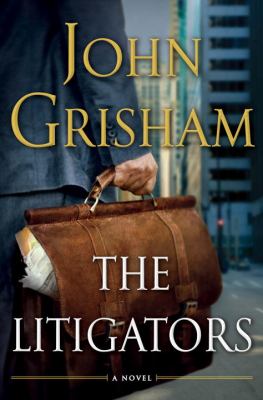
#29: The Litigators

The Litigators, by John Grisham (New York: Doubleday, 2011)

Summary:
"The partners at Finley & Figg -- all two of them -- often refer to themselves as 'a boutique law firm.' Boutique, as in chic, selective, and prosperous. They are, of course, none of these things. What they are is a two-bit operation always in search of their big break, ambulance chasers who've been in the trenches much too long making way too little. Their specialties, so to speak, are quickie divorces and DUIs, with the occasional jackpot of an actual car wreck thrown in. After twenty-plus years together, Oscar Finley and Wally Figg bicker like an old married couple but somehow continue to scratch out a half-decent living from their seedy bungalow offices in southwest Chicago.

"And then change comes their way. More accurately, it stumbles in. David Zinc, a young but already burned-out attorney, walks away from his fast-track career at a fancy downtown firm, goes on a serious bender, and finds himself literally at the doorstep of our boutique firm. Once David sobers up and comes to grips with the fact that he's suddenly unemployed, any job -- even one with Finley & Figg -- looks okay to him.

"With their new associate on board, F&F is ready to tackle a really big case, a case that could make the partners rich without requiring them to actually practice much law.

"The Litigators is a tremendously entertaining romp filled with the kind of courtroom strategies, theatrics, and suspense that have made John Grisham America's favorite storyteller."

Opening Lines:
"The law firm of Finley & Figg referred to itself as a 'boutique firm.' This misnomer was inserted as often as possible into routine conversations, and it even appeared in print in some of the various schemes hatched by the partners to solicit business."

My Take:
Meh. Yeah, I've said this before, but I think Grisham has, too, so that seems fitting. Sadly, it seems the John Grisham of A Time to Kill, The Firm, and The Pelican Brief has either retired or gone on extended hiatus. The Litigators reads like something he texted in on his smartphone while devoting most of his attention to something else.

The Point, in so much as there is one, seems mostly to be about Big Pharma. While paying a condolence call to a recent widow in hopes of being hired to handle the deceased's estate, Figg stumbles on what he's sure is The Next Big Thing: several deaths that just might be related to Krayoxx, a fairly new cholesterol-reducing wonder drug manufactured by New Jersey-based pharmaceutical giant Varrick. (Gee, I wonder what that's based on?) If Finley & Figg can get in on even a tiny piece of what they're sure will be a huge mass tort action and correspondingly huge settlement, they'll be in hog heaven. Trouble is, it's not quite clear who the real bad guy is here -- the Varrick minions, for having enough lawyers, money, and machinery to weather pretty much any legal hiccups that arise, or Finley & Figg, for being complete caricatures of every shady lawyer joke you've ever heard?

What was clear is that none of these players are especially likable. Zinc is more so, but his arrival at Finley & Figg and the way his path and the firm's go on from there are somewhat clumsy and unconvincing. What's supposed to be a sideline, about Zinc representing a family of Burmese immigrants whose son has suffered permanent brain damage from sucking on a cheap Halloween toy, is more compelling, but hasn't Grisham told us this story -- big shot lawyer gets burned out, but then finds more fulfillment in the less lucrative world of representing regular people -- already in The Street Lawyer?

Read it if you're bored or there's nothing else around, but don't expect serious entertainment here.

Tuesday, March 20, 2012

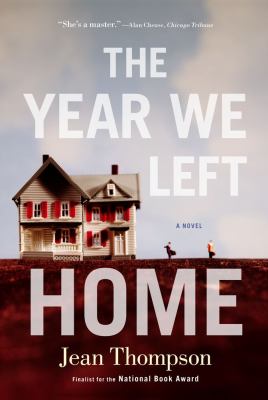
#18: The Year We Left Home

The Year We Left Home, by Jean Thompson (New York: Simon & Schuster, 2011)

Summary:
"Named a New York Times Editors' Choice, a People magazine "Pick of the Week," and an Indie Next and Midwest Connections selection, The Year We Left Home is the career-defining novel that Jean Thompson's admirers have been waiting for: a sweeping and emotionally powerful story of a single American family during the tumultuous final decades of the twentieth century.

"Stretching from the early 1970s in the Iowa farmlands to suburban Chicago and across the map of contemporary America, The Year We Left Home follows the Erickson siblings as they confront prosperity and heartbreak, setbacks and triumphs, and seek their place in a country whose only constant seems to be breathtaking change.

"Ambitious and richly told, this is a vivid and moving meditation on our continual pursuit of happiness and an incisive exploration of the national character."

Opening Line:
"The bride and groom had two wedding receptions: the first was in the basement of the Lutheran church right after the ceremony, with punch and cake and coffee and pastel mints."

My Take:
Liked this one a lot. Spare, beautiful, mostly sad, but ending on a just slightly hopeful note. A good one.

Thursday, September 22, 2011

#70 - Big Girl Small

Big Girl Small, by Rachel DeWoskin (New York: Farrar, Straus, & Giroux, 2011)

Summary:
"Judy Lohden is your above-average sixteen-year-old -- sarcastic and vulnerable, talented and uncertain, full of big dreams for a big future. With a singing voice that can shake an auditorium, she should be the star of Darcy Academy, the local performing arts high school. So why is a girl this promising hiding out in a seedy motel room on the edge of town?

"The fact that the national media is on her trail after a controversy that might bring down the whole school could have something to do with it. And that scandal has something -- but not everything -- to do with the fact that Judy is three feet nine inches tall.

"Rachel DeWoskin remembers everything about high school: the auditions (painful), the parents (hovering), the dissection projects (weird but compelling), the friends (outcasts), the boys (crushable), and the girls (complicated), and she lays it all out with an unparalleled wit and wistfulness. Big Girl Small is a scathingly funny and moving book about dreams and reality, at once light on its feet and profound."


Opening Line:
"When people make you feel small, it means they shrink you down close to nothing, diminish you, make you feel like shit."


My Take:
This was a happy accident. Picked this one up at the library for who knows what reason; I guess just because the title or the cover caught my eye. And I'm glad I did. Stayed up way too late getting into it last night, and then finished up today after knocking off work (had no choice, system was down. Really.)

On one level, the jacket blurb nails it: DeWoskin does have an eye for nailing those details that make high school both memorable and excruciating. The compulsion, even though you know you shouldn't, to throw your loyal but equally-outcast friend over when a pretty, popular girl invites you to hang out. The all-but-total paralysis that can affect otherwise strong and independent young women when That Guy deigns to give you the time of day. The simultaneous love and irritation with parents and younger siblings. You get the idea.

Then on top of this, this fairly short book has a lot to say about the tension -- strongest in adolescence, but never really absent -- between our longing to fit in, and our desire to stand out. Owing to her stature and proportions, Judy can't really help doing the latter when she transfers to the local performing arts high school, and hopes less to belong then to go unnoticed. With a few exceptions -- dancer Goth Sarah, nerdy but kooky Molly, and surprisingly, gorgeous Ginger -- she sort of succeeds (despite being the only junior admitted to a prestigious senior voice class). That is, until BMOC Kyle turns out to be surprisingly friendly and candid, even offering to drive Judy home. You know early on that things between them don't turn out well -- in fact, they go badly enough to convince Judy her life is over, and send her from her loving (if occasionally overprotective) family in Ann Arbor to the dingy Motel Manor in Ypsilanti -- but I won't spoil more than that; part of the book's art lies in the way Judy and the author roll the trauma out slowly, piece by piece.

A tremendously compelling story, with a fitting ending.

Thursday, May 26, 2011

#43: Freedom

Freedom, by Jonathan Franzen (New York: Farrar, Straus & Giroux, 2010)

Summary:
"Patty and Walter Berglund were the new pioneers of old St. Paul -- the gentrifiers, the hands-on parents, the avant-garde of the Whole Foods generation. Patty was the ideal sort of neighbor, who could tell you where to recycle your batteries and how to get the local cops to actually do their job. She was an enviably perfect mother and the wife of Walter's dreams. Together with Walter -- environmental lawyer, commuter cyclist, total family man -- she was doing her small part to build a better world.

"But now, in the new millenium, the Berglunds have become a mystery. Why has their teenaged son moved in with the aggressively Republican family next door? Why has Walter taken a job working with Big Coal? What exactly is Richard Katz -- outre rocker and Walter's college best friend and rival -- still doing in the picture? Most of all, what happened to Patty? Why has the bright star of Barrier Street become 'a very different kind of neighbor,' an implacable Fury coming unhinged before the street's attentive eyes?

"In his first novel since The Corrections, Jonathan Franzen has given us an epic of contemporary love and marriage. Freedom comically and tragically captures the temptations and burdens of liberty: the thrills of teenage lust, the shaken compromises of middle age, the wages of suburban sprawl, the heavy weight of empire. In charting the mistakes and joys of Freedom's characters as they struggle to learn how to live in an ever more confusing world, Franzen has produced an indelible and deeply moving portrait of our time."


Opening Line:
"The news about Walter Berglund wasn't picked up locally -- he and Patty had moved away to Washington two years earlier and meant nothing to St. Paul now -- but the urban gentry of Ramsey Hill were not so loyal to their city as not to read The New York Times."

My Take:
Cautiously optimistic after the first 150 pages, though I was underwhelmed by The Corrections and often end up disappointed by any book that gets half the hype this one did when it came out last year.

OK, after the fact -- probably not one of my all-time favorites, but a solid book and, dare I say, worthy of at least most of the acclaim it received. Complex, interesting characters, PLUS had a lot to say about the world and culture of the US over the last 30 years or so. A bit too much back story on our principal characters, Walter and Patty, for my tastes, which made it drag a bit up front. Sure, I guess we needed to know something of their childhoods and adolescences to understand the people they'd become by the time the novel opens, but a little bit of this goes a long way. Also, given that we learned as much about the Berglunds' son Joey as we did about his parents (sure, he gets less screen time, but he is younger with less back story to reveal), and almost as much about Walter's best friend and Patty's one-that-got-away Richard, the absence of any real detail about their daughter Jessica seems conspicuous. Fairly minor quibbles, though -- still a good read.

Thursday, January 27, 2011

#11: Native Son

Don't think I've mentioned this here yet, but I've been listening to an audiobook of Richard Wright's Native Son (New York: Random House, 1940).

Summary: "After 58 years in print, Wright's Native Son has acquired classic status. It has not, however, lost its power to shock or provoke controversy. Bigger Thomas is a young black man in 1940s Chicago who accidentally kills the daughter of his wealthy white employer. He tries to frame the young woman's fiance for the crime and attempts to extort ransom from the victim's family, but his guilt is discovered, and he is forced into hiding. After a terrifying manhunt, he is arrested and brought to trial. Though his fate is certain, he finds that his crimes have given meaning and energy to his previously aimless life, and he goes to his execution unrepentant. Wright avoids the trap of making his hero a martyr, for Bigger is a vicious and violent bully. But out of this tale the author develops a profoundly disturbing image of racism and its results that puts Bigger's experience in horrifying perspective." (-Library Journal Review)

Opening Lines:
"Brrrrrriiiiiinnng!

"An alarm clock clanged in the dark and silent room. A bed spring creaked. A woman's voice sang out impatiently:

"'Bigger, shut that thing off!'"


My Take: I'm just about halfway through the book right now (Bigger's just fled his employer's home, knowing his crime is about to be discovered). Incredibly disturbing, suspenseful, and surprisingly contemporary. I suspect this will be one of this books I appreciate deeply, but can't really say I like.

Wow. Maybe it's the way I took this book in -- a few tracks at a time over several weeks, while in the car or doing the dishes -- but when I finished it last night, I felt both bereft and deeply satisfied. The book's a classic, and synopses/ study guides/ Cliff Notes abound on the internet; I won't spend time providing another one here. But the way Wright unfolds Bigger's story is nothing short of masterful. Even now, having finished the novel, it's hard to wrap my brain around how I could feel at once appalled by the murders Bigger's committed and unconvinced that things could have gone any other way. His jail conversations with Boris Max, lawyer and eventual friend, bring about an ending that's simultaneously devastating, terrifying, and ever-so-slightly hopeful. Frankly, I can't do this book justice.

Thursday, September 2, 2010

#67 - A Reliable Wife

Just finished A Reliable Wife, by Robert Goolrick (Chapel Hill, N.C.: Algonquin Books of Chapel Hill, 2009).

Summary: "Rural Wisconsin, 1909. In the bitter cold, Ralph Truitt, a successful businessman, stands alone on a train platform waiting for the woman who answered his newspaper advertisement for 'a reliable wife.' But when Catherine Land steps off the train from Chicago, she's not the 'simple, honest woman' that Ralph is expecting. She is both complex and devious, haunted by a terrible past and motivated by greed. Her plan is simple: she will win this man's devotion, and then, ever so slowly, she will poison him and leave Wisconsin a wealthy widow. What she has not counted on, though, is that Truitt -- a passionate man with his own dark secrets -- has plans of his own for his new wife. Isolated on a remote estate and imprisoned by relentless snow, the story of Ralph and Catherine unfolds in unimaginable ways. With echoes of Wuthering Heights and Rebecca, Robert Goolrick's intoxicating debut novel delivers a classic tale of suspenseful seduction, set in a world that seems to have gone temporarily off its axis."

Opening line: "It was bitter cold, the air electric with all that had not happened yet."


My take: A fresh and enjoyable, vaguely Gothic take on the classic mail-order bride tale -- an excellent last book of summer.

As the summary suggests, both Catherine and Truitt come to their marriage with darker, more complex motives than their brief correspondence suggests. We know what Catherine wants from the get-go, though we don't yet know why -- without spoiling what may be a surprise to some readers (though I had my suspicions), it's fair to say she didn't quite pick Truitt's ad at random. Ralph Truitt takes a bit longer to figure out. One thing is clear, though: He may be the richest man in his small Wisconsin town, but this status has left him desperately lonely for both physical and emotional contact, ever since the untimely death of his faithless Italian wife and their lovely but simple young daughter, and the disappearance of the young son he blamed, many years earlier. Despite knowing his now-grown son was probably fathered by his late wife's lover, he's inexplicably driven to bring him home and reopen the long-abandoned grand home his first family shared.

The marriage gets off to an inauspicious start on several fronts. For one thing, Catherine turns out to be far more beautiful than the picture she'd sent Truitt earlier -- so much so that he realizes the photo wasn't really her, and she confesses to sending a plain cousin's photo instead. For another, a dramatic October snowstorm on their way home leads to an accident that leaves Truitt gravely injured, and requires Catherine to spend weeks alongside the devoted Mrs. Larsen, stitching his wounds and aiding in his care. At first, the stark stillness is nearly enough to drive her mad, but she comes to appreciate both Truitt's reserved dignity and that of his home ... so much so that she questions her devotion to her original mission not once, but many times.

An excellent book -- well worth a read.

Wednesday, July 7, 2010

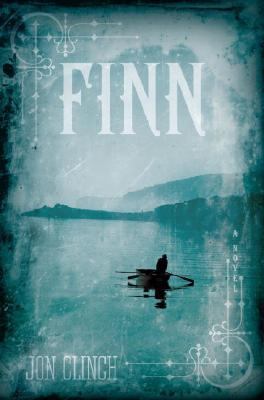
#54 - Finn

Finn, by John Clinch (New York: Random House, 2007).

Summary: "In this masterful debut by a major new voice in fiction, Jon Clinch takes us on a journey into the history and heart of one of American literature's most brutal and mysterious figures: Huckleberry Finn's father. The result is a deeply original tour de force that springs from Twain's classic novel but takes on a fully realized life of its own. Finn sets a tragic figure loose in a landscape at once familiar and mythic. It begins and ends with a lifeless body -- flayed and stripped of all identifying marks -- drifting down the Mississippi. The circumstances of the murder, and the secret of the victim's identity, shape Finn's story as they will shape his life and his death. Along the way Clinch introduces a cast of unforgettable characters: Finn's terrifying father, known only as the Judge; his sickly, sycophantic brother, Will; blind Bliss, a secretive moonshiner; the strong and quick-witted Mary, a stolen slave who becomes Finn's mistress; and of course young Huck himself. In daring to recreate Huck for a new generation, Clinch gives us a living boy in all his human complexity -- not an icon, not a myth, but a real child facing vast possibilities in a world alternately dangerous and bright. Finn is a novel about race; about paternity in its many guises; about the shame of a nation recapitulated by the shame of one absolutely unforgettable family. Above all, Finn reaches back into the darkest waters of America's past to fashion something compelling, fearless, and new."

Opening line: "Under a low sun, pursued by fish and mounted by crows and veiled in a loud languid swarm of bluebottle flies, the body comes down the river like a deadfall stripped clean."

My take: I usually enjoy books that offer a different take on a familiar story, but this one was just so-so. Maybe it's because Twain was never one of my favorites; too many bad "required reading" associations from high school, I s'pose. Maybe it's because the story jumped all over the place temporally, which made it a bit confusing. Maybe it's because the title character was so over-the-top awful (in short, he's a mean, violent drunk and a thief, with a guilty passion for women of color) that it was hard to care much about or believe in what he did. Or maybe it's just because the book's Big Shocking Reveal (Clinch envisions Huck as biracial) just wasn't that big a surprise to me. The writing itself was first-rate, but that alone wasn't enough to get me past not caring much one way or the other about Clinch's subject.

Thursday, March 25, 2010

#25 - The Girls from Ames

This time, I needed something a little more substantial than Johnny Bunko, but less bleak than Knockemstiff. Enter The Girls from Ames: A Story of Women and a Forty-Year Friendship, by Jeffrey Zaslow (New York: Gotham Books, 2009).

Summary: "Meet the Ames Girls: eleven childhood friends who formed a special bond growing up in Ames, Iowa. As young women, they moved to eight different states, yet managed to maintain an enduring friendship that would carry them through college and careers, marriage and motherhood, dating and divorce, a child's illness, and the mysterious death of one member of their group. Capturing their remarkable story, The Girls from Ames is a testament to the deep bonds of women as they experience life's joys and challenges -- and the power of friendship to triumph over heartbreak and unexpected tragedy.

"The girls, now in their forties, have a lifetime of memories in common, some evocative of their generation and some that will resonate with any woman who has ever had a friend. Photography by photograph, recollection by recollection, occasionally with tears and often with great laughter, their sweeping and moving story is shared by Jeffrey Zaslow, Wall Street Journal columnist, as he attempts to define the matchless bonds of female friendship. It demonstrates how close female relationships can shape every aspect of women's lives -- their sense of themselves, their choice of men, their need for validation, their relationships with their mothers, their dreams for their daughters -- and reveals how such friendships thrive, rewarding those who have committed to them."


Opening line: "At first, they were just names to me. Karla, Kelly, Marilyn, Jane, Jenny. Karen, Cathy, Angela, Sally, Diana. Sheila."

My take: Worth reading from a human-interest perspective, but I'm not sure what (if anything) the take-away message is. The Girls from Ames follows eleven women, now forty-something, who met as children in Ames, Iowa (some literally as infants, none later than middle school) and have remained friends until this day. One of their number died a somewhat mysterious death in her early 20s; among the 10 survivors, they've grappled with divorce, cancer, and the death of a child.

This tries to be a feel-good book, and mostly it succeeds. For the entire group to maintain this friendship for so many years, despite living in far-flung locales, is indeed impressive. On the other hand, if Zaslow's contention that women really need to forge these friendships by the time they finish high school is accurate, it's not so hopeful for those who don't have a similar network in place by the time they graduate. Not altogether convincing, either (unless that's just my own wishful thinking -- to this day, my own closest friends are those I met during my college days).

In short, if the jacket flap sounds interesting, you'll probably like the book; if it doesn't, you probably won't. WYSIWYG.

Wednesday, March 10, 2010

#17 - Songs for the Missing

And this one pretty much lived up to expectations. Songs for the Missing, by Stewart O'Nan (New York, 2008) isn't the first families-of-missing-teens book I've read (see The Local News, for one), but it's definitely one of the best -- probably because it neither wraps things up neatly, nor does the usual tug-at-the-tear-ducts stuff you might expect.

Summary: "An enthralling portrait of one family in the aftermath of a daughter's disappearance. 'It was the summer of her Chevette, of J.P. and letting her hair grow.' It was also the summer when, without warning, popular high school student Kim Larsen disappeared from her small midwestern town. Her loving parents, her introverted sister, her friends and boyfriend must now do everything they can to find her. As desperate search parties give way to pleading television appearances, and private investigations yield to personal revelations, we see one town’s intimate struggle to maintain hope and, finally, to live with the unknown. Stewart O'Nan's new novel begins with the suspense and pacing of a thriller and soon deepens into an affecting family drama of loss. On the heels of his critically acclaimed and nationally bestselling Last Night at the Lobster, Songs for the Missing is an honest, heartfelt account of one family's attempt to find their child. With a soulful empathy for these ordinary heroes, O'Nan draws us into the world of this small American town and allows us to feel a part of this family."

A good, solid read. In addition to Kim's parents and sister, Lindsey, we also see how her disappearance reverberates in the lives of her boyfriend, J.P., and her best friend, Nina. Certain small details are handled especially well: J.P. and Nina's guilt, first at not telling and then at telling the police about Kim's connection to a skanky, 30-year-old drug dealer (no, he didn't do it); the Larsens' inclination to both overprotect Lindsey in the wake of her sister's disappearance, and shelter her from too much direct involvement with the search; their struggle to visit and explain things to Roger's elderly, nursing home-bound mother; the over-the-top cheesy memorial buttons and songs that flow from the community; the local crazy lady (doesn't every town have one?) whose obsession with the case ultimately leads to an important discovery. If I had a book club, this would be a good book club book.

Wednesday, November 18, 2009

119 - The Local News

Trying a slightly new approach here.

My 119th book of the year (wow, do I need to get out more!) was The Local News, by Miriam Gershow (Spiegel & Grau, 2009).

Dust jacket blurb: "Even a decade later, the memories of the year Lydia Pasternak turned sixteen continue to haunt her. As a teenager, Lydia lived in her older brother's shadow. While Danny's athletic skills and good looks established his place with the popular set at school, Lydia's smarts relegated her to the sidelines, where she rolled her eyes at her brother and his meathead friends and suffered his casual cruelty with resigned bewilderment. Though a part of her secretly wished for a return of the easy friendship she and Danny shared as children, another part of her wished Danny would just vanish. And then, one night, he did."

Maybe I'm easy, but both this one and the book that followed it were far better and more thought-provoking than I'd expected them to be. It's always a pleasant surprise when that happens, like getting dragged along to a party where you actually end up having a great time in spite of yourself.

Or maybe I'm just a sucker for smart but lonely high school students. Lydia, our narrator and protagonist, was both even before her brother's disappearance, which transforms her overnight from mere invisibility to downright alienation. The initial chapters, set after the shock of Danny's vanishing has begun to dissipate and the local shopkeepers are no longer so willing to display his "Missing" posters, introduce the themes we and Lydia will become intimately familiar with in the months and chapters to come: the inadequacy of others' good intentions and her own unspoken guilt at not grieving Danny's loss more deeply. Even years after the fact, she fumes silently at a support group meeting:
"Finding myself backed into the overly familiar terrain of heartache and desperation brought out the worst in me. I was cornered, wanting to scream or kick my chair over or run my nails along the chalkboard where the woman had made us brainstorm a list of feeling words about our siblings (love, confusion, fear, sadness, the list began, predictably). I wanted to reel off my own list of shitty things Danny had done to me when we were teenagers (calling me the titless wonder, mashing my face in a pillow once until I couldn't breathe, ignoring me in front of his friends). I wanted to be irreverent and inappropriate. I wanted to shake up the righteous anguish. Going missing, I wanted to yell from some deep, dark pit in the middle of me, was the only interesting thing my brother had ever done."
Perhaps most heartbreaking is Lydia's description of her parents' collapse into numbness, so bereft at the loss of their son that they scarcely notice their daughter:
"We couldn't keep the refrigerator stocked; its contents dwindled to bread heels and condiments in a matter of days. My mom started smoking again, years after having quit. Her energy was both frenetic and focused: she designed posters, concocted overly elaborate phone trees to recruit people for the area sweep searches, and added to her steadily growing stack of index cards, each one scribbled with a 'clue' to helo the police. ... My father became quietly obsessed with the TV news -- local, national, international, as if he couldn't rule out any possibility. Maybe Danny was part of the throngs of Bosnian Serb refugees; maybe he'd been victim to the floods in the Philippines. Dad could go days without speaking. He could sit for hours ... in his sunken chair without once getting up. And we kept running out of toilet paper. Over and over again we had to use tissues instead, until those ran out too and we moved to paper towels, which quickly clogged the pipes. I'd never before had to think about the supply of toilet paper in our household. It had always simply been there. I was fifteen. Up to that point, I'd believed that the world more or less worked -- toilet paper sat on its roll, dinner was served hot at the table, everyone came home at the end of a day -- simply because it was supposed to and it always had."
Unusually perceptive, Lydia describes the "uncomfortable stillness" and "impermeable smell of neglect" which pervade her family's home. She wakes one night to find her father rummaging through Danny's room, making an unearthly sound "like nothing I'd heard from him before, not even after that first night Danny did not return and the next morning and then the night again, when it was clear something had gone terribly wrong. It was a throaty hum of a noise, high-pitched and childish-sounding. No, dog-sounding. He was whimpering."

Only with her best friend, the slight and equally brainy David, can Lydia let her guard down and just be herself. Even that changes, though, when an unexpected and ill-timed kiss renders their once-easy closeness stilted and suspect. "[H]e'd crossed a line, a line which I knew -- instantaneously -- we couldn't just cross back from with the hopes that everything would revert to its rightful place. He'd changed things, created a moment after which nothing would be the same. I already had one of those, recently acquired. One was too much. I couldn't have another. Not now."

Instead, she lets herself be befriended by Lola Pepper, the terminally perky flag team girl ("one significant and humiliating step down in the Franklin High hierarchy from the actual cheerleaders") who's apparently transferred her dogged pursuit of Danny to his sister. Lydia alternately pities and looks down on Lola, but accepts her friendship and invitations for their sheer undemandingness. "It was hard to stay prickly in Lola's world, pliant and fluffy as it was." The two play Hungry Hungry Hippos, Lite Brite, and other long-outgrown toys that still line Lola's closets. She also forges a wary connection with Tip, Danny's best friend and the last person to have seen him, a musclehead who, in his less-than-articulate way, nonetheless "gets" Lydia's isolation:
"'Your problem, Pasternak, is that you're like this little grown-up already. Nobody f-----g knows what to do with you. But like give it a few years. Give it college or something. I don't know, after college, when you have some job running the world and the rest of us are just your little employees, you're going to be like a total guy killer, with like a male secretary and shit."
And then there's Denis Jiminez, the detective assigned to Danny's case. Not only does Denis actually notice and listen to Lydia, he also maintains a "steadfast indifference toward Danny" rather than "[surrendering] to the tales of charisma and popularity and charm and [being] taken in like the rest of them." He even ventures to ask Lydia if she misses her brother, and after a brief flurry of "'Sure. I mean, of course," the floodgates open:
"I talked quickly then -- it came out in a rush -- about the oppressive, nearly suffocating quiet of the house now, but at least we were free of the ever-present vigilance of the tracking and cataloging of Danny Pasternak's every move. I described the countless evenings of waiting for him to get home from swim or football practice as the spaghetti sauce simmered on the stove and my parents busied themselves with tasks, my mother wiping down the dinner table, my father sorting through the mail, but really, all of us just waiting to see if he would come bursting through the door after a missed pass or a butterfly stroke that clocked nineteen seconds slower than usual, full of venom and glowering. Those were dinners spent gingerly passing the rolls, the three of us making polite conversayion, trying to avoid the vitriol that could roll so easily off his tongue ... as my parents impotently chided him.

"I told him about the time when Danny jammed my bedroom door closed with his desk chair so I was trapped inside for hours until my parents got home from work. I told him about when Danny ripped my National Junior Honor Society certificate off the fridge and then denied it when my dad found it torn to bits in the garbage. ...

"I told him then about the whole titless wonder thing, about Danny one time kicking me in the shin and leaving a flowery bruise, about splattering bleach on one of my favorite shirts. I was no longer worried about humiliating myself, instead feeling like this was my chance to shift things permanently, to ensure that Denis would never be lulled by the gravitational pull of all things Danny."
Not surprisingly, Denis's attention and kindness give rise to a wee crush on Lydia's part, inspiring her to put so much effort into organizing clues and leads that he starts to question her motives.

Gershow's take on Lydia seems pitch-perfect, making the reader (at least this one) recall her own awkward, square-peg-in-round-hole adolescence, and then imagine what it would be like to have that overlaid with a tragedy that utterly shatters your family. Lydia describes her sixteenth birthday as "one of those recidivist cold days ... an event marked by almost no one." She's given Lola a fake birth date "to avoid the brownie-and-Rice-Krispies-treat tower, the You look like a monkey and you smell like one too that was a birthday at Lola's lunch table." David, who "had always made me handmade birthday cards on his computer, with inappropriate quotes ... or with pictures of fractals or nebulae," tracks her down as she's leaving school and shoves a card into her hand, but their conversation is artificial, and the card itself downright perplexing:
"It turned out to be store-bought, with a pastel drawing on the front of deer in a field. Inside was a printed poem following a basic meter and simple rhyme scheme (The seasons are turning, one line read; which means you are growing and learning, read the next). At the bottom David had written simply Happy Birthday and signed his name. I was a little surprised. Had he meant it, I wondered, as a bit of a dig? Did he think me now the sort of person we'd always made fun of, the kind who liked this Hallmarky sort of bad poetry?"
She does pass her road test, but freezes up on the drive home and ultimately, humiliatingly, needs to let her father take the wheel. A few months later, as the school year winds down, she's just begun to enjoy ordinary people and pleasures (like the flag team's end-of-year banquet) when Danny's case again takes center stage, a painful and abrupt reminder that Lydia's life will never be normal.

I'm still not sure how I feel about the ending, which takes place at Lydia's ten-year high school reunion. On one hand, it seems a bit tacked-on; on the other, I do appreciate Gershow's restraint in not using this setting as an excuse to wrap everything up in tidy little packages. The effect is less like the Harry Potter & the Deathly Hallows epilogue, which is so pat and perfect it seems a cop-out, and more like Prep, where the protagonist has to be an adult looking back on her teenage years to have the perspective she does. Ultimately, Lydia comes to grips with the loss of what might have been, not just in terms of her own coming of age, but the chance to know and love her brother as an adult.

I'm never good at pithy concluding statements (heck, I'm not much good at pithy anything) but all in all, it was a good read: poignant, funny, believable, and sweet. I may even want to own this one.

Tuesday, September 29, 2009

#92 - Sing Them Home

Wrapping up September with another backlog of fiction books. #92 was Sing Them Home, by Stephanie Kallos (Atlantic Monthly Press, 2009). The short verdict here was, definitely a girl book, and a bit of a slow starter, but engaging and worthwhile once I got there.

I picked this one up at the library based solely on the author's name; I absolutely loved Kallos's Broken for You. (Then again, I did read that one on a long bus ride, so I may have gotten past any slow starting because, well, there was nothing else to do but keep reading.) At 542 pages, Sing Them Home is on the hefty side, and as I said before, it took a little while to draw me in. Without giving too much away, there's an extended magical/ whimsical piece at the beginning which wasn't really what I was looking for ... but fortunately, this does wrap up within a few pages and is only referred to occasionally throughout the rest of the novel. Essentially, this is a story of family, love, and loss set in the fictional Nebraska small town of Emlyn Springs. For those not up on their geography, Nebraska is in Tornado Alley, and in a sense, the novel is bracketed by tornadoes: one 30-odd years before the story begins, and the other ... well, I won't spoil that piece for you. Anyhow, the earlier cyclone still looms large in the town's collective memory, and larger still for the Jones family; it was this tornado that swept up Hope Jones, the young wife and mother who'd fallen in love with then-fiance Llewellyn's home town and insisted on settling there some years earlier. To this day, people talk not about Hope's death, but about when she "went up," and in the cemetery where most of the departed townspeople are buried, there is only a memorial marker.

But all of this is mere context. As the book opens, Hope's widower, Dr. Llewellyn Jones, ignores the nagging of his long-time companion (and Hope's one-time best friend) Viney to play golf in a thunderstorm. The results are tragic, if predictable; lightning strikes, and Llewellyn is killed instantly. Viney quickly summons the 3 adult Jones children, who must come home not only to mourn and bury their father, but to confront the demons that still linger around their mother's death 30 years earlier. Larken, the eldest, is an art history professor in Lincoln who seems poised to be the next department chair. However, her personal life seems painfully empty; she takes comfort and joy only from near-constant, furtive snacking and her weekly babysitting date with Esme, cherubic daughter of Larken's on-again, off-again neighbors John and Mira. Gaelen, the middle child and only son, is a semi-famous local weather reporter who comes off as the proverbial talking head. With no meteorological training, but a telegenic face and (thanks to countless hours at the gym) buff bod extraordinaire, Gaelen never lacks for (ahem) dates, but doesn't seem to have truly loved a woman since dumping his high school and college sweetheart Bethan. And then there's Bonnie, a/k/a Flying Girl, the baby sister who remained in Emlyn Springs and who Larken and Gaelen fear is fast on her way to eccentric spinsterhood. While the local children adore her, Bonnie's means of support have always been marginal at best (as the book opens, she runs a juice and smoothie bar which is open except when it isn't), and she's long had an odd hobby of combing the local landscape for artifacts and tending local graves, convinced she'll eventually find the clue that unlocks the mystery of Hope's disappearance.

Much of the book takes place against the backdrop of a (purportedly) traditional Welsh funeral celebration, which lasts a full week. For the first 4 days, the immediate family members don't speak at all, and are attended more or less constantly by neighbors. This is followed by 3 days of nonstop (24/7, or perhaps 24/3) hymn singing, with all the townspeople and family taking shifts to honor the dead ... to sing them home, if you will; hence, the title. I have no idea if the Welsh or Welsh-Americans really do mourn their dead in this manner, but the idea does make for an interesting metaphor: how do we behave in that in-between time, after the death and before the burial? How can we truly grieve when there's no body to view and bury -- no "closure," in pop psych-speak? And what does it mean, after a life-altering loss, to go on with our lives, to get back to normal?

Monday, January 19, 2009

Vacation Reads

OK, back from a week's vacation in Orlando, worshipping at the Temple of the Mouse. I'm eager to jot down my observations about this American rite of passage, road trips in general, and a whole bunch of other stuff, but that will have to wait till I've had some coffee and unpacked some suitcases. In the meantime, the book list continues:
  • 4. Peripheral Vision, by Patricia Ferguson. Pretty good, but didn't quite live up to expectations. The story itself was fairly interesting, though I found the ending a bit abrupt; without giving away too much, in case someone's actually reading this, one of the stories' conclusion seems a bit forced, and doesn't quite make sense. In terms of meta-commentary, I appreciate the point Ferguson's trying to make: that which we see clearly, right in front of our noses, is only part of the truth, and every story has bits and pieces around the edges that don't quite seem to fit at first ... but in reality, provide important clues to what really lies beneath. 3.5 out of 5 bookmarks.
  • 4a. The Unofficial Guide to Walt Disney World 2009, by Bob Sehlinger and Len Testa. Brilliant guidebook for anyone who wants to enjoy a Disney vacation, but can't quite bring themselves to buy into they hype completely. I'm not counting this as one of my 100 books for the year, as it's more a reference than anything else ... but I can't recommend it highly enough to anyone else planning a Disney vacation, and can't thank Ruth & Becky enough for recommending it to me. The touring plans were invaluable in helping us figure out what to see and do when, which is key in parks that are this big and crowded (though the crowds weren't bad at all when we visited). Detailed info on FastPass helped us make the most of it without overdoing it (which would have caused more trouble than it was worth), useful restaurant recommendations, detailed descriptions of who each R&A would appeal to vs. which ones could be skipped. 4.5 out of 5 bookmarks.
  • 5. The Spare Wife, by Alex Witchel. Decent but forgettable vacation read. Outing myself here: this is just the kind of thing I secretly love to read on vacation or when I'm procrastinating about something much more important. Gorgeous, wealthy model-cum-attorney in NYC, widow of a much-older, very successful husband, beloved by her NY society friends, dubbed "the spare wife" because she's such a good friend to both husbands and wives alike without being threatening. That is, until (dum dum DUM) a crass but ambitious young journalist discovers she's having a long-standing affair with the "happily" married fertility specialist to the stars. Mayhem ensues; all ultimately ends well. 2.5 out of 5 bookmarks.
  • 6. Liberty, by Garrison Keillor. Entertaining for Prairie Home Companion fans. This reads almost exactly like an episode of Keillor's radio show, for better or worse. If you enjoy Prairie Home Companion, you'll probably like the book; if you find it annoying, don't bother. On the plus side, Keillor is very funny, and has a ton of mostly good-natured observations about small-town Americana that made me laugh out loud. It's also entertaining to see him apply this same style to subjects that are a bit too risque, too political, or both for the radio. (There's a parody of the Larry Craig debacle that had me in stitches, and a definitely Palinesque congressional candidate.) On the other, his meandering, tangential style gets a little old in a 267-page novel ... and maybe this is just my own bias, but the whole theme of older man becomes enamored of young woman, and suddenly fears he's been living the wrong life all along has been done to death. (Tangent of my own: this is why I stopped reading Philip Roth, who's a brilliant writer, but clearly needs to work through some of his own aging issues before writing yet another version of this same story.) 3 out of 5 bookmarks.

All right, that coffee is calling. Let's see what else I can read before the current cache is due back to the library.