About Me

Ithaca, New York
MWF, now officially 42, loves long walks on the beach and laughing with friends ... oh, wait. By day, I'm a mid-level university administrator reluctant to be more specific on a public forum. Nights and weekends, though, I'm a homebody with strong nerdist leanings. I'm never happier than when I'm chatting around the fire, playing board games, cooking up some pasta, and/or road-tripping with my family and friends. I studied psychology and then labor economics in school, and I work in higher education. From time to time I get smug, obsessive, or just plain boring about some combination of these topics, especially when inequality, parenting, or consumer culture are involved. You have been warned.
Showing posts with label siblings. Show all posts

Friday, August 10, 2012

#71: The Cookbook Collector

The Cookbook Collector, by Allegra Goodman
(New York: The Dial Press, 2010)
Summary:
"Heralded as 'a modern-day Jane Austen' by USA Today, National Book Award finalist and New York Times bestselling author Allegra Goodman has compelled and delighted hundreds of thousands of readers. Now, in her most ambitious work yet, Goodman weaves together the worlds of Silicon Valley and rare book collecting in a delicious novel about appetite, temptation, and fulfullment.

"Emily and Jessamine Bach are opposited in every way: Twenty-eight-year-old Emily is the CEO of Veritech, twenty-three-year-old Jess is an environmental activist and graduate student in philosophy. Pragmatic Emily is making a fortune in Silicon Valley, romantic Jess works in an antiquarian bookstore. Emily is rational and driven, while Jess is dreamy and whimsical. Emily's boyfriend, Jonathan, is fantastically successful. Jess's boyfriends, not so much -- as her employer George points out in what he hopes is a completely disinterested way.

"Passionate, surprising, rich in ideas and characters, The Cookbook Collector is a novel about getting and spending, and about the substitutions we make when we can't find what we're looking for: reading cookbooks instead of cooking, speculating instead of creating, collecting instead of living. But above all it is about holding onto what is real in a virtual world: love that stays."

Opening Lines:
"Rain at last. Much-needed rain, the weathermen called it."


My Take:
A good read -- perfect blend of being interesting enough to keep me turning pages, but substantial enough for me to care about the characters. Not big on weighty matters while I was home last week, or, for that matter, since I've come back to work (and soul-sucking travel) this week. 

Monday, July 23, 2012

#64: Rise and Shine

Rise and Shine, by Anna Quindlen
(New York: Random House, 2006)
Summary:
"From Anna Quindlen, acclaimed author of Blessings, Black and Blue, and One True Thing, a superb novel about two sisters, the true meaning of success, and the qualities in life that matter most.

It’s an otherwise ordinary Monday when Meghan Fitzmaurice’s perfect life hits a wall. A household name as the host of Rise and Shine, the country’s highest-rated morning talk show, Meghan cuts to a commercial break–but not before she mutters two forbidden words into her open mike.

In an instant, it’s the end of an era, not only for Meghan, who is unaccustomed to dealing with adversity, but also for her younger sister, Bridget, a social worker in the Bronx who has always lived in Meghan’s long shadow. The effect of Meghan’s on-air truth telling reverberates through both their lives, affecting Meghan’s son, husband, friends, and fans, as well as Bridget’s perception of her sister, their complex childhood, and herself. What follows is a story about how, in very different ways, the Fitzmaurice women adapt, survive, and manage to bring the whole teeming world of New York to heel by dint of their smart mouths, quick wits, and the powerful connection between them that even the worst tragedy cannot shatter."

Opening Line:
"From time to time some stranger will ask me how I can bear to live in New York City."

My Take:
Started this on the plane from Syracuse to Philadelphia to Boston last night (I don't remember exactly which leg I was on or which airport I was cooling my heels in at the time) and it's promising; I usually like Quindlen. Stay tuned.  

(time passes)

Pretty darned good. Meatier and more nuanced than a lot of the bourgeois upper-class porn I've read, which is a lot. (And hey, I mean "porn" in the sense of "sneaking a guilty peek into how the 1% or the 0.001% lives" sense, not the "50 shades" way.) Chiefly this is because Meghan is neither the narrator nor the book's chief focus. That would be her younger sister, Bridget, who leads a far more ordinary, low-profile life as a social worker, dating a much older cop. She's close to her famous sister, sure, but seems not all that interested in basking in her limelight; if anything, it's a distraction from their relationship. Rather than being a thin frame story for a book full of designer name-dropping, Rise and Shine is more about the effects of fame and wealth on those on its periphery: spouses, siblings, kids. 

If I have to pick a quibble, it's with the almost-too-perfect character of Leo, Meghan's son and Bridget's nephew. While he shows some flashes of normal youth -- being a bit untidy, bringing a stray kitten home to his aunt's apartment on a whim, buying way too many apples -- he's otherwise depicted as just so good-natured and unspoiled (despite a mother who makes $10 million a year and a father whose investment banking career is nothing to sneeze at either) that it seems too obvious a set-up for the "worst tragedy" alluded to in the publisher's blurb. As this is part of what saves the book from a too-perfectly-wrapped-up ending, though, I'll take it. Worth a read or a recommendation.


Saturday, July 14, 2012

#57: A Proper Education for Girls

A Proper Education for Girls, by Elaine di Rollo  
(New York: Crown Publishing, 2009)
Summary:
"Not since the Brontës have we seen the likes of the Talbot sisters, plucky peach growers with a peculiar upbringing and a flair for subversion. Set in England and India in the mutinous year of 1857, A Proper Education for Girls tells the story of Alice and Lilian Talbot, twins separated for the first time in their lives by their martinet father. After an affair comes to a tragic end, Lilian is banished from the Talbot mansion and married off to a sickly missionary in India. Unwilling to play the part of the demure missionary wife, beautiful, tomboyish Lilian quickly takes advantage of her husband’s hypochondria and her newfound freedom as a British expatriate, tramping off into the jungle to paint pictures of the indigenous flora and secretly learning the language and customs of her adopted homeland.

"Meanwhile, the plain but sharp-witted Alice remains on her father’s isolated estate, serving as curator to his strange and vast Collection under the watchful eye of the malevolent Dr. Cattermole. The Collection, which has taken over every inch of the rambling estate, is the essence of Victorian England -- antiquated and ingenious, austere and excessive. Twelve perfectly synchronized grandfather clocks stand at attention at the bottom of a staircase. Botanical specimens have overrun the conservatory, turning the room into a tropical greenhouse. Forgotten houseguests roam amid fossilized sea creatures, display cases of Greek pottery, and mechanical contraptions. A peach tree, inherited from their mother and planted in a wheelbarrow for portability, is a constant reminder of Lilian’s absence.

"Though Mr. Talbot has cut off all communication between the sisters, a cryptic letter from Lilian manages to slip through, and hidden in the envelope is a puzzling photograph of a tiger hunt. Alice sets about cracking the code in the letter, finding an unlikely ally in Mr. Blake, the photographer hired to document the Collection. While Mr. Talbot is absorbed in the eccentric but seemingly benign Society for the Propagation of Useful and Interesting Knowledge, Alice plots her escape from both her oppressive father and Dr. Cattermole’s unspeakable plans for her future.

"Intrigue is rife in India as well, where Lilian continues to defy convention. Playing her many admirers off one another, she quietly works toward the goal of reuniting with her sister. But the violent onset of the Indian rebellion against British rule threatens to derail her plans. And back at the Talbot estate, the Society’s experiments are taking a menacing turn. Will the sisters' resourcefulness and profound devotion to each other be enough to save them? Capturing the Victorian era in all of its whimsy and horror, A Proper Education for Girls is a superb debut novel about the power of sisterhood."
 
Opening Line:
"Travelers unfamiliar with the countryside around the great house would come upon its boundary walls with some surprise." 

My Take:
Not usually my favorite era for historical fiction, but I enjoyed this one a lot more than I expected to -- probably because of the sisters' ingenuity at making very close call escapes from what could have been truly horrific circumstances. Worth a read.

#53: The Interruption of Everything

The Interruption of Everything, by Terry McMillan  
(New York: Viking, 2005)
Summary:
Since Terry McMillan’s breakout novel Waiting to Exhale surged onto the bestseller lists, critics and readers alike have been captivated by her irreverent, hilarious, pitch-perfect tales of women’s lives and contemporary issues. With The Interruption of Everything, her sixth novel, McMillan takes on the fault lines of midlife and family life, reminds us once again of the redeeming power of friendship, and turns her eye toward the dilemma of how a woman starts to put her own needs higher on the to-do list while not shortchanging everyone else.

"Marilyn Grimes, wife and mother of three, has made a career of deferring her dreams to build a suburban California home and lifestyle with her husband, Leon. She troubleshoots for her grown kids, cares for her live-in mother-in-law, Arthurine (and elderly poodle, Snuffy); keeps tabs on her girlfriends Paulette and Bunny and her own aging mother and foster sister—all the while holding down a part-time job. But at forty-four, Marilyn’s got too much on her plate and nothing to feed her passion. She feels like she’s about ready to jump. She’s just not sure where.

Highly entertaining, deeply human, a page-turner full of heart and soul, The Interruption of Everything is vintage Terry McMillan—and a triumphant testament to the fact that the detour is the path, and living life 'by the numbers' never quite adds up."

Opening Line:
"The only reason I'm sitting on a toilet seat in the handicapped stall of the ladies' room is because I'm hiding."

My Take:
One of my more expensive finds from the May booksale at the Boston Public Library (think I paid a dollar for it), and a highly entertaining read. Things do tend to wrap up a bit too neatly and quickly at the end, which is often a peeve of mine, but it wasn't necessarily a bad ending -- just one that might have benefited from a loose end or 2.
 

Thursday, July 5, 2012

#44: Walking to Gatlinburg

Walking to Gatlinburg, by Howard Frank Mosher (New York: Shaye Areheart Books, 2010)

Summary:
"A stunning and lyrical Civil War thriller, Walking to Gatlinburg is a spellbinding story of survival, wilderness adventure, mystery, and love in the time of war.

Morgan Kinneson is both hunter and hunted.  The sharp-shooting 17-year-old from Kingdom County, Vermont, is determined to track down his brother Pilgrim, a doctor who has gone missing from the Union Army.  But first Morgan must elude a group of murderous escaped convicts in pursuit of a mysterious stone that has fallen into his possession.

"It's 1864, and the country is in the grip of the bloodiest war in American history.  Meanwhile, the Kinneson family has been quietly conducting passengers on the Underground Railroad from Vermont to the Canadian border.  One snowy afternoon Morgan leaves an elderly fugitive named Jesse Moses in a mountainside cabin for a few hours so that he can track a moose to feed his family.  In his absence, Jesse is murdered, and thus begins Morgan's unforgettable trek south through an apocalyptic landscape of war and mayhem.

"Along the way, Morgan encounters a fantastical array of characters, including a weeping elephant, a pacifist gunsmith, a woman who lives in a tree, a blind cobbler, and a beautiful and intriguing slave girl named Slidell who is the key to unlocking the mystery of the secret stone.  At the same time, he wrestles with the choices that will ultimately define him – how to reconcile the laws of nature with religious faith, how to temper justice with mercy. Magical and wonderfully strange, Walking to Gatlinburg is both a thriller of the highest order and a heartbreaking odyssey into the heart of American darkness."


Opening Line:
"Years later Morgan Kinneson would conclude that it was probably reading that had gotten him and his brother, Pilgrim, into trouble in the first place."

My Take:
I didn't hate it, but this was one of those books that I had high hopes for based on some laudatory reviews, and it didn't quite live up to my expectations. Every other reviewer, it seems, calls books "lyrical," and perhaps this one was; it's been over a month but I do recall the language being intriguing, and several of the characters and scenarios Morgan wanders into have a fascinating, almost fantastic appeal. Overall, though, I had the impression that I myself was taking a long road trip through unfamiliar country: interesting and lovely to look at in places, but rather slower than I'd like in many others.

Friday, April 27, 2012

#38: Bed

Bed, by David Whitehouse (New York: Scribner, 2011)


Summary:
"Mal Ede. a child of untamed manners and unbounded curiosity, is the eccentric eldest son of an otherwise typical middle-class family. But as the wonders of childhood fade into the responsibilities of adulthood, Mal's spirits fade too. On his twenty-fifth birthday, disillusioned, Mal goes to bed -- back to his childhood bed -- and never emerges again.


"Narrated by Mal's shy, diligent younger brother, Bed details Mal's subsequent extreme and increasingly grotesque transformation: immobility and a gargantuan appetite combine, over the course of two decades, to make him the fattest man in the world. Despite his seclusion and his refusal to explain his motivations, Mal's condition earns him worldwide notoriety and a cult of followers convinced he is making an important statement about modern life. But Mal's actions will also change the lives of his haunted parents, his brother and the woman they both love, Lou.


"In Bed, David Whitehouse has put a magnifying glass on contemporary society. Hailed as a 'momentous' (The Bookseller) debut in the UK, Bed is a mordantly funny and ultimately redemptive parable about mortality, obesity, celebrity, depression, and the broken promises of adulthood. It is one of the most audacious debut novels in years."

Opening Line:
"Asleep he sounds like a pig hunting truffles in soot."

My Take:
OK but a bit on the underwhelming side. I seem to be saying this a lot, but it was hard to get a good grasp on the characters and their motives. Mal comes off as a spoiled brat (if a deeply troubled one), and both the brother/ narrator (who never does get a name of his own) and their servile, enabling mother are ciphers. I also didn't see a lot of humor here, probably because so much of the description of Mal's condition was so horrifyingly grotesque. Heft was, in my mind, a much stronger book on similar themes.

Thursday, December 8, 2011

#101: Sweet Valley Confidential: Ten Years Later

And speaking of not being ashamed of who you are ...

Sweet Valley Confidential: Ten Years Later, by Francine Pascal (New York: St. Martin's Press, 2011)

Summary:
"Anyone who grew up reading the Sweet Valley High series (that would be basically every girl born in the late 70s/early 80s) has been waiting for this -- Sweet Valley Confidential: 10 Years Later came out on Friday.

Make any mention of SVH to a 20 or 30-something woman and you’re likely to be bombarded with stories of childhood obsession, followed by a ranking of said woman’s favorite characters–for some reason most people liked goody-two-shoes Elizabeth, which is mystifying; c’mon, without saucy Jessica there never would have been any action! So really it’s no surprise that people have been eagerly waiting for this book. But how does it stack up to the originals?

Well, let’s just say this book wasn’t written to attract new fans. Even before the book was released it was apparent that it wasn’t meant for young readers the way the series was, but was instead written for fans of the original books. Readers who are now, like Jessica and Elizabeth Wakefield, adults. Readers who are thrilled by the fact that Sweet Valley-ites now drink! And use Facebook! And have sex!

Which is lucky, because honestly, without the emotional attachment to the characters (I’m emotionally attached to the Wakefields–that doesn’t sound weird, right? Right?) there isn’t much draw to Sweet Valley Confidential.

The story reads like a bad romance novel (and not the so-bad-it’s-good kind), starting with the plot: Jessica, who now works in public relations, has broken the cardinal rule of friendship and shattered her relationship with her beloved twin sister, who is now a writer in New York. The book centers on what Jessica’s offense was (I won’t spoil it for you, but it’s quite obvious) and whether or not Elizabeth will forgive her (I won’t spoil that one either). Then there’s the dialogue and first person narration, which is pretty laughable–especially Jessica’s habit of adding “so” and “like” to every sentence. In fact, even the third-person narration (the book swings between both) is questionable at times, as it’s occasionally peppered with profanity that comes out of nowhere.

The thing is, it doesn’t really matter how bad the book is. If you were a fan back then, you’re going to appreciate it. How can you not? It’s Sweet Valley! It’s the Wakefields and Lila Fowler and Bruce Patman and Caroline Pierce all grown up! It’s almost like going to your own high school reunion and being able to judge everyone’s life choices (Seriously, girl? You married that guy?) without having to worry about anyone questioning your own decisions.

Maybe that’s a stretch, but still — this book is a good time, as long as you can tap into your girlhood fandom." -Megan Gibson, from Time Magazine

Opening Line:

"Elizabeth had turned the key in the Fox lock, releasing a heavy metal bar that scraped across the inside of the front door with an impressive prison-gate sound, and was about to attack the Segal lock when the phone in the apartment started to ring."

My Take:

Yes, it was as dopey as you'd expect. Next.

Tuesday, May 10, 2011

#36: Night Road

Night Road, by Kristin Hannah (New York: St. Martin's Press, 2011).

Summary:
"For eighteen years, Jude Farraday has put her children's needs above her own, and it shows -- her twins, Mia and Zach, are bright and happy teenagers. When Lexi Baill moves into their small, close-knit community, no one is more welcoming than Jude. Lexi, a former foster child with a dark past, quickly becomes Mia's best friend. Then Zach falls in love with Lexi and the three become inseparable.

"Jude does everything to keep her kids on track for college and out of harm's way. It has always been easy -- until senior year of high school. Suddenly she is at a loss. Nothing feels safe anymore; every time Mia and Zach leave the house, she worries about them.

"On a hot summer's night her worst fears are realized. One decision will change the course of their lives. In the blink of an eye, the Farraday family will be torn apart and Lexi will lose everything. In the years that follow, each must face the consequences of that single night and find a way to forget ... or the courage to forgive."


Opening Line:
"She stands at the hairpin turn on Night Road."


My Take:

I do love me some chick lit now and again. Light, quick, enough twists to keep it interesting, but predictable enough that you feel like you accomplished something in guessing what was next. I'd read one or two of Hannah's other books before, knew what I was getting into, and wasn't really disappointed. She hasn't yet written as much and/or I haven't yet read enough of her books for them to become as predictable as, say, a Jodi Picoult or Maeve Binchy; either way, I only read a given author in this genre once every 6 months, if that, so it takes a while to get so old as to cease being fun anymore.

So I got about what I expected. Jude as the just-about-perfect, if a tad overprotective, mom is just over-the-top enough to be both funny and oddly sympathetic (at least, until the pivotal event alluded to in the jacket summary above). Lexi really does turn out to be a good kid, rather than the bad apple you might expect, and her aunt Eva, who works at Wal-Mart and lives in a clean if shabby trailer, never had kids ... yet seems to know exactly how to talk to Lexi and what she needs, is a perfect contemporary version of the noble peasant cliche. Zach, even if he's the most popular and best looking boy at school, turns out to just be The World's Nicest Guy, and is apparently never mean to his shyer, somewhat awkward twin sister or her trailer-park new best friend. Yeah, it strains credibility in places, but like I said -- that and the can't-possibly-imagine tragedies are what make our own everyday lives seem manageable and decent by comparison. Not worth owning, but a decent evening's entertainment for those who, like me, prefer lightweight novels to bad TV.

Monday, June 14, 2010

#46 - Homer & Langley

Homer and Langley, by E.L. Doctorow (New York: Random House, 2009).

Jacket summary: "Homer and Langley Collyer are brothers -- the one blind and deeply intuitive, the other damaged into madness, or perhaps greatness, by mustard gas in the Great War. They live as recluses in their once grand Fifth Avenue mansion, scavenging the city streets for things they think they can use, hoarding the daily newspapers as research for Langley's proposed dateless newspaper whose reportage will be as prophecy. Yet the epic events of the century play out in the lives of the two brothers -- wars, political movements, technological advances -- and even though they want nothing more than to shut out the world, history seems to pass through their cluttered house in the persons of immigrants, prostitutes, society women, government agents, gangsters, jazz musicians ... and their household lives are fraught with odyssean peril as they struggle to survive and create meaning for themselves."

Opening line: "I'm Homer, the blind brother."

My take: Didn't know quite what to expect here, but this was an interesting book. Loosely based on the famous if bizarre lives of the real Collyer brothers (no, I'd not heard of them either, but they died in the 1940s), it follows 2 Fifth Avenue recluses from their childhood and youth (long-haired pianist Homer goes blind; Langley goes off to fight the Great War and comes back ... different) in the 1910s, through their brushes with the Jazz Age (their long-time cook's grandson becomes a jazz horn player of some renown before moving South to wed and ultimately dying in WWII), Great Depression, and mid-20th century gangsters, and eventually providing a temporary crash pad for a tribe of hippies in the 1960s. Aside from the historical background, not much actually happens to the brothers -- largely, they become increasingly withdrawn and reclusive while the outside world transforms itself -- and normally, this bothers me in a story. Not here, though; the characters and their/ Doctorow's observations on 20th century history and progress make for compelling reading even without an action-packed plot. As was my experience with Ragtime, I find Doctorow a bit slow going in places, but I always feel richer for having read it. Homer and Langley is no exception.

Monday, April 5, 2010

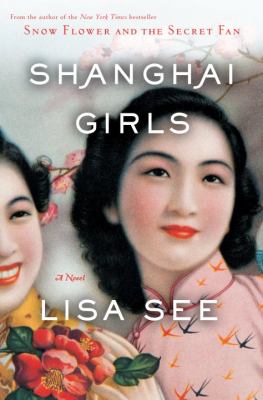
#27 - Shanghai Girls

Lisa See's Shanghai Girls (New York: Random House, 2009) was another pleasant surprise. I'd read Peony in Love, by the same author, and was pretty underwhelmed; maybe it's that I just can't get excited about a story where the main character is a ghost.

Summary: "In 1937, Shanghai is the Paris of Asia, full of great wealth and glamour, home to millionaires and beggars, gangsters and gamblers, patriots and revolutionaries, artists and warlords. Twenty-one-year-old Pearl Chin and her younger sister May are having the time of their lives, thanks to the financial security and material comforts provided by their father’s prosperous rickshaw business. Though both wave off authority and traditions, they couldn’t be more different. Pearl is a Dragon sign, strong and stubborn, while May is a true Sheep, adorable and placid. Both are beautiful, modern, and living the carefree life ... until the day their father tells them that he has gambled away their wealth, and that in order to repay his debts he must sell the girls as wives to suitors who have traveled from Los Angeles to find Chinese brides.

As Japanese bombs fall on their beloved city, Pearl and May set out on the journey of a lifetime, one that will take them through the villages of south China, in and out of the clutch of brutal soldiers, and across the Pacific to the foreign shores of America. In Los Angeles, they begin a fresh chapter, trying to find love with their stranger husbands, brushing against the seduction of Hollywood, and striving to embrace American life, even as they fight against discrimination, brave Communist witch hunts, and find themselves hemmed in by Chinatown’s old ways and rules.

At its heart, Shanghai Girls is a story of sisters: Pearl and May are inseparable best friends, who share hopes, dreams, and a deep connection. But like sisters everywhere, they also harbor petty jealousies and rivalries. They love each other but they also know exactly where to drive the knife to hurt the other sister the most. Along the way there are terrible sacrifices, impossible choices and one devastating, life-changing secret, but through it all the two heroines of this astounding new novel by Lisa See hold fast to who they are – Shanghai girls."

Opening line: "'Our daughter looks like a South China peasant with those red cheeks,' my father complains, pointedly ignoring the soup before him."

My take: Yes, Shanghai Girls is both a sweeping family story and an immigrant's tale ... but these descriptions alone don't do it justice. The characters are complex and believable; the plot compelling with just the right amount of surprise (neither predictable nor preposterous). As the above summary suggests, the story opens in 1937 Shanghai, where narrator Pearl and her less clever, more charming younger sister May are livin' la vida loca, garnering just the right amount of fame and fortune by modeling for the "beautiful girls" calendars that are ubiquitous to Shanghai advertising.

No sooner, however, have we gotten a taste of the girls' world than it starts to crumble, and ultimately shatters. Initially, Pearl and May defy their father's order to settle his debts by marrying the sons of a wealthy businessman, but then the full story emerges: Baba's creditor is a notoriously brutal gangster, and until he is paid, no one in the family is safe. The sisters have no other choice but to go through with the wedding, spending but a single night with their new husbands before the brothers depart for L.A. To their grave embarrassment, their new father-in-law publicly inspects their bedding in the morning, revealing that while Pearl and Sam have consummated their marriage, May and the childlike Vern have not.

As Sam, Vern, and their parents depart, Pearl and May promise to sail for America in 2 weeks to join them, but have no real plans to do so. That is, until the Japanese army invades Shanghai. Unable to find Baba, the girls and their mother try to trade in their tickets and flee to Hong Kong, but by now, they are but three among countless refugees. They end up hiring a wheelbarrow puller to carry their foot-bound mother as far as he can, stopping at the odd farmhouse along the way for food and rest, until ultimately, the soldiers catch up with them. Mama's attempt to protect her daughters, and later, Pearl's effort to save both Mama and May, have grave, life-altering consequences for all three of them.

All in all, an outstanding story, with a not-too-tidy ending (a plus, in my book). Highly recommended.

Monday, January 18, 2010

More quickies

Also recently finished 2 young adult books of note.

I read Cynthia Voight's Homecoming (New York: Athenium, 1981) with Littlehazel; finished it a week ago. Wow. Homecoming is the first book in Voight's seven-volume Tillerman cycle, and I can't believe I never came across the books before. It tells the story of four siblings, ranging in age from 13 to 6, who are abandoned in the parking lot of a shopping mall on the Rhode Island-Connecticut border by their poor and emotionally fragile mother. Their father walked out of their lives before the youngest child's birth, and they know no other friends or relatives to turn to, so Dicey, the eldest (with some input from brainy, 10 year old James), decides their only option is to walk to Bridgeport, where their mother had been taking them, in search of an elderly aunt they've never met. Book One follows their journey; Book Two chronicles what happens after they arrive, only to find Aunt Cilla dead, and her daughter, cousin Eunice, not quite what they'd expected.

Interesting to read this while Littlehazel's class was doing a project on survival stories. We've read Island of the Blue Dolphins and Julie of the Wolves, but a tale of survival in a mostly contemporary setting (cheaper food and fewer restrictions on unaccompanied kids notwithstanding) is a whole 'nother kettle of fish. We're partway through the sequel, Dicey's Song, as I speak. An excellent parent-and-child or teacher-and-student read-aloud (or read-together).

The second YA book was Here's to You, Rachel Robinson, by Judy Blume (New York: Orchard Books, 1993) -- and OK, I can't blame this on my daughter; this one was just me. Like most girls of a certain age, I loved Judy Blume's books as a grade-schooler, and can't resist picking 'em up when I stumble on them now -- especially ones like this that were published long after I'd outgrown the genre. This is a sequel to Just as Long as We're Together, which Littlehazel owns, and which both of us have read. Here, though, the protagonist isn't Stephanie, but her gifted best friend Rachel, who, in seventh grade, has more than enough on her plate. Older brother Charles has been kicked out of boarding school and seems to delight in making the family's life hell. And frankly, between mom's pending judicial appointment, big sister Jessica's cystic-acne-and-prom troubles, and cousin Tarren's single parenthood, there's not much room for Rachel to be anything less than perfect. Stephanie and Allison, the new girl from Just as Long, seem to spend more time together and have more in common than Rachel does with either of them. And if that's not enough, her teachers and friends are pushing her to join yet more school activities, from natural helpers to class president to ... argh! It's enough to make you want to scream. In short, Blume does indeed still have it, writing for grade schoolers and tweens in a way that's realistic without being preachy.

Sunday, November 29, 2009

123 - The Story Sisters

Thanksgiving Break edition, part 1. 123 was The Story Sisters, another one by Alice Hoffman (Shaye Areheart, 2009).

Dust jacket blurb: "Alice Hoffman's previous novel, The Third Angel, was hailed as 'an unforgettable portrait of the depth of true love' (USA Today), 'stunning' (Jodi Picoult), and 'spellbinding' (Miami Herald). Her new novel, The Story Sisters, charts the lives of three sisters -- Elv, Claire, and Meg. Each has a fate she must meet alone: one on a country road, one in the streets of Paris, and one in the corridors of her own imagination. Inhabiting their world are a charismatic man who cannot tell the truth, a neighbor who is not who he appears to be, a clumsy boy in Paris who falls in love and stays there, a detective who finds his heart's desire, and a demon who will not let go.

"What does a mother do when one of her children goes astray? How does she save one daughter without sacrificing the others? How deep can love go, and how far can it take you? These are the questions this luminous novel asks."

After reading Property Of, my hopes for savoring the rest of Hoffman's ouvre were high. Now, I'm not so sure. I liked Story Sisters well enough, and found elements of the story excellent -- but overall, I don't think it lived up to its potential. Perhaps Wendy Smith, in this Washington Post review, captures it best:
"It's a rare year that doesn't bring a novel from Alice Hoffman, and those who follow this maddeningly uneven writer have learned to cast a wary eye on each new offering. Will it be Good Alice, poser of uncomfortable moral dilemmas and marvelously rich portraitist of family life ... ? Or will it be Bad Alice, blatantly careless plotter and outrageous overdoer of the magic-beneath-the-surface-of-our-lives shtick ... ? The Story Sisters, actually, is In-Between Alice: excessive and over-determined but ultimately so moving that it overwhelms these faults."
On this last point, I mostly concur. There's a lot to be said for this book, even if I have become suspicious of any novel deemed "luminous" by its jacket, but Hoffman comes near to spoiling it by gilding the lily. The title sisters are simply too darned beautiful, and their imagined language (Arnish, which New York Times reviewer Chelsea Cain describes as "[looking] a little like the Italian a Tolkien elf might speak after a year in Rome") too precious. I'm no stranger to excess verbiage, but the purple description in the first chapter made me feel like I'd wandered into a Danielle Steele novel by mistake:
"The Story sisters were sharing a room on the evening of their grandparents' fiftieth anniversary party. Their mother trusted them completely. They were not the sort of teenagers who would steel from the minibar only to wind up drunk in the hallway, sprawled out on the carpet or nodding off in a doorway, embarrassing themselves and their families. They would never hang out the window to wave away cigarette smoke or toss water balloons onto unsuspecting pedestrians below. They were diligent, beautiful girls, well behaved, thoughtful. Most people were charmed to discover that the girls had a private, shared language. It was lovely to hear, musical. When they spoke to each other, they sounded like birds.

"The eldest girl was Elisabeth, called Elv, now fifteen. Meg was only a year younger, and Claire had just turned twelve. Each had long, dark hair and pale eyes, a startling combination. Elv was a disciplined dancer, the most beautiful in many people's opinions, the one who had invented the Story sisters' secret world. Meg was a great reader and was never without a book; while walking to school she often had one open in her hands, so engrossed she would sometimes trip while navigating familiar streets. Claire was diligent, kindhearted, never one to shirk chores. Her bed was made before her sisters opened their sleepy eyes. She raked the lawn and watered the garden and always went to sleep on time. All were self-reliant and practical, honor students any parent would be proud to claim as their own."
The storybook anniversary party goes wrong when the Story sisters attempt to rescue a (so they think) "mistreated" Central Park carriage horse, only to have Claire break both arms and the horse end up dead. This incident sets the stage for the rest of the novel: a place where innocence is lost, and fairytales go wrong in grotesque, unimagined ways. Early on, we learn that "the worst had happened" already, at least for Elv: the summer of her parents' divorce, when she was eleven, she jumped into a neighbor's car to stop him from abducting Claire, and was snatched and molested in her stead.

The girls never tell Meg or their mother, Annie, and it's this summer that Elv invents Arnish and an fairyland, Arnelle, to go with it. Frankly, this is the part of the story that loses me a bit -- perhaps because we get only snippets of it in retrospect, after the horse-rescuing, arm-breaking party when the trio begins to crumble and Arnelle starts to lose some of its luster. At the same time, Elv loses control, staying out all night, using marijuana and methamphetamine, running around with all sorts of disreputable boys. This could be poignant and gripping, but isn't, really; Hoffman offers no clue as to why, after four years of holding her secret, Elv falls apart so suddenly and so completely. Moreover, we see only her defiance and lashing out at her mother and sisters; I know I'm supposed to assume this behavior is somehow related to her earlier trauma, but with nary a glimpse of what she's thinking and feeling all the while, she just comes off like a spoiled brat.

Eventually, the situation becomes so untenable and Elv so uncontrollable that Annie (reluctantly abetted by her ex-husband Alan) plans an intervention, packing the girls off for a drive to New Hampshire that, unbeknownst to Elv, ends at a therapeutic boarding school. Here, her life is transformed, but it's not the treatment that does it; Elv is quick to get around, rather than with, the Westfield program:
"By the end of the first month Elv had come to understand the school's philosophy. They swiftly broke you down until you were nothing. They destroyed you, then built you back up again. Only they did it their way, the Westfield way. What they wanted were clones, people without minds of their own who had the Westfield agenda imprinted on their souls. ...

"If you wanted to survive in this place, you had to let them think you had given in. The harder you fought, the harder they broke you. You had to hide yourself away. ...

"She wanted to jump up and cheer. Inshead, she said 'Thank you' in a solemn, soft voice. 'I'm grateful for your trust and support.' She had the language of self-help down pat. In group therapy, she told sorrowful stories that shocked everyone. It felt as if she was lying even if it was the truth, how she'd been fed bread and water, how he'd tied her down. When she cried, her tears were made of glass. They broke her in half when they fell to the floor. No one noticed; they thought they were real. As if she would ever cry over what had happened.

"The staff began to like her, she could tell. They pitied her. They though she'd been treated unfairly at home, that she'd come from a dysfunctional family of divorce and shared secrets and was trying to reclaim her life."
No, the change comes when Elv meets Lorry, the brother of one of her classmates, who readers of Property Of will recognize as a classic McKay-style bad boy:
"Lorry liked people to hand over what was precious to them, convinced that they had made their own decision to do so. He was tall and thin, handsome, dark, with hooded eyes and an uncanny ability to read people. Women said he had a lethal smile and that he was difficult to resist. Everyone agreed -- he could talk himself out of just about any kind of trouble. ... Unlike his little brother, he didn't have to brag. He simply knew what he wanted."
Elv finally feels "turned inside out by love", and falls "feetfirst, as though dropped from a bridge." Soon, Lorry reluctantly introduces her to his "fatal flaw": heroin. Before long, Annie's second thoughts get the best of her, and she arrives to sign Elv out of Westfield, but discovers almost immediately that the daughter she brings home has changed, but not as she'd expected. Elv's pre-Westfield hijinks resume with a vengeance, and not surprisingly, a tragedy ensues, tearing the family apart.

The aforementioned Times review calls the latter part of the novel "histrionic," but I disagree. While it's not without its cliches (Annie's illness, and her budding romance with the detective she hires to find the runaway Elv), I found Part 2 far more compelling and believable than Part 1. Elv lives in Queens with Lorry, a stone's throw from her childhood home on Long Island, which, er, happens to be where he works:
"People had to live, didn't they? If a lion took a lamb for its supper, did anyone complain or say it was unnatural? She went with him sometimes when he drove out to Long Island, to wealthy neighborhoods where the people were so rich, they wouldn't miss a few things. And if they did, all they had to do was phone their insurance companies and everything would be replaced within the week. Elv sat behind the wheel of the car, the engine running, the headlights low, chewing on her lip while Lorry robbed houses. She thought of herself as an accomplice, and she savored the word."
Too much more detail at this point would spoil the ending, but suffice it to say that the surviving Storys are left to discover, each in her own way, the perils, power, and limitations of love. As the girls' grandmother, Natalia, muses while sewing a wedding dress, "that was the way love was, invisible, there whether or not you wanted to see it or admit to it." Likewise, in the final chapter, one of the sisters observes:
"The nature of love had totally escaped her until now. She had thought that if you lost it, you could never get it back, like a stone thrown down a well. But it was like the water at the bottom of the well, there when you can't even see it, shifting in the dark. She remembered everything."
Her sister, telling her own daughter stories of a fairyland whose demons have now been exorcised, concurs:
"Maybe some love was guaranteed. Maybe it fit inside you and around you like skin and bones. This is what she remembered and always would: the sisters who sat with her in the garden, the grandmother who stitched her a dress the color of the sky, the man who spied her in the grass and loved her beyond all measure, the mother who set up a tent in the garden to tell her a story when she was a child, neither good nor bad, selfish nor strong, only a girl who wanted to hear a familiar voice as the dark fell down, and the moths rose, and the night was sure to come."

Wednesday, November 18, 2009

119 - The Local News

Trying a slightly new approach here.

My 119th book of the year (wow, do I need to get out more!) was The Local News, by Miriam Gershow (Spiegel & Grau, 2009).

Dust jacket blurb: "Even a decade later, the memories of the year Lydia Pasternak turned sixteen continue to haunt her. As a teenager, Lydia lived in her older brother's shadow. While Danny's athletic skills and good looks established his place with the popular set at school, Lydia's smarts relegated her to the sidelines, where she rolled her eyes at her brother and his meathead friends and suffered his casual cruelty with resigned bewilderment. Though a part of her secretly wished for a return of the easy friendship she and Danny shared as children, another part of her wished Danny would just vanish. And then, one night, he did."

Maybe I'm easy, but both this one and the book that followed it were far better and more thought-provoking than I'd expected them to be. It's always a pleasant surprise when that happens, like getting dragged along to a party where you actually end up having a great time in spite of yourself.

Or maybe I'm just a sucker for smart but lonely high school students. Lydia, our narrator and protagonist, was both even before her brother's disappearance, which transforms her overnight from mere invisibility to downright alienation. The initial chapters, set after the shock of Danny's vanishing has begun to dissipate and the local shopkeepers are no longer so willing to display his "Missing" posters, introduce the themes we and Lydia will become intimately familiar with in the months and chapters to come: the inadequacy of others' good intentions and her own unspoken guilt at not grieving Danny's loss more deeply. Even years after the fact, she fumes silently at a support group meeting:
"Finding myself backed into the overly familiar terrain of heartache and desperation brought out the worst in me. I was cornered, wanting to scream or kick my chair over or run my nails along the chalkboard where the woman had made us brainstorm a list of feeling words about our siblings (love, confusion, fear, sadness, the list began, predictably). I wanted to reel off my own list of shitty things Danny had done to me when we were teenagers (calling me the titless wonder, mashing my face in a pillow once until I couldn't breathe, ignoring me in front of his friends). I wanted to be irreverent and inappropriate. I wanted to shake up the righteous anguish. Going missing, I wanted to yell from some deep, dark pit in the middle of me, was the only interesting thing my brother had ever done."
Perhaps most heartbreaking is Lydia's description of her parents' collapse into numbness, so bereft at the loss of their son that they scarcely notice their daughter:
"We couldn't keep the refrigerator stocked; its contents dwindled to bread heels and condiments in a matter of days. My mom started smoking again, years after having quit. Her energy was both frenetic and focused: she designed posters, concocted overly elaborate phone trees to recruit people for the area sweep searches, and added to her steadily growing stack of index cards, each one scribbled with a 'clue' to helo the police. ... My father became quietly obsessed with the TV news -- local, national, international, as if he couldn't rule out any possibility. Maybe Danny was part of the throngs of Bosnian Serb refugees; maybe he'd been victim to the floods in the Philippines. Dad could go days without speaking. He could sit for hours ... in his sunken chair without once getting up. And we kept running out of toilet paper. Over and over again we had to use tissues instead, until those ran out too and we moved to paper towels, which quickly clogged the pipes. I'd never before had to think about the supply of toilet paper in our household. It had always simply been there. I was fifteen. Up to that point, I'd believed that the world more or less worked -- toilet paper sat on its roll, dinner was served hot at the table, everyone came home at the end of a day -- simply because it was supposed to and it always had."
Unusually perceptive, Lydia describes the "uncomfortable stillness" and "impermeable smell of neglect" which pervade her family's home. She wakes one night to find her father rummaging through Danny's room, making an unearthly sound "like nothing I'd heard from him before, not even after that first night Danny did not return and the next morning and then the night again, when it was clear something had gone terribly wrong. It was a throaty hum of a noise, high-pitched and childish-sounding. No, dog-sounding. He was whimpering."

Only with her best friend, the slight and equally brainy David, can Lydia let her guard down and just be herself. Even that changes, though, when an unexpected and ill-timed kiss renders their once-easy closeness stilted and suspect. "[H]e'd crossed a line, a line which I knew -- instantaneously -- we couldn't just cross back from with the hopes that everything would revert to its rightful place. He'd changed things, created a moment after which nothing would be the same. I already had one of those, recently acquired. One was too much. I couldn't have another. Not now."

Instead, she lets herself be befriended by Lola Pepper, the terminally perky flag team girl ("one significant and humiliating step down in the Franklin High hierarchy from the actual cheerleaders") who's apparently transferred her dogged pursuit of Danny to his sister. Lydia alternately pities and looks down on Lola, but accepts her friendship and invitations for their sheer undemandingness. "It was hard to stay prickly in Lola's world, pliant and fluffy as it was." The two play Hungry Hungry Hippos, Lite Brite, and other long-outgrown toys that still line Lola's closets. She also forges a wary connection with Tip, Danny's best friend and the last person to have seen him, a musclehead who, in his less-than-articulate way, nonetheless "gets" Lydia's isolation:
"'Your problem, Pasternak, is that you're like this little grown-up already. Nobody f-----g knows what to do with you. But like give it a few years. Give it college or something. I don't know, after college, when you have some job running the world and the rest of us are just your little employees, you're going to be like a total guy killer, with like a male secretary and shit."
And then there's Denis Jiminez, the detective assigned to Danny's case. Not only does Denis actually notice and listen to Lydia, he also maintains a "steadfast indifference toward Danny" rather than "[surrendering] to the tales of charisma and popularity and charm and [being] taken in like the rest of them." He even ventures to ask Lydia if she misses her brother, and after a brief flurry of "'Sure. I mean, of course," the floodgates open:
"I talked quickly then -- it came out in a rush -- about the oppressive, nearly suffocating quiet of the house now, but at least we were free of the ever-present vigilance of the tracking and cataloging of Danny Pasternak's every move. I described the countless evenings of waiting for him to get home from swim or football practice as the spaghetti sauce simmered on the stove and my parents busied themselves with tasks, my mother wiping down the dinner table, my father sorting through the mail, but really, all of us just waiting to see if he would come bursting through the door after a missed pass or a butterfly stroke that clocked nineteen seconds slower than usual, full of venom and glowering. Those were dinners spent gingerly passing the rolls, the three of us making polite conversayion, trying to avoid the vitriol that could roll so easily off his tongue ... as my parents impotently chided him.

"I told him about the time when Danny jammed my bedroom door closed with his desk chair so I was trapped inside for hours until my parents got home from work. I told him about when Danny ripped my National Junior Honor Society certificate off the fridge and then denied it when my dad found it torn to bits in the garbage. ...

"I told him then about the whole titless wonder thing, about Danny one time kicking me in the shin and leaving a flowery bruise, about splattering bleach on one of my favorite shirts. I was no longer worried about humiliating myself, instead feeling like this was my chance to shift things permanently, to ensure that Denis would never be lulled by the gravitational pull of all things Danny."
Not surprisingly, Denis's attention and kindness give rise to a wee crush on Lydia's part, inspiring her to put so much effort into organizing clues and leads that he starts to question her motives.

Gershow's take on Lydia seems pitch-perfect, making the reader (at least this one) recall her own awkward, square-peg-in-round-hole adolescence, and then imagine what it would be like to have that overlaid with a tragedy that utterly shatters your family. Lydia describes her sixteenth birthday as "one of those recidivist cold days ... an event marked by almost no one." She's given Lola a fake birth date "to avoid the brownie-and-Rice-Krispies-treat tower, the You look like a monkey and you smell like one too that was a birthday at Lola's lunch table." David, who "had always made me handmade birthday cards on his computer, with inappropriate quotes ... or with pictures of fractals or nebulae," tracks her down as she's leaving school and shoves a card into her hand, but their conversation is artificial, and the card itself downright perplexing:
"It turned out to be store-bought, with a pastel drawing on the front of deer in a field. Inside was a printed poem following a basic meter and simple rhyme scheme (The seasons are turning, one line read; which means you are growing and learning, read the next). At the bottom David had written simply Happy Birthday and signed his name. I was a little surprised. Had he meant it, I wondered, as a bit of a dig? Did he think me now the sort of person we'd always made fun of, the kind who liked this Hallmarky sort of bad poetry?"
She does pass her road test, but freezes up on the drive home and ultimately, humiliatingly, needs to let her father take the wheel. A few months later, as the school year winds down, she's just begun to enjoy ordinary people and pleasures (like the flag team's end-of-year banquet) when Danny's case again takes center stage, a painful and abrupt reminder that Lydia's life will never be normal.

I'm still not sure how I feel about the ending, which takes place at Lydia's ten-year high school reunion. On one hand, it seems a bit tacked-on; on the other, I do appreciate Gershow's restraint in not using this setting as an excuse to wrap everything up in tidy little packages. The effect is less like the Harry Potter & the Deathly Hallows epilogue, which is so pat and perfect it seems a cop-out, and more like Prep, where the protagonist has to be an adult looking back on her teenage years to have the perspective she does. Ultimately, Lydia comes to grips with the loss of what might have been, not just in terms of her own coming of age, but the chance to know and love her brother as an adult.

I'm never good at pithy concluding statements (heck, I'm not much good at pithy anything) but all in all, it was a good read: poignant, funny, believable, and sweet. I may even want to own this one.

Tuesday, October 20, 2009

#107 - Cutting for Stone

Finished Abraham Verghese's Cutting for Stone (Alfred A. Knopf, 2009) last night. Interesting story, but very long and a bit slow-paced at times. Obligatory Times review that inspired me here; longer original review to follow soon.

Wednesday, September 9, 2009

#84 - I See You Everywhere

Oops. Gave this one to Sisterhazel as a gift a year or so ago, based on the jacket flap alone (story of two sisters who live different lives and have their issues, but nonetheless share a strong bond, yadda yadda), without realizing how it ends. Ulp. Remind me not to do that again.

Julia Glass' I See You Everywhere (Pantheon, 2008) is the story of Louisa and Clem (Clement) Jardine. Louisa, four years older, has always half-envied, half-resented Clem's adventurous, peripatetic life, never quite understanding that Clem has her own demons to grapple with. The story jumps around from one time period to another, which was a bit confusing for me, and is told alternately from the two sisters' points of view. We see Clem's summer adventure with their 99 year old maiden Aunt Lucy in Vermont, Louisa's discovery (she's an art editor) of promising young artist Roberto, Louisa's misdirected attempt to seduce Clem's (gay) best friend, ecologist Clem's quest to save an ailing young bear cub in Montana, and Louisa's battles with her marriage and then breast cancer. Again, I don't want to spoil it for you and this isn't so much a book about plot as a story about a relationship, but it's worth a read -- even if I'm still not sure about that ending.

Sunday, March 29, 2009

With a thrill in my head, and a pill on my tongue

Sorry it's been a while, folks -- I got a little over-ambitious with #30 - I Know This Much Is True, by Wally Lamb, marking pages (responsibly, with scraps of paper) and passages willy-nilly with grand plans for a big, pretentious review ... and then of course, couldn't carve time out to actually write it. So now I'm back, determined to just write it up and move on.

At any rate, before I read this book, the title conjured up the corny pop song from the '80s by Spandau Ballet. I expected schmaltz; after all, there's an Oprah's Book Club label displayed proudly on the cover. Well, IMHO, it ain't so. In fact, it's not too much of a stretch to say the book is brilliant, complicated, and multi-layered, and I don't care who knows I think so. (So there! Nyah!) As you've probably heard, if you've paid any attention to popular novels in the 11 years since its publication, I Know This Much Is True is the life story of identical twin brothers who differ in one tremendous regard: one of them has schizophrenia. As the narrator, non-schizophrenic twin Dominick, muses at the beginning of Chapter 3, his relationship with his brother Thomas defines both the novel and his life:

"When you're the sane brother of a schizophrenic identical twin, the tricky thing about saving yourself is the blood it leaves on your hands -- the little inconvenience of the look-alike corpse at your feet. And if you're into both survival of the fittest and being your brother's keeper -- if you've promised your dying mother -- then say so long to sleep and hello to the middle of the night. Grab a book or a beer. Get used to Letterman's gap-toothed smile of the absurd, or the view of the bedroom ceiling, or the indifference of random selection. Take it from godless insomniac. Take it from the uncrazy twin -- the guy who beat the biochemical rap."

The book opens with Thomas, whose delusions have long been religious in nature, sneaking a military-issue knife of his stepfather's into the public library and amputating his own hand while quoting scripture, in a one-man attempt to protest the wrong-headedness of the war in Iraq. From here, it follows the brothers both forward, through Thomas's stay in the local psychiatric hospital, and backward, through their childhood, the gradual and painful onset of Thomas's disease during their college years, and the collapse of Dominick's marriage in the wake of his infant daughter's death.

The story spans 50 years and about 900 pages, but it's never plodding, and only occasionally jumpy or confusing. Not surprisingly, the characters are many and the relationships among them complex. Although she's passed away before the story begins, Thomas and Dominick's mother, Concettina, is a constant presence, as are the unanswered questions she left behind. Chief among these is the identity of the brothers' father, who she never married. Their stepfather, the abusive but complicated Ray, looms at least as large:


"As a kid I had had a recurring fantasy in which my biological father was Sky King, the aventuresome pilot on Saturday morning TV. ... Later, somewhere around the time I began to sprout armpit hair and lift weights down in the cellar, I gave up on heroes and took to buzzing Ray myself, goading him in small ways -- stepping, usually, on the line but not quite over it. I was still afraid of his anger but saw, now, how he punished weakness -- pounced on it. Out of self-preservation, I hid my fear. Smirked at the dinner table, answered him in grudging single syllables, and learned how to look him back in the eye. Because Ray was a bully, I showed him as often as possible that Thomas was the weaker brother. Fed him Thomas to save myself."

Other important players include Dessa, the ex-wife Dominick still loves; Joy, his much-younger live-in girlfriend; ladies-man Leo, his long-time best friend; prison social worker Lisa Sheffer; Dr. Patel, the prison psychiatrist who becomes Dominick's therapist; and the ever-present Ralph Drinkwater, a biracial former classmate of the Birdsey twins who now works as a janitor at the psychiatric hospital.

If this isn't complicated enough, Dominick's acquisition of his grandfather's autobiography provides an extended story-within-a-story, following the arrogant Domenico Tempesta from a modest, troubled childhood in Sicily through his emigration to the U.S., marriage to the beautiful Ignazia, who loathes him; and lasting bedevilment by Ignazia's best friend, Prosperine Tucci. (I'd even argue, though others might disagree, that Prosperine's lengthy recollection of Ignazia's and her own childhood is a story within the story within the story.)

It's been said that I Know This Much Is True is a tad melodramatic, and while I don't fully agree, I do understand the argument. In one admittedly long book, Lamb covers schizophrenia, racism, HIV/ AIDS, SIDS, PTSD, child abuse ... and that's just off the top of my head. That said, little of this save the last few chapters seemed forced to me. After all, these events take place over the course of half a century, and I'd wager that if you go back far enough and/or branch out far enough, most families would find their own share of skeletons in the closet.

At this point, I finished the book almost a week ago and have been at the review long enough that I won't go into more detail -- but I recommend it highly.

Saturday, January 31, 2009

#10 - Three Girls and Their Brother

Yep, I'm just gonna put that out there. "My name is Hazelthyme, and I like to read fluff now and then." There it is, deal with it. (Sheesh, can you tell I hang out with 9 year olds fairly often?)

Anyway, Three Girls and Their Brother (Theresa Rebeck) is pretty much a WYSIWYG book, not serious literature, but entertaining, complete with a warm, fuzzy, feel-good ending. The title characters are 3 attractive but unknown teenagers from Brooklyn who, for no reason other than their striking red hair and their tenuous "literary legacy" (a late grandfather who was a well-known author and critic in his day), are photographed for a high-profile feature in The New Yorker. Daria, 18, is the most determined to succeed as a model, and even a little desparate; after all, in the modeling world, 18 is old. Baby sister Amelia, 14, frankly isn't all that interested, and would rather just go back to her normal high school life, but is dragged along cussing and screaming by her elder sisters and their mother -- a former Miss Tennessee who wants nothing more than to live vicariously through her daughters' youth, beauty, and success.

Things really take a turn for the surreal when the sisters, poised on the edge of stardom, are invited to a private party with Rex Wentworth, a 40-something mega-star with an (until now) hidden penchant for very young girls. He gets a little too friendly with Amelia, who lashes out and ends up biting him in her attempt to fend off his advances, and before they know it, the story is all over the media, and the media all over the girls. Their mother and the girls' agent, the ever-present and perhaps not completely above-board Colette, coerce Amelia into a public apology, which only feeds the media frenzy. When Philip, the girls' 16 year old brother, tries to protect Amelia and egg her on in her snark and eye-rolling, Mom and Colette ship him off to live with Dad and stepmom, and do their best to limit his contact with his sisters. Amelia's fame lands her a role in an off-Broadway play, and though she's not much of an actress, she finds herself much happier and more at home in the theater than in the modeling world. Eventually, seeing how badly Philip's been treated and how vulnerable Amelia is, middle sister Polly, 17, realizes it's up to her to get her feet back on the ground and keep her family intact.

Like I said, pretty much what I'd expected. Not high literature, and doesn't pretend to be ... but still a fun lazy afternoon. 2.5 out of 5 bookmarks.