About Me

Ithaca, New York
MWF, now officially 42, loves long walks on the beach and laughing with friends ... oh, wait. By day, I'm a mid-level university administrator reluctant to be more specific on a public forum. Nights and weekends, though, I'm a homebody with strong nerdist leanings. I'm never happier than when I'm chatting around the fire, playing board games, cooking up some pasta, and/or road-tripping with my family and friends. I studied psychology and then labor economics in school, and I work in higher education. From time to time I get smug, obsessive, or just plain boring about some combination of these topics, especially when inequality, parenting, or consumer culture are involved. You have been warned.
Showing posts with label parenting. Show all posts

Sunday, January 27, 2013

#101: Talk to Me First

Talk to Me First: Everything You Need to Know to Become Your Kids' Go-To Person About Sex, by Deborah Roffman
(Boston: Da Capo Press, 2012)


Summary:
"Nationally acclaimed educator and author of Sex and Sensibility, Deborah Roffman distills her more than thirty years of experience teaching kids -- and their parents -- into this indispensable guide, helping you to be your kids' number one source for information and guidance on human sexuality. Roffman tackles everything from developmental stages to strategies for handling embarrassing or difficult conversations, offering the best way to make sure you both keep talking (and listening)."

Table of Contents:
  1. Getting There First About Sex
  2. Raising Children in a World Gone Upside Down
  3. Parenting Is a Five-Piece Suit
  4. Affirmation: Our Children as Sexual Beings
  5. Information: Folding in the Facts
  6. Clarity About Value: Honing Your Message
  7. The Delicate Art of Limit-Setting
  8. Anticipatory Guidance: Turning Children over to Themselves
  9. Practice Makes Perfect: Let's Go Fishing
My Take:
Here's one where I really wish I'd kept up on my blogging, as I remember this being an especially useful book about parents, kids of all ages, and communications around sexuality (and in general). Unfortunately, enough time has gone by that the book's long been returned to the library and I don't recall enough specifics to comment on in more detail. Oh well. If you're looking for a good book about talking with kids about sex that doesn't push a particular agenda, read this one.  

Wednesday, October 17, 2012

#87: Bringing Up Bebe

Bringing Up Bebe: One American Mother Discovers the Wisdom of French Parenting, by Pamela Druckerman
(New York: Penguin Press, 2012)
Summary:
"When American journalist Pamela Druckerman has a baby in Paris, she doesn't aspire to become a 'French parent.' French parenting isn't a known thing, like French fashion or French cheese. Even French parents themselves insist they aren't doing anything special.

"Yet the French children Druckerman knows sleep through the night at two or three months old, while children of her American friends take a year or more. French kids eat well-rounded meals that are more likely to include braised leeks than chicken nuggets. Her American friends spend their visits resolving spats between their kids, but her French friends sip coffee while the kids play.

"Motherhood itself is a whole different experience in France. There's no role model for the harried new mom with no life of her own. French mothers assume that even good parents aren't at the constant service of their children, and that there's no need to feel guilty about this. They have an easy, calm authority with their kids that Druckerman can only envy.

"Of course, French parenting wouldn't be worth talking about if it produced robotic, joyless children. In fact, French kids are just as boisterous, curious, and creative as Americans. They're just far better behaved and more in command of themselves. While some American toddlers are getting Mandarin tutors and preliteracy training, French kids are -- by design -- toddling around and discovering the world at their own pace.

"With a notebook stashed in her diaper bag, Druckerman -- a former reporter for The Wall Street Journal -- sets out to learn the secrets of raising a society of good sleepers, gourmet eaters, and reasonably relaxed parents. She discovers that French parents are extremely strict about some things, and strikingly permissive about others. And she realizes that to be a different kind of parent, you don't just need a different parenting philosophy. You need a very different view of what a child actually is.

"While finding her own firm non, Druckerman discovers that children -- including her own -- are capable of feats of understanding and autonomy that she'd never imagined."

Table of Contents:
  • French Children Don't Throw Food
  • 1. Are You Waiting for a Child?
  • 2. Paris Is Burping
  • 3. Doing Her Nights
  • 4. Wait!
  • 5. Tiny Little Humans
  • 6. Day Care?
  • 7. Bebe au Lait
  • 8. The Perfect Mother Doesn't Exist
  • 9. Caca Boudin
  • 10. Double Entendre
  • 11. I Adore This Baguette
  • 12. You Just Have to Taste It
  • 13. It's Me Who Decides
  • 13. Let Him Live His Life
  • The Future in French

My Take:
Maybe it's just because it provides some justification for my own parenting style (my admittedly-human and thus imperfect teenager also "did her nights" at 3 months, and has always had a remarkably broad palate), but I enjoyed this book. There's always a danger, when comparing two cultures, to fall into the "A is good, B is bad" trap, and Druckerman does some of this, but she at least acknowledges some of the ways in which American parents may be onto something (for example, the far-greater prevalence of extended breastfeeding), and those in which cultural and political differences undergird those in parenting styles (i.e., it's much easier to establish and enforce widespread norms for parent and child behavior in a country where state-supported creches are ubiquitous and high-quality).

According to Druckerman, the advantages of French parenting essentially boil down to two. First is the concept of attend, or "wait." In the glossary of French parenting that precedes the body of the book, she explains "'Wait' implies that the child doesn't require immediate gratification, and that he can entertain himself." This begins in infancy, when parents pause for a moment before responding to a noise from the baby's room (is she really hungry or wet, or just stirring in her sleep?), and continues to be a common command throughout childhood, whether prompted by kids' requests for snacks or parental attention. The second is the cadre, or framework: "setting firm limits for children, but giving them tremendous freedom within those limits." While this makes sense, I do wish Druckerman had paid more attention here to the role society as a whole plays in setting these limits. Certainly, the prevalence of creches gives the French an edge here, as does (I believe, from what I've read) the far-greater value the French place on assimilation. Nonetheless, as someone who always strove to be a minimalist parent and often felt like an ill-prepared or merely grouchy one, there's more than a little appeal to the notion that a Good Parent need not follow her child around the playground, haul a week's worth of toys around in her diaper bag, or offer a pre-prepared, processed food snack every 30 minutes. (Parisian parents, says Drucker, offer children an afternoon snack -- gouter -- at about 4:30 pm, but otherwise just feed them at mealtimes along with the rest of the family.)

An interesting and thought-provoking read, especially for anyone who's had it up to here with the One True Way/ more self-sacrificing than thou parenting ethic of certain US sub-groups.

Monday, July 9, 2012

#51: Julia's Child

Julia's Child, by Sarah Pinneo (New York: Plume, 2012)

Summary:
"A delectable comedy for every woman who has ever wondered if buying that $6 box of organic crackers makes her a hero or a sucker.

 "Julia Bailey is a mompreneur with too many principles and too little time. Her fledgling company, Julia’s Child, makes organic toddler meals with names like Gentle Lentil and Give Peas a Chance. But before she realizes her dream of seeing them on the shelves of Whole Foods, she will have to make peace between her professional aspirations and her toughest food critics: the two little boys waiting at home. Is it possible to save the world while turning a profit?

Julia's Child is a warmhearted, laugh-out-loud story about motherhood’s choices: organic vs. local, paper vs. plastic, staying at home vs. risking it all."

Opening Line:
"Though I wasn't familiar with the neighborhood, St. Agatha's was easily found in the middle of a leafy Brooklyn street."

My Take:
Funny little book -- really does, as Publisher's Weekly put it, "[Skewer] the cult of the child with an insider’s eye." Unfortunately, as this was the third or fourth BookLite in a row I read a few weeks back, the moment has passed and it seems hardly worth it to go back and remember enough detail to illustrate what I liked about it. If the summary sounds like it might be funny, you might enjoy it.

Thursday, July 5, 2012

#48: Another Piece of My Heart

Another Piece of My Heart, by Jane Green (New York: St. Martin's Press, 2012)

Summary:
"Andi has spent much of her adult life looking for the perfect man, and at thirty-seven, she's finally found him. Ethan--divorced with two daughters, Emily and Sophia--is a devoted father and even better husband. Always hoping one day she would be a mother, Andi embraces the girls like they were her own. But in Emily’s eyes, Andi is an obstacle to her father’s love, and Emily will do whatever it takes to break her down. When the dynamics between the two escalate, they threaten everything Andi believes about love, family, and motherhood—leaving both women standing at a crossroad in their lives…and in their hearts."

Opening Lines:
"The sheets are drenched. Again. Andi takes a long time to wake up, drifting in and out, aware she is hot, then freezing, then finally, when she moves into a state of consciousness, wet."


My Take:
Entertaining but forgettable fluff. (I think this and the next few were the result of a brain-dead phase I had, after a missed connection and a hellacious night in Newark stole half of a precious weekend home with my family.) Till I looked up the title online and read the jacket blurb (the book itself's been returned to the libe long ago) I'd forgotten exactly which one this was. The character's names and a vague memory of reading it in JFK and/or the Syracuse airport brought it back a little ways, but there's not much else I can say about it. The literary equivalent of a movie you won't bother going to see in the theater, but would watch at home some night when there's not much else on.

Wednesday, April 18, 2012

#30: A Grown-Up Kind of Pretty

A Grown-Up Kind of Pretty, by Joshilyn Jackson New York: Grand Central Publishing, 2012)

Summary:
"Every fifteen years, trouble comes after the three Slocumb women. Now, as the youngest turns fifteen, she's desperate to know who used their yard as a makeshift cemetery, and why. The unlikely matriarch, forty-five-year-old Ginny, doesn't know the truth -- she only knows she must do everything in her power to keep it hidden. Between them is Liza, silenced by a stroke, haunted by the choices she made as a teenager, with the answers trapped inside her. To survive Liza's secrets and Mosey's insistent adventures, Ginny must learn to trust the love that braids the strands of their past -- and stop at nothing to defend their future.

"With riveting plot twists and off-kilter characters, A Grown-Up Kind of Pretty introduces three generations of Slocumbs: a child on the cusp of womanhood searching for her true family; a woman whose fight to protect her daughter will toss her headlong into a second chance at first love; and a lost soul rediscovering her voice. New York Times bestselling author Joshilyn Jackson takes us on a wild ride from desperate mystery to a place of firm hope, providing once more that 'she knows how to grab a reader -- and not let go' (USA Today)."

Opening Line:
"My daughter, Liza, put her heart in a silver box and buried it under the willow tree in our backyard."

My Take:
Two chapters in, and weirdness aplenty has been established. Thirty years earlier, Ginny got pregnant at fourteen by a popular high school athlete who plied her with zombie punch, and used the hush money from his family to get away from the shameful gazes in her parents' small town and raise her daughter, Liza, on her own. Fifteen years later, Liza repeats her mother's mistake, disappears a few weeks after her still-unnamed daughter's birth, and returns two years later with a skinny toddler named Mosey who looks oddly unlike her mother and grandmother. Since Mosey's own fourteenth year, both Ginny and Liza have been a wreck, although Ginny desperately hopes that Liza's stroke will be all the bad luck the family's due for another fifteen years.

Then Ginny hires a local yokel to cut down Liza's beloved willow tree so she can put in a swimming pool, in hopes that this will aid Liza's recovery. He finds a silver box containing what Ginny can't help but recognize as the infant Mosey's clothing and toys, along with a tiny infant jawbone. The discovery sends Liza into an anguished rage, screaming words only Ginny and Mosey can decipher: "Umbay! Umbay! Geem, gee!" My baby! My baby! Give me, give!

I, for one, am intrigued.

(Next day) Well, I wasn't disappointed, and can't wait to track down some of Jackson's other novels if this one is any indication. It's not too much of a spoiler to say that both Mosey and Ginny (a/k/a Big) realize early on that the baby beneath the willow is probably Liza's child, in which case ... who the heck is Mosey? Neither knows that the other knows, and Mosey is by turns angry and terrified that Big won't want a thing to do with her once she learns she's not a blood relation. Did Liza steal someone else's baby? If so, does anyone know, and will they come to take Mosey back? And just who was the carney who allegedly fathered Liza's baby, anyway? a different kind of mystery than I'm used to -- less legal and police procedural, more family and relationship stuff -- but plenty of twists and intrigue to keep things interesting.

Wednesday, March 14, 2012

#17: The Anti-Romantic Child

The Anti-Romantic Child: A Story of Unexpected Joy, by Priscilla Gilman (New York: Harper, 2011)

Summary:
"Priscilla Gilman had the greatest expectations for the birth of her first child. Growing up in New York among writers and artists, Gilman experienced childhood as a whirlwind of imagination and creative play. Later, as a student and a scholar of Wordsworth, she embraced the poet's romantic view of children -- and eagerly anticipated her son's birth, certain that he, too, would come 'trailing clouds of glory.' But her romantic vision would not be fulfilled in the ways she dreamed. Though Benjamin was an extraordinary child, the signs of his remarkable precocity were also manifestations of a developmental disorder that would require intensive therapies and special schooling and would dramatically alter the course Priscilla had imagined for her family.

"In The Anti-Romantic Child, a memoir full of lyricism and light, Gilman explores the complexity of our hopes for our children, our families, and ourselves, and the ways in which experience can lead us to reimagine those hopes and expectations. Using Wordsworth's poetry as a touchstone, she speaks intimately of her poignant journey through crisis and disenchantment to a place of peace and resilience. Gilman illuminates the flourishing of life that occurs when we embrace the unexpected, and shows how events and situations often perceived as setbacks can actually enrich us. The Anti-Romantic Child is a courageous and inspiring synthesis of memoir and literature, one that resonates long after you finish the last page."

Opening Line:
"A few weeks after my first child, a boy named Benjamin, was born, a box arrived in the mail from a beloved former professor."

My Take:
As established in my last post (and probably long before that), I'm not a literary scholar ... but I really enjoyed this one nonetheless. Sure, it was a bit overly full of Wordsworth poems for my taste, but they were easy enough to skim (true confessions time), and the overall idea -- deriving meaning and inspiration for the challenges one faces in everyday life from the literature and other art we love -- is an appealing one. (Heck, I may not be a Wordsworth expert, but I've been moved to tears by many a Springsteen or Cohen song and even the occasional cummings, so perhaps my tastes are just a bit more contemporary.)

I'll admit to having been a bit skeptical at the beginning, partly because Gilman seemed to have a rather privileged childhood (especially until her own parents' separation, but even beyond that) and the first few chapters had a bit more name- and place-dropping than my chip-on-the-shoulder blue-collar-upbringing tastes tend to like. (The story about looking at the moon with Dad late one night would be just as sweet if it hadn't been in Spain, for example.) But this largely calms down later on, even if it never totally goes away, and I came to appreciate this sketch of an idyllic childhood as something she remembered and treasured and wanted for her own family precisely because it was both so precious and so fleeting.

And once we (OK, I) got past that stuff, this was one of the better books about parenting a special needs child that I've read. It seemed more honest than both; too many are a bit too syrupy and saint-like, and this one seemed ... I don't know, just more balanced.

Wednesday, January 25, 2012

#112: Then Came You

Then Came You, by Jennifer Weiner (New York: Atria Books, 2011)

Summary:
"The lives of four very different women intertwine in unexpected ways in this new novel ... Each woman has a problem: Princeton senior Jules Wildgren needs money to help her dad cure his addiction; Pennsylvania housewife Annie Barrow is gasping to stay financially afloat; India Bishop yearns to have a child, an urge that her stepdaughter Bettina can only regard with deep skepticism until she finds herself in a most unexpected situation. Interlocking dramas designed to ensnare; bound to be a bestseller. ...

"Weiner has a knack for amazing dialogue and descriptions that ring true and her humor is a constant presence. There isn't a fake, forced or phony tone in any of her writing. In Then Came You, Weiner explores the sensitive issues of infertility, egg donation, and surrogacy, while also delving into the more universal issues surrounding marriage, family relationships, alcoholism, regret, and love. Each chapter is told from the point of view of a different character and as the story unfolds, the role that each woman will play in the life of another is revealed. Annie, a stay-at-home mom, married her high school sweetheart and is now raising her two boys. She decides to become a surrogate to help her family out of their current financial problems. Jules, a recent Princeton graduate, decides to donate her eggs to a fertility clinic hoping that the money she gets can go towards helping her sick father. India is a trophy wife. She recently married a wealthy older man and decides to have a baby. When she can't conceive naturally, she turns to surrogacy. Each individual story is woven together when Bettina, India's stepdaughter, decides to investigate India's past."


Opening Line:
"The man in the suit was watching me again."


My Take:
Hella fun vacation read. (Yeah, I'm way behind in blogging so this is all the reviewing I can do for now. Sorry.)

Thursday, December 8, 2011

#103: Take It Like a Mom

Take It Like a Mom, by Stephanie Stiles (New York: New American Library, 2011).

Summary:
"
One thing sets her apart from other modern-day superheroes: mom genes. Annie Fingardt Forster used to be a lawyer who wore dry-clean only and shaved both legs. But things have changed. Now a stay-at-home mom, she wears cargo pants and ponytails and harbors a nearly pathological hatred towards hipster parents. With a three-year-old and a baby on the way, Annie knows what to expect...at least, she thought she did. Faced with her husband's job loss, pre-school politics, and a playground throwdown with her arch nemesis, Annie realizes that even with her husband and friends by her side, what she really needs is to learn to suck it up-and take it like a mom."

Opening Line:
"Since it's always kind of awkward getting started -- like a blind date, or a first date with a guy you only saw late one night in a bar -- I guess I should tell you right away that my name is Annie."

My Take:
More a sitcom than a real novel. A series of fairly entertaining chapters, but there's no real central conflict here. Ah well, it was a vacation read.

#102: Black and Blue

After wading through about a third of Emotional Intelligence and finally giving up, I read this and the next one while away for Thanksgiving.

Black and Blue, by Anna Quindlen (New York: Random House Trade Paperbacks, 2010)

Summary:
"For eighteen years, Fran Benedetto kept her secret. And hid her bruises. And stayed with Bobby because she wanted her son to have a father. And because, in spite of everything, she loved him. Then one night, when she saw the look on her ten-year-old son's face, Fran finally made a choice -- and ran for both their lives ...

"Now she is starting over in a city far from home, far from Bobby. And in this place she uses a name that isn't hers, and cradles her son in her arms, and tries to forget. For the woman who now calls herself Beth, every day is a chance to heal, to put together the pieces of her shattered self. And every day she waits for Bobby to catch up to her. Because Bobby always said he would never let her go. And despite the flawlessness of her escape, Fran Benedetto is certain of one thing: it is only a matter of time ..."


Opening Line:
"The first time my husband hit me I was nineteen years old."


My Take:
Pretty good, and bonus points for a not-so-tidy, vaguely unsatisfying ending. Never really thought to wonder before about what life must be like for those battered women who do escape.

Saturday, October 22, 2011

#86: The Gap Year

The Gap Year, by Sarah Bird (New York: Alfred A. Knopf, 2011)

Summary:
"From the widely-praised author of The Yokota Officers Club and The Flamenco Academy, a novel as hilarious as it is heartbreaking about a single mom and her seventeen-year-old daughter learning how to let go in that precious moment before college empties the nest.

"In The Gap Year, told with perfect pitch from both points of view, we meet Cam Lightsey, lactation consultant extraordinaire, a divorcee still secretly carrying a torch for the ex who dumped her, a suburban misfit who's given up her rebel dreams so her only child can get a good education.

"We also learn the secrets of Aubrey Lightsey, tired of being the dutiful, grade-grubbing band geek, ready to explode from wanting her 'real' life to begin, trying to figure out love with boys weaned on Internet porn.

"When Aubrey meets Tyler Moldenhauer, football idol-sex god with a dangerous past, the fuse is lit. Late bloomer Aubrey metastasizes into Cam's worst silent, sullen teen nightmare, a girl with zero interest in college. Worse, on the sly Aubrey's in touch with her father, who left when she was two to join a celebrity-ridden nutball cult.

"As the novel unfolds -- with humor, edge-of-your-seat suspense, and penetrating insights about love in the twenty-first century -- the dreams of daughter, mother, and father chart an inevitable, but perhaps not fatal, collision ... "


Opening Line:
"I once believed that I was physiologically incapable of being unhappy while submerged in water."

My Take:
This one was pretty darned good. As the jacket indicates, the story alternates between Cam's and Aubrey's perspectives, but also between different times; Cam's story begins in August 2010, on the eve of Aubrey's scheduled departure for far-away Peninsula College, while Aubrey's starts a year earlier, on the cusp of her senior year when heat exhaustion at band practice leads her to puke on local football star Tyler Moldenhauer.

Both characters are very well-rendered, with a realistic dose of faults. On one hand, Aubrey's so dazzled by the initial scraps of attention Tyler offers that she thinks little about what she herself wants, both in terms of friendships/ Relationships and life in general. On the other, she's seventeen, so this is probably understandable thanks to youth and hormones. It's the little touches here that make the story: Aubrey's being surprised by Tyler's "country teeth" (anyone else in Parkhaven would've had that remedied by orthodontia years ago) and touched by his calling an interviewer for the in-school TV show "son" even though they're presumably only 2 or 3 years apart.

Cam, on the other hand, is both sympathetic and infuriating, in that half-nervous, too-close-for-comfort way. She's always prided herself on the close, open relationship she has with Aubrey -- at least, till a year ago -- but now finds herself agonizing regretfully over all the things they haven't done, from reading The Secret Garden together to staying in the hipper but educationally dodgier Sycamore Heights instead of moving to well-off, uber-conformist Parkhaven where neither of them really fits in. I'm with her here, but on the other hand, her contempt for Tyler is way excessive and off-putting. She can't seem to mention or even think of him without affixing "redneck" or "hillbilly" before his name, and appears to have spent the whole summer disparaging a job that seems pretty darned enterprising for a barely-literate high school grad; Tyler and Aubrey have been raking in the bucks operating a mobile food service van, which Cam can't stop calling a "roach coach."

Put the two together, add in Aubrey's unexpected Facebook friendship and regular online chats with her father, Martin ... and it's clear that something, somewhere is eventually gonna blow. When her part of the story opens, Cam's spent the whole summer laying in enough towels, sheets, and other dorm supplies for a whole floor of freshmen, but Aubrey won't even say two words about her college plans. Cam nags incessantly about how the two of them need to go to the bank together to withdraw her first year's tuition from her trust, but Aubrey constantly insists she's too busy with customers. Did I mention that Cam still carries a torch for Martin, even though he left her for the Next! cult and cut off all contact 16 years ago? Or that her own best friend, bad-a$$, rebel-without-a-cause Dori, serves as both comfort and warning (since Twyla, her own daughter and Aubrey's former best friend, ran off to live with her dad a year ago and hasn't been in touch since)?

A balanced, highly readable novel.

#85: 7 Things Your Teenager Won't Tell You

7 Things Your Teenager Won't Tell You and How to Talk About Them Anyway, by Jennifer Marshall Lippincott and Robin M. Deutsch, Ph.D. (New York: Ballantine, 2005)

Summary:
"Every teenager keeps secrets. If you're like most parents, you worry about what your kids don't tell you. In this guide to keeping pace -- and peace -- with teens, authors Jennifer Lippincott and Robin Deutsch offer a deceptively simple plan for talking to your kids that's based on a simple set of rules: Teens need to stay safe, show respect, and keep in touch."


Table of Contents:

Part I: Our Jobs Redefined


Introduction
  • Job Description
The Rules of Play
  • Our Own Adolescence -- A Look Back
  • Today's Adolescents -- What's Changed?
  • The Case for the Rules of Play
  • Selling the Rules of Play to Our Adolescents
  • Rule #1: Stay Safe
  • Rule #2: Show Respect
  • Rule #3: Keep in Touch
Part II: The Seven Things

1. Their Brains Are To Blame
  • The New News About the Adolescent Brain
  • The Adolescent Brain's Control Mechanisms
  • What We Need to Know About the Limbic System
  • What We Need to Know About the Prefrontal Cortex
  • The Great Brain Drain
  • Substance Abuse and the Adolescent Brain
  • Sleep and the Adolescent Brain
  • How to Deal
2. Truth Is As Malleable As Their Friday Night Plans
  • The Anatomy of an Adolescent Lie
  • Categories of Lies
  • Getting at the Truth
  • How to Deal
3. Controlling Them Is Not the Point
  • The Control Conundrum
  • A New Regime
  • Taking Their Tempraments
  • Playing with Our Adolescents
  • Games It's Okay to Play
  • How to Deal
  • Command of Control
4. The Adolescent Mirror Distorts
  • What We See Is Not What We Get
  • What They See Is Not What We See
  • The Only Adolescent Perspective -- Their Own
  • Time Is on Their Side
  • The Art of the Adolescent Conversation
  • How to Deal
5. Friends Don't Matter As Much As We May Think
  • Friends Versus Companions
  • Their Reality Shows
  • Is a Friend of Our Adolescent's a Friend of Our?
  • The Seven Myths of Peer Influence
  • Friendship Formations
  • How to Deal
6. When We Say No, They Hear Maybe
  • Reality Bytes
  • Values Clarification
  • The Great Adolescent (Parenting) Inhibitors
  • Our Moral Addresses
  • Gender Balancing
  • How to Deal
7. Taking Risks Gives Them Power
  • The Nature of Risk
  • The Power of Risk
  • Balancing the Power Scales
  • Risks Past and Present
  • Degrees of Risk
  • How to Deal
My Take:
The very short jacket blurb above (it's a paperback and most of the back cover is excerpts from reviews) seems appropriate, as there didn't really seem to be all that much to this book. Yes, the point the authors make about the adolescent brain not being fully developed bears repeating (and may well have still fallen into the category of hot this-just-in news when the book as published in 2005). And truth be told, I'll admit to reading about the first half pretty closely and then, well, doing a lot of skimming from there on.

But that aside, unless I missed something major, there just isn't enough substance there for a full book. Most of the communication tips seem pretty self-evident, and certainly have been published elsewhere before this, i.e., you get more info from your teen if you ask non-judgmental, impersonal questions (i.e., "Do many kids drink at parties?" "Hey, I read this article about ... ") than if you start right out accusing and blaming. And the authors' much-touted Rules of Play (stay safe, show respect, keep in touch) are good ideas in theory, but so vague ad to cover pretty much everything and nothing at once. They're also a bit light on the consequences part of parenting.

All in all -- meh. Not awful but not particularly impressive or memorable, either.

Wednesday, September 21, 2011

#66: Sing You Home

Sing You Home, by Jodi Picoult (New York: Atria Books, 2011).

Summary:
"Zoe Baxter has spent ten years trying to get pregnant, and after multiple miscarriages and infertility issues, it looks like her dream is about to come true -- she is seven months pregnant. But a terrible turn of events leads to a nightmare -- one that takes away the baby she has already fallen for, and breaks apart her marriage to Max.

"In the aftermath, she throws herself into her career as a music therapist -- using music clinically to soothe burn victims in a hospital; to help Alzheimer's patients connect with the present; to provide solace for hospice patients. When Vanessa -- a guidance counselor -- asks her to work with a suicidal teen, their relationship moves from business to friendship and then, to Zoe's surprise, blossoms into love. When Zoe allows herself to start thinking of having a family, again, she remembers that there are still frozen embryos that were never used by herself and Max.

"Meanwhile, Max has found peace at the bottom of a bottle -- until he is redeemed by an evangelical church, whose charismatic pastor -- Clive Lincoln -- has vowed to fight the 'homosexual agenda' that has threatened traditional family values in America. But this mission becomes personal for Max, when Zoe and her same-sex partner say they want permission to raise his unborn child.

"Sing You Home explores what it means to be gay in today's world, and how reproductive science has outstripped the legal system. Are embryos people or property? What challenges do same-sex couples face when it comes to marriage and adoption? What happens when religion and sexual orientation -- two issues that are supposed to be justice-blind -- enter the courtoom? And most importantly, what constitutes a 'traditional family' in today's day and age?"

Opening Line:
"One sunny, crisp Saturday in September when I was seven years old, I watched my father drop dead."


My Take:

One of Picoult's better ones. The fact that she limits herself to three characters' different vantage points (Zoe's, Vanessa's, and Max's) helps, as does the remarkable lack of surprise dead children at the end. (Other Picoult veterans will understand.) As one review I came across noted, the book's treatment of the fundamentalists isn't exactly even-handed, and something about Max's brother Reid just seemed too #$%^& perfect to be true (Reid's equally perfect wife, Liddy, works a wee bit better, partly because we see more of her and learn at least something of what makes her tick), but hey -- for a light but not too light piece o' chick lit, it was about what I'd hoped for and better than I'd expected.

Monday, September 5, 2011

#64: The Pile of Stuff at the Bottom of the Stairs

The Pile of Stuff at the Bottom of the Stairs, by Christina Hopkinson (New York: Grand Central Publishing, 2011).

Summary:
"What do you hate most about the one you love? Mary Gilmour doesn't know whether it's his not quite reaching the laundry basket when he throws his dirty clothes at it (but doesn't ever walk over to finish the job) or the balled-up tissues he puts on the bedside table when he has a cold. Is it the way he never completely empties the dishwasher, leaving the 'difficult' items for her to put away, or the fact that she is responsible for all of the domestic tasks in the house just because she's only working part-time?

"Mother to two young boys, Mary knows how to get them to behave the way she wants. Now she's designing the spousal equivalent of a star chart, and every little thing her husband does wrong will go on it. Though Mary knows you're supposed to reward the good behavior rather than punish the bad, the rules for those in middle age are different than the rules for those not even in middle school . . .

"This is the novel for every woman who finds herself frustrated with something (or perhaps everything) her husband does. Harried and hilarious, Mary's trip beyond the breaking point will carry any reader through this wry, astute novel about marriage, motherhood, children, work, and above all, that ever-growing pile of clutter."


Opening Line:
"The solitary jigsaw piece sits in the corner of the living room, daring me to ignore it."

My Take:
I was about to say "add this one right under Sisterhood Everlasting on the list of 'books that turned out way better than they should have,'" but realized that wasn't quite accurate. Sisterhood was OK, even entertaining ... but this is basically just giving it the benefit of my rather low expectations. (The only prior non-young-adult novel of Brashares's I'd read was pretty darned boring, if I remember correctly, and the Sisterhood series up till now is an entertaining beach read or 2 with way too many sequels.)

Pile of Stuff ..., on the other hand, was a few cuts above your basic chick lit, mom flavor, story. This is due in large part to Hopkinson's well-honed gift for satire. When a friend-of-a-friend drops by unannounced and finds Mary's home not quite passing the white glove test, she offers to let her in on the secret, and presses a Post-It with a URL scribbled on it into Mary's palm as if it's a map to Ponce de Leon's elusive fountain. When Mary logs on, she finds a parody of the FlyLady web site that had me in stitches:
"Instead of the virtual magic I've been hoping for, I'm faced with one of the messiest looking web pages I've ever seen, with the exhortations, 'Declutter!,' 'A new program for home executives!' and 'Shiny happy sinks!' I am very confused. Is this really the life-saving secret that Alison has bestowed on me?

"I read on ... I force myself through the myriad exclamation marks to try to make sense of it all. The website tells, I finally discover, of a system by which your house will be spotless and permanently guest-ready, without you having to spend more than fifteen minutes a day on it. Florid testimonials tell of lives and homes transformed by the mere application of the 'dance of disposal,' where the home executive will put on a three-minute song and throw away as many things as she can in its duration. Others speak of the elimination of their 'toxic spot,' which sounds like something I haven't done since I had adolescent acne. All write eulogies as to the transformative powers of the creation of a 'Golden Notebook,' a ring-binder of to-do lists, menu plans and household zones. Doris Lessing, I think, must be so proud.

"I read on, hoping to discover the secret of how you can inspire those that you share your house with to take as much interest in purging household junk as you do, while at the same time wondering why the women behind this site didn't think to perhaps try to declutter some of the excessive exclamation marks littering the prose. My eyes are glazing over just thinking about these commands to enjoy the daily cleaning of my toilet bowl and to have fun while throwing out junk. ...

"But still, I concede, can all these women (and they are all women) be so wrong? ... Before I can change my mind, I sign up for email reminders of how to 'Work the System!' and resolve to give the 'Clutter NoNo!' system of home-executive efficiency a week's trial.

"Day 1. By the time I check my messages at work on Monday morning I have 39 emails from my new friends at ClutterNoNo. I'm confused before I've even read them. How am I supposed to find time to wade through the household detritus if I have to spend all my time wading through my inbox?

"I soon discover that I'm falling woefully behind. I should have set my alarm to get up half an hour before the rest of my family in order to get that toilet bowl really sparkly, as well as making sure that I have put on a 'face' -- by which I think they mean makeup, rather than just pulling one. ...

"Day 2. The house doesn't look much better than it did before. I find I am spending so much time trying to create a nice-looking Golden Notebook that I don't have time to get myself looking 'nice 'n' pretty' for the day. ...

"Day 3. What I am asked to do: fertilize the plants, write outstanding thank-you notes, buy the groceries, balance my checkbook and change dead lightbulbs in the cooker hood. I must tell each member of my family that I love them, and one thing that I think is awesome about their personalities. I must tell myself that I love me, and find five things that I think are awesome about my personality.

"What I actually do: scream.

"Stop it, stop it, stop! You stupid idiotic women! Leave me alone, stop hassling me, why are you on at me all day long? For Christ's sake, stop nagging. Does it really matter if I haven't shampooed the carpet on a Thursday? You're all flaming crazy. ...

"I find the unsubscribe button and then declutter my email inbox of every single last reminder, all 103 of them, from that source of 1950s pinny-wearing nonsense. I breathe out. They're right about one thing, those Clutter NoNo ladies, it does feel wonderful to expunge unwanted crap."
(OK, clearly someone needs to explain digest format to our heroine, but still.)

Then there's Mitzi, Mary's old college friend, now frenemy, who's probably the funniest and most over-the-top character in the book. She's the type who's married a man rich and successful enough that they have not one but two showplace homes, each furnished in oh-so-original, environmentally friendly, perfect taste. She takes great pride in being an at-home mom to four perfectly-coiffed, private-schooled children -- Molyneux, Mahalia, Merle, and Milburn -- despite having a staff of nannies et al. to swoop in whenever anything messy or unfun needs doing. Complains Mary's husband, Joel, at the prospect of a weekend at Mitzi and Michael's country home, "'[W]e'll be expected to way lyrical about ... the wonderful original features and aren't you clever to have found flagstones made from the bones of real organic orphans, and a bath hand-knitted by a thousand Hindu priests and filled with holy water from the river Ganges.'" Yes, said country home visit does finally happen, and proves to be a turning point in the book, in a manner both hilarious and sweet.

Overall, a pleasant surprise to have what initially seemed like someone's admittedly funny blog have so much insight and heart to it.

Wednesday, June 29, 2011

#53: Minding Frankie

Minding Frankie, by Maeve Binchy (New York: Alfred A. Knopf, 2011)

Summary:
"When Noel learns that his terminally ill former flame is pregnant with his child, he agrees to take guardianship of the baby girl once she's born. But as a single father battling demons of his own, Noel can't do it alone.

"Fortunately, he has a competent, caring network of friends, family and neighbors: Lisa, his unlucky-in-love classmate, who moves in with him to help him care for little Frankie around the clock; his American cousin, Emily, always there with a pep talk; the newly retired Dr. Hat, with more time on his hands than he knows what to do with; Dr. Declan and Fiona and their baby son , Frankie's first friends; and many eager babysitters, including old friends Signora and Aidan and Frankie's doting grandparents, Josie and Charles.

"But not everyone is pleased with the unconventional arrangement, especially a nosy social worker, Moira, who is convinced that Frankie would be better off in a foster home. Now it's up to Noel to persuade her that everyone in town has something special to offer when it comes to minding Frankie."

Opening Line:
"Katie Finglas was coming to the end of a tiring day in the salon."

My Take:
I will probably regret this. Binchy used to be an easy go-to when I wanted something light and entertaining, but after reading Heart and Soul in the first few months of this blog, I'd pretty much sworn her off. (Well, I occasionally flip through my old paperback copy of Circle of Friends if I can't sleep, but that's different.) Much like an Irish Anne Rivers Siddons, the author grew formulaic and predictable, and/or I just plain had had enough. We'll see how this one plays out. It is, of course, a library book, so it won't cost me anything other than time.

(afterwards) All in all, I'd give this one somewhere between a B and B-. The story's not nearly as boring and the characters not half as wooden as the ones in Heart and Soul, but Binchy does make the same mistake again here of trying to cram as many characters from her previous novels into supporting roles in this one, and the effect is forced and confusing.

The main characters, for the most part, are fine. Noel is a recovering alcoholic, which I don't think Binchy's touched before (quirky lovable small-town drunks in some of her 1950s and '60s-era novels aside) ... and while this is hardly a serious treatment of how alcoholism affects an individual and family, she at least throws a few relapses in there to make it half-believable. Emily, the American cousin, is a bit too perfect and efficient to believe, and Lisa, the classmate who moves in on a whim after seeing her father bring a prostitute home ... a halfway-interesting character, if one that's been done before (talented but naive young woman falls for charming, utterly fake gentleman? Hello, Ella Lynch from Quentins.) I'm also fine suspending my disbelief about a social worker having any leg to stand on when it comes to putting Frankie in foster care -- the child has a father who's employed, nothing unsafe or unsuitable at home, and babysitters/ extended family galore coming out of the woodwork -- only because Binchy's Irish and I'm not, and I just plain may not get how the social services system works there.

But it's really not necessary to stuff Declan and Fiona, Aidan and Signora, Clara Casey and Frank Ennis, Maude and Simon, and probably several others I'm forgetting into the supporting roles here. A, as I've said before, coincidences like this that mostly work in a small town of 50 years ago aren't really plausible in 21st century Dublin. B, the overall effect ends up being that instead of getting to know a small number of characters pretty well, you're asked to keep track of a few names and details of a whole long list ... most of which still doesn't make sense unless you've read all Binchy's previous books and kept track of the characters from same.

So ... not as bad as I was expecting, but nothing fantabulous, either.

Monday, May 16, 2011

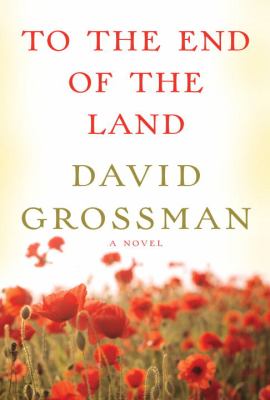
#39: To the End of the Land

To the End of the Land, by David Grossman (translated by Jessica Cohen) (New York: Alfred A. Knopf, 2010)

Summary:
"From one of Israel's most acclaimed writers comes a novel of extraordinary power about family life -- the greatest human drama -- and the cost of war.

"Ora, a middle-aged Israeli mother, is on the verge of celebrating her son Ofer's release from army service when he returns to the front for a major offensive. In a fit of preemptive grief and magical thinking, she sets out for a hike in the Galilee, leaving no forwarding information for the 'notifiers' who might darken her doorstep with the worst possible news. Recently estranged from her husband, Ilan, she drags along an unlikely companion: their former best friend and her former lover Avram, once a brilliant artistic spirit. Avram served in the army alongside Ilan when they were young, but their lives were forever changed one weekend when the two jokingly had Ora draw lots to see which of them would get the few days' leave being offered by their commander -- a chance act that sent Avram into Egypt and the Yom Kippur War, where he was brutally tortured as a POW. In the aftermath, a virtual hermit, he refused to keep in touch with the family and has never met the boy. Now, as Ora and Avram sleep out in the hills, ford rivers, and cross valleys, avoiding all news from the front, she gives him the gift of Ofer, word by word: she supplies the whole story of her motherhood, a retelling that keeps Ofer very much alive for Ora and for the reader, and opens Avram to human bonds undreamed of in his broken world. Their walk has a 'war and peace' rhythm, as their conversation places the most hideous trials of war next to the joys and anguish of raising children. Never have we seen so clearly the reality and surreality of daily life in Israel, the currents of ambivalence about war within one household, and the burdens that fall on each generation anew.

"Grossman's rich imagining of a family in love and crisis makes for one of the great antiwar novels of our time."

Opening Lines:
"Hey, girl, quiet!
"Who is that?
"Be quiet! You woke everyone up!
"But I was holding her
"Who?
"On the rock, we were sitting together
"What rock are you talking about? Let us sleep
"Then she just fell
"All this shouting and singing
"But I was asleep
"And you were shouting!
"She just let go of my hand and fell
"Stop it, go to sleep
"Turn on a light
"Are you crazy? They'll kill us if we do that"


My Take:
Still a bit confused, which usually means cranky about not understanding exactly what's going on -- but I'm hanging in there, hoping there's some meta-intentionality to this on Grossman's part and that all will be revealed in time. The opening sequence above is an extreme example, though it does go on for four pages ... hard to figure out, but as it's a conversation whispered in the dark between 2 fever-stricken patients/ prisoners in an Israeli military hospital/ prison, circa 1967, its disorienting nature can be forgiven.

I'm almost 200 pages into the book now, though, and while subsequent parts are a bit more lucid, there's still a lot I don't know. I do know some of what's been explained on the dust jacket: Ora's still reeling from the collapse of her marriage and the defection of her older son, Adam, so Ofer's being recalled to the army at the eleventh hour really is the last straw. Avram was the victim of horrific torture at Egyptian hands some 33 years earlier, and has lived a marginal, hermit's existence since. It's not fully clear how Ora ended up marrying Ilan rather than Avram, whether this happened before or after Avram was sent to war, and whether Avram is indeed Ofer's father. I guess I'll find out eventually, or discover that it doesn't really matter.

(Later, Thurs., 5/19). Just finished. Yes, you do find out pretty much everything you need to know if you stick with it. I just described the story to Mr. Hazelthyme and from the back story, it sounds rather soap operatic ("You see, Ora, Ilan, and Avram all met as teenagers, and were inseparable. Both of the men were in love with Ora and she with them, though in slightly different ways, and she actually dated both at the same time for a while ... but then by chance, ended up marrying one will the other ended up a POW on the wrong side of the Six Day War and survived, but came back Different.") It's not, though. Mostly, the book follows Ora and Avram on their long hike through the Galilee, during which the two fill each other in on all that's happened in their lives these past 20 years. The pacing is much like many long hikes I've been on -- slow-going at once, but ultimately rewarding for the effort. The short afterward from the author is eerily devastating, as well. If you're interested in an Israeli anti-war voice and in literary fiction, check this one out.

#38: Little Girls Can Be Mean

Little Girls Can Be Mean: Four Steps To Bully-Proof Girls in the Early Grades, by Michelle Anthony and Reyna Lindert (New York: St. Martin's Griffin, 2010).

Summary:
"In
today's world, girls are facing myriad friendship issues, including bullying and cliques. As a parent, you are likely wondering how to guide your daughter through these situations effectively. Little Girls Can Be Mean is the first book to tackle the unique social struggles of elementary-aged girls, giving you the tools to help your child become stronger, happier, and better able to enjoy friendships and handle social cruelty.

"Michelle Anthony and Reyna Lindert's simple, four-step plan will help you become a problem-solving partner with your daughter. They also offer tips for educators and insights that girls can use to confront social difficulties in an empowered way. Whether your daughter is just starting kindergarten or is on her way to middle school, you'll learn how to:
  • observe the social situation with new eyes
  • connect with your child in a new way
  • guide your child with simple, compassionate strategies
  • support your daughter to act more independently to face the social issue.
"By focusing squarely on the issues and needs of girls in the years before adolescence, Little Girls Can Be Mean is the essential go-to guide for any parent, counselor, or educator of girls in grades K-6."

Table of Contents:

I. Laying the Foundation: The Four-Step Approach


1. The Rise of Social Cruelty

2. How Can I Help My Daughter or Student?

  • What Is Bullying?
  • Building the Foundation
  • Facing Tough Situations
  • Following the Four-Step Plan
  • Step 1: Observe
  • Step 2: Connect
  • Step 3: Guide
  • Step 4: Support to Act
  • Integrating the Four Steps
  • How Long Will This All Take?
3. Think, Share, Do ... Activity Bank for Part I

II. The Heart of the Matter: Applying the Four Steps to Real Situations Faced by Real Girls

4. Side by Side: Best Friends, Worst Enemies
  • Dealing with a Turf War
  • When Best Friends Pull Away
  • Yo-Yo Friendships
5. Going Along with the Gang
  • When Girls Struggle to Fit In
  • When Girls Struggle with Feeling "Different"
  • When Girls Struggle with Going Along with the Group
  • When the Group Turns Against Your Child
6. All Girls Can Be Mean: When Your Daughter Is Acting Like a Mean Girl
  • There Are Two Sides to Every Story
  • The Power Rush of Popularity
  • When Girls Struggle with Following the Group
7. Think, Share, Do ... Activity Bank for Part II

III. Wrapping Up: Using the Four Steps in Your Home, School, or Office
  • The Difference Between "Younger" and "Older" Girls
  • Facing All Kinds of Issues, Together
  • She Is Not Alone
My Take:
Meh. Is my guilty love of self-help manuals finally drawing to a close? I guess this one's a useful reminder, or introduction to the principles involved if you're not familiar with the subject, but there didn't seem to be a lot of meat (or non-animal protein, for my vegetarian friends) here. In brief, pay attention to what's going on with your kid even before she explicitly tells you about it; use active listening to draw out both the facts and her feelings; and help her brainstorm about what to do without going all Mama Bear and taking over. Next.


Tuesday, May 10, 2011

#36: Night Road

Night Road, by Kristin Hannah (New York: St. Martin's Press, 2011).

Summary:
"For eighteen years, Jude Farraday has put her children's needs above her own, and it shows -- her twins, Mia and Zach, are bright and happy teenagers. When Lexi Baill moves into their small, close-knit community, no one is more welcoming than Jude. Lexi, a former foster child with a dark past, quickly becomes Mia's best friend. Then Zach falls in love with Lexi and the three become inseparable.

"Jude does everything to keep her kids on track for college and out of harm's way. It has always been easy -- until senior year of high school. Suddenly she is at a loss. Nothing feels safe anymore; every time Mia and Zach leave the house, she worries about them.

"On a hot summer's night her worst fears are realized. One decision will change the course of their lives. In the blink of an eye, the Farraday family will be torn apart and Lexi will lose everything. In the years that follow, each must face the consequences of that single night and find a way to forget ... or the courage to forgive."


Opening Line:
"She stands at the hairpin turn on Night Road."


My Take:

I do love me some chick lit now and again. Light, quick, enough twists to keep it interesting, but predictable enough that you feel like you accomplished something in guessing what was next. I'd read one or two of Hannah's other books before, knew what I was getting into, and wasn't really disappointed. She hasn't yet written as much and/or I haven't yet read enough of her books for them to become as predictable as, say, a Jodi Picoult or Maeve Binchy; either way, I only read a given author in this genre once every 6 months, if that, so it takes a while to get so old as to cease being fun anymore.

So I got about what I expected. Jude as the just-about-perfect, if a tad overprotective, mom is just over-the-top enough to be both funny and oddly sympathetic (at least, until the pivotal event alluded to in the jacket summary above). Lexi really does turn out to be a good kid, rather than the bad apple you might expect, and her aunt Eva, who works at Wal-Mart and lives in a clean if shabby trailer, never had kids ... yet seems to know exactly how to talk to Lexi and what she needs, is a perfect contemporary version of the noble peasant cliche. Zach, even if he's the most popular and best looking boy at school, turns out to just be The World's Nicest Guy, and is apparently never mean to his shyer, somewhat awkward twin sister or her trailer-park new best friend. Yeah, it strains credibility in places, but like I said -- that and the can't-possibly-imagine tragedies are what make our own everyday lives seem manageable and decent by comparison. Not worth owning, but a decent evening's entertainment for those who, like me, prefer lightweight novels to bad TV.

#35: I'm Going to College -- Not You!

I'm Going to College -- Not You! Surviving the College Search with Your Child, edited by Jennifer Delahunty (New York: St. Martin's Press, 2010).

Summary:
"Acceptance by a top college is more than a gold star on a high school graduate's forehead today. It has morphed into the ultimate 'good parenting' stamp of approval -- the better the bumper sticker, the better the parent, right? Parents of juniors and seniors in high school fret over SAT scores and essays, obsessed with getting their kids into the right college, while their children push for independence.

"I'm Going to College -- Not You! is a godsend for parents, written by parents who've been in their shoes. Kenyon College dean Jennifer Delahunty shares her unique perspective (and her daughter's) on one of the toughest periods of parenting, and has assembled a top-notch group of writers that includes bestselling authors, college professors and admissions directors, and journalists. Their experience with the difficult balancing act between control freak and resource answer questions such as:
  • How can a parent be less of a 'helicopter' (hovering) and more of a 'booster rocket' uplifting?
  • What do you do when your child wants to put off college to become a rock star?
  • How will you keep from wanting to kill each other?"
Table of Contents:
Part 1 - Where It All Begins
  • An Unsentimental Education, by Neal Pollack
  • A Cautionary Tale, by Christine VanDeVelde
  • Personal Statement, by Wendy MacLeod
Part 2 - From the Outsiders
  • How to Get Into College Without Really Trying, by Gail Hudson
  • The Age of Reasons, by Joe Queenan
  • Application Madness, by Anne C. Roark
  • A Piece of Cake, by Jan Brogan
Part 3 - From the Insiders
  • Impersonating Wallpaper: The Dean's Daughter Speaks, by Jennifer Delahunty and Emma Britz
  • A Life of Too Much, by Lisa Gates
  • The Kids Are Alright (With Apologies to The Who), by Debra Shaver
  • Let It/Them Be (With or Without Apologies to the Beatles), or How Not to Spend Your Child's Summer Vacation, by Katherine Sillin
Part 4 - From a Mother's Perspective
  • The Deep Pool, by Anna Quindlen
  • When Love Gets in the Way, by June Hamilton
  • Hooked, by Laurie Kutchins
  • Our Quixotic Quests for Utopia U, by Anna Duke Reach
Part 5 - From a Father's Perspective
  • Market Lambs and Chaos Warriors, by Dan Laskin
  • Flowers Will Grow, by Sean Callaway
  • The Worst of Times, the Best of Times: The Scholar-Athlete Applies to College, by David Latt
  • From the Belly of the Whale, by David H. Lynn
  • Where the Chips Fall, by Scott Sadil
Part 6 - Road Trippin'
  • The Most Difficult Year to Get into College in the History of the World: Excerpts from 'The Neurotic Parent' Blog, by The Neurotic Parent
  • Laundry, Lost Luggage, and Lord of the Rings, by Lisa K. Winkler
  • Sound Tracks, by Joy Horowitz
Part 7 - A User's Guide for Parents
  • Love in the Time of College Angst, by S. X. Rosenfeld
  • Wait Outside, by Sarah Kahrl
  • Sophie, Real and Imagined, by Ellen Waterston
  • T-minus Thirteen Minutes and Forty-one Seconds, by Steve Thomas
My Take:
OK, but not exactly what I was expecting. Sure, we're still a few years from this particular milestone in Hazel House, but hey -- sending a sweet, funny girl off to school one morning and getting a moody tween home is sorta the same kind of strange country experience, and I spend enough professional time in the freshman-admissions hothouse to be curious about how it feels from the other side.

In short, this is an anthology of essays. Like all anthologies, it's a mixed bag; I enjoyed some of the pieces more than others, and given the subject matter, it's not surprising that at least a few come off as being a wee bit self-congratulatory. You all know my tolerance for what I recently heard called "first-world annoyances," i.e., upper-middle-class, mostly white people kvetching about problems most folks would give their eyeteeth to have. Yeah, there's some of that here, but it's not all like that. There were two essays by the parents of scholar-athletes, which provided a window on a part of the college selection process I didn't really know much about. I also enjoyed the one by the editor and her daughter, which essentially describes the former's efforts (at the latter's insistence) to remain as invisible as possible while her daughter made a decision that would ultimately surprise them both.

Don't read it seeking advice or coping tips, really -- but if you're in this position and want to feel like someone else understands, or have other reasons to hear what the process is like from a panel of parents who've been there fairly recently, it's worth a read-through.