Home Front, by Kristin Hannah (New York: St. Martin's Press, 2012)
Summary:
"All marriages have a breaking point. All families have wounds. All wars have a cost…
"In her bestselling novels Kristin Hannah has plumbed the depths of
friendship, the loyalty of sisters, and the secrets mothers keep. Now,
in her most emotionally powerful story yet, she explores the intimate
landscape of a troubled marriage -- with this provocative and timely
portrait of a husband and wife, in love and at war.
"Like many couples, Michael and Jolene have to face the pressures of
everyday life — children, careers, bills, chores — even as their twelve
year marriage is falling apart. Then an unexpected deployment sends
Jolene deep into harm’s way and leaves defense attorney Michael at
home, unaccustomed to being a single parent to their two girls. As a
mother, it agonizes Jolene to leave her family, but as a soldier she
has always understood the true meaning of duty. In her letters home,
she paints a rose-colored version of her life on the front lines,
shielding her family from the truth. But war will change Jolene in
ways that none of them could have foreseen. When tragedy strikes,
Michael must face his darkest fear and fight a battle of his own -- for
everything that matters to his family.
"At once a profoundly honest look at modern marriage and a dramatic
exploration of the price of war on an ordinary American family, Home Front is a story of love, loss, heroism, honor and ultimately, hope."
Opening Line:
"On her forty-first birthday, as on every other day, Jolene Zarkades woke before the dawn."
My Take:
Chick lit that doesn't leave you feeling like you've overindulged in Haagen-Dasz when you're done. A good beach or airline read.
About Me
- Hazelthyme
- Ithaca, New York
- MWF, now officially 42, loves long walks on the beach and laughing with friends ... oh, wait. By day, I'm a mid-level university administrator reluctant to be more specific on a public forum. Nights and weekends, though, I'm a homebody with strong nerdist leanings. I'm never happier than when I'm chatting around the fire, playing board games, cooking up some pasta, and/or road-tripping with my family and friends. I studied psychology and then labor economics in school, and I work in higher education. From time to time I get smug, obsessive, or just plain boring about some combination of these topics, especially when inequality, parenting, or consumer culture are involved. You have been warned.
Showing posts with label military. Show all posts
Monday, July 9, 2012
#50: Home Front
Labels:
domestic,
fiction,
love,
marriage,
military,
Pacific Northwest,
US,
US regional,
war
Monday, October 17, 2011
#82: Dead or Alive
Dead or Alive, by Tom Clancy with Grant Blackwood (New York: G.P. Putnam's Sons, 2010)Summary:
"After almost a decade, Tom Clancy -- the acknowledged master of international intrigue and nonstop military action -- returns to the world he knows better than anyone: a world of chaos, caught in the crossfire of politics and power, placed on the edge of annihilation by evil men.
"But there are other men who are honor-bound to stop the bloodshed and protect their homeland-- by any means necessary ...
"It is called the Campus. It was secretly created under the administration of President Jack Ryan, its sole purpose to hunt down, locate, and eliminate terrorists and those who protect them, at will, without sanction or oversight. A self-sufficient entity, it has no official connection to the American government -- a necessity in a time when those in power consider themselves above such arcane concepts as loyalty, justice, and right or wrong.
"Covert intelligence expert Jack Ryan Jr. and his compatriots at the campus have waged this silent war in every corner of the world. Now joined by two of his father's closest allies, black ops warriors John Clark and 'Ding' Chavez, as well as Brian and Dominic Caruso and Mary Pat Foley, the campus has come up against its greatest foe: a sadistic killer known as the Emir.
"The mastermind of countless horrific attacks, the Emir has eluded capture by every law enforcement agency in the world -- a fact that the Campus is determined to change. But his greatest devastation is yet to be unleashed, as he plans a monumental single strike that will destroy the heart of America, unless the Campus can take him, dead or alive.
"On the trail of the emir, Jack Ryan Jr. will find himself following in his legendary father's footsteps on a deadly manhunt that will take him and his allies around the globe, into the shadowy arenas of political gamesmanship, and back onto U.S. soil -- in a battle to prevent the fall of the West ...
"Together for the first time, an all-star cast of Tom Clancy's characters races to ensure the nation's survival and to complete their mission, the desperate search for a madman who may be hiding in plain sight."
Opening Line:
"Light troops -- an Eleven-Bravo light infantryman, according to the United States Army's MOS (military occupational specialty) system -- are supposed to be 'pretty' spit-and-polish troops with spotless uniforms and clean-shaven faces, but First Sergeant Sam Driscoll wasn't one of those anymore, and hadn't been for some time."
My Take:
See, not all my light, entertaining reading is gender-specific!
Sigh. Yeah, it's a Clancy novel ... much like the Danielle Steel fluff I read a few weeks back, you pretty much know what you're getting into when you pick it up (though the specifics are quite a bit different). I could never get that into Jack Ryan's character, and his son doesn't interest me all that much, either, but I have had a big old book-character crush on John Clark ever since I read Without Remorse and Clear and Present Danger way back in the day, and couldn't resist the chance to read about how he and colleague/ son-in-law Domingo Chavez captured Osama bin Laden. (OK, Clancy calls his uber-bad guy Saif Rahman Yasin, dba the Emir, but he's obviously based on bin Laden -- right down to the responsibility for 9/11 and the ties to the Saudi royal family.)
As I'd expected, the complaints I've had about previous Clancy novels still hold for this one. I can never tell if Clancy himself doesn't like women or he's just giving his predominantly male readers what they want, but his stories take place in an almost exclusively masculine universe. With the exception of the no-nonsense, CIA veteran Mary Pat Foley, who plays a bit part here that would land her name just above the stunt doubles if this were made into a movie, only three female characters grace Dead or Alive's 950 pages -- two call girls, and one teenaged Indonesian terrorist. (Clark and Chavez's wives and the way-in-over-her-head National Security Advisor, none of whom actually say anything, don't count.) I'm not looking for a 50/50 split, but come on, now.
Clancy's more recent books also seem to suffer from what I think of as the J.K. Rowling problem: a tendency of famous, successful authors to decide that they don't need no stinkin' editors and will bloat their texts as much as they darned well please, TYVM. Usually, half the fun of a Clancy novel is seeing how the umpteen seemingly disconnected threads are going to come together at the end, but here the author's given us way too much of a good thing. There's the poorly-secured, former Soviet nuclear stockpile; good soldier Driscoll's being railroaded for murder by some Washington desk jockey who has the President's ear; the Indonesia as terrorist petri dish angle; the plot to blow up a Midwestern church ... ugh, I get tired and confused just trying to remember what all the ancillary story lines are. I don't mind so much if and when I can guess at an author's politics from reading his novels, but having it simultaneously flash a neon sign in my face, club me over the head, and stuff itself down my throat is a bit much.
Meh. As with several other authors, I may well read other Clancy books I haven't yet bothered with, if they present themselves ... but I think the author's Clear and Present Danger days are behind him.
Monday, May 16, 2011
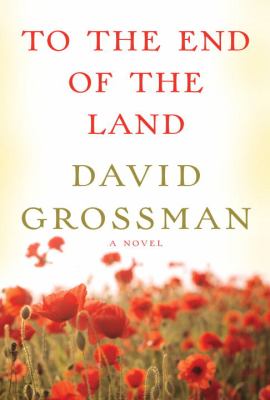
#39: To the End of the Land
To the End of the Land, by David Grossman (translated by Jessica Cohen) (New York: Alfred A. Knopf, 2010)Summary:
"From one of Israel's most acclaimed writers comes a novel of extraordinary power about family life -- the greatest human drama -- and the cost of war.
"Ora, a middle-aged Israeli mother, is on the verge of celebrating her son Ofer's release from army service when he returns to the front for a major offensive. In a fit of preemptive grief and magical thinking, she sets out for a hike in the Galilee, leaving no forwarding information for the 'notifiers' who might darken her doorstep with the worst possible news. Recently estranged from her husband, Ilan, she drags along an unlikely companion: their former best friend and her former lover Avram, once a brilliant artistic spirit. Avram served in the army alongside Ilan when they were young, but their lives were forever changed one weekend when the two jokingly had Ora draw lots to see which of them would get the few days' leave being offered by their commander -- a chance act that sent Avram into Egypt and the Yom Kippur War, where he was brutally tortured as a POW. In the aftermath, a virtual hermit, he refused to keep in touch with the family and has never met the boy. Now, as Ora and Avram sleep out in the hills, ford rivers, and cross valleys, avoiding all news from the front, she gives him the gift of Ofer, word by word: she supplies the whole story of her motherhood, a retelling that keeps Ofer very much alive for Ora and for the reader, and opens Avram to human bonds undreamed of in his broken world. Their walk has a 'war and peace' rhythm, as their conversation places the most hideous trials of war next to the joys and anguish of raising children. Never have we seen so clearly the reality and surreality of daily life in Israel, the currents of ambivalence about war within one household, and the burdens that fall on each generation anew.
"Grossman's rich imagining of a family in love and crisis makes for one of the great antiwar novels of our time."
Opening Lines:
"Hey, girl, quiet!
"Who is that?
"Be quiet! You woke everyone up!
"But I was holding her
"Who?
"On the rock, we were sitting together
"What rock are you talking about? Let us sleep
"Then she just fell
"All this shouting and singing
"But I was asleep
"And you were shouting!
"She just let go of my hand and fell
"Stop it, go to sleep
"Turn on a light
"Are you crazy? They'll kill us if we do that"
My Take:
Still a bit confused, which usually means cranky about not understanding exactly what's going on -- but I'm hanging in there, hoping there's some meta-intentionality to this on Grossman's part and that all will be revealed in time. The opening sequence above is an extreme example, though it does go on for four pages ... hard to figure out, but as it's a conversation whispered in the dark between 2 fever-stricken patients/ prisoners in an Israeli military hospital/ prison, circa 1967, its disorienting nature can be forgiven.
I'm almost 200 pages into the book now, though, and while subsequent parts are a bit more lucid, there's still a lot I don't know. I do know some of what's been explained on the dust jacket: Ora's still reeling from the collapse of her marriage and the defection of her older son, Adam, so Ofer's being recalled to the army at the eleventh hour really is the last straw. Avram was the victim of horrific torture at Egyptian hands some 33 years earlier, and has lived a marginal, hermit's existence since. It's not fully clear how Ora ended up marrying Ilan rather than Avram, whether this happened before or after Avram was sent to war, and whether Avram is indeed Ofer's father. I guess I'll find out eventually, or discover that it doesn't really matter.
(Later, Thurs., 5/19). Just finished. Yes, you do find out pretty much everything you need to know if you stick with it. I just described the story to Mr. Hazelthyme and from the back story, it sounds rather soap operatic ("You see, Ora, Ilan, and Avram all met as teenagers, and were inseparable. Both of the men were in love with Ora and she with them, though in slightly different ways, and she actually dated both at the same time for a while ... but then by chance, ended up marrying one will the other ended up a POW on the wrong side of the Six Day War and survived, but came back Different.") It's not, though. Mostly, the book follows Ora and Avram on their long hike through the Galilee, during which the two fill each other in on all that's happened in their lives these past 20 years. The pacing is much like many long hikes I've been on -- slow-going at once, but ultimately rewarding for the effort. The short afterward from the author is eerily devastating, as well. If you're interested in an Israeli anti-war voice and in literary fiction, check this one out.
Friday, April 29, 2011
#30: The Good Son
The Good Son, by Michael Gruber (New York: Henry Holt and Co., 2010).Summary:
"Special Operations soldier Theo Bailey is right to be concerned when his mother, a controversial Muslim writer, announces that she will be traveling to Pakistan to attend a symposium on peace. His worst fears are realized when the conference participants are taken hostage by a group of terrorists who resolve to execute the captives one at a time for every new Muslim war casualty. Fortunately, Sonia Bailey Laghari is prepared with a few tricks of her own: an astounding facility with languages, the mysterious insights of Jungian psychotherapy, and an unshakeable, at times brutal, sense of faith. While Theo masterminds a high-stakes military operation to save the hostages, his mother discovers in her gift for dream interpretation a psychological tool of great power and subtlety. For her fellow prisoners -- including an eccentric American billionaire, a Jesuit priest, and a married Quaker activist couple -- Sonia's uncanny influence over the captors is their only hope of survival. But life is not all that's at stake: the mounting tumult of their terrifying adventure leads Sonia and Theo ultimately to face the far-reaching questions of culture, morality, religion, and family."
Opening Line:
"The phone rang at a little before one in the morning and I knew it was my mother."
My Take:
Interesting that it was this book, set largely in Pakistan and full of admittedly fictional insights on the differences between the US and the Muslim world, that I was reading when Osama bin Laden was killed. It was a decent read anyhow, but that coincidence made it seem that much more relevant and real.
That aside, it's nice after my last few efforts to actually read something with characters who are sufficiently complex that I was able to care about what they did and what became of them. The Good Son has its flaws, of course -- who and what doesn't? -- but all in all was an enjoyable, intriguing combination of a political thriller and a meaty family saga. In addition to Theo, the self-described "half-breed" offspring of a U.S.-educated Pakistani lawyer and a Polish-American cum good Muslim wife who seems to care far more for soldiering than for which side he's fighting on, and Sonia, his infinitely resourceful chameleon of a mother, the book also spends a good chunk of time with Cynthia Lam, the ambitious NSA language expert who feels bound to call shenanigans on the intelligence that suggests Islamic jihadists have gotten hold of The Bomb even though she doesn't know whether doing so will send her career skyrocketing or just crashing down in flames. (Hint: It's not the former.) As the novel unfolds, so do the secrets of all three characters' pasts, and the often-circuitous routes that led them up to the present day.
While it seems an odd thing to complain about, I couldn't help noticing that Sonia was almost too strong a character. It's established very early on that she's the novel's moral center, which isn't a bad thing -- but she eventually goes from complex and likable to seeming almost too perfect and unflappable. This may be deliberate on Gruber's part, but her role relative to Theo's is almost like Reese Witherspoon's to Joaquin Phoenix's in Walk the Line: he'd be a perfectly solid if not especially memorable leading man, had she not stolen the show out from under him.
I've gotten pretty picky about endings lately, and this one is better than most. I'm not 100% thrilled about how Sonia's piece of the story wraps up -- I won't spoil it for you, but it just seemed a bit too perfect (Jean Auel's Ayla, anyone) for my tastes. While I didn't love what became of Theo or Cynthia, either, I have to admit that both resolutions make sense given what we'd learned of the characters up until that point. Long story short, The Good Son was certainly one of my favorites of the month, if not the year to date, and was strong enough to make me want to check out other books by Michael Gruber when I have the chance.
Sunday, October 24, 2010
#75 - Matterhorn
Matterhorn: A Novel of the Vietnam War, by Karl Marlantes (New York: Atlantic Monthly Press, 2010).Summary: "High in the mountains of South Vietnam, a young lieutenant is flown to an isolated, anonymous hill between Laos and the DMZ where a company of Marines is building a fire-support base. It is his first day in the jungle. From the moment his feet hit the mud -- the brass have named the hill Matterhorn -- his senses are assaulted by a chaotic swirl of monsoon rain and fog, screeching radios and bulldozers, and the stench of almost two hundred men who are some combination of sick, exhausted, filthy, sodden, and scared out of their minds. He has no idea if he is up to this.
"So begins this extraordinary story of second lieutenant Waino Mellas and his comrades in Bravo Company. The year is 1969 and Mellas, a reservist with an Ivy League education and a chip on his shoulder, has been assigned to lead a rifle platoon of forty Marines, most of whom are teenagers. He will need the help of his fellow officers: Fitch, the harried company commander who, at twenty-three, is already straining under the weight of his responsibilities; Hawke, the charismatic executive officer who is suspicious of Mellas's ambition; and Mellas's fellow platoon leaders, Goodwin and Kendall, who have troubles of their own.
"Soon the company is ordered to abandon Matterhorn and embark on a dangerous mission to sever a crucial North Vietnamese supply line. As the Marines navigate the bewildering valleys and switchbacks of the jungle they endure a series of deadly tests -- firefights, mortar attacks, snipers -- and are driven forward by a capricious colonel who, thanks to new technology, is trying to fight the war by long-range radio. They are also dogged by racial tension that threatens to tear the company apart. But when the Marines find themselves confronted by a massive enemy regiment, they are thrust into the raw and all-consuming terror of combat. As each man fights for his life and the lives of his friends, Mellas must face the reality of war, the truth of his motives, and the depth of his commitments. The experience will change him forever."
Opening Line: "Mellas stood beneath the gray monsoon clouds on the narrow strip of cleared ground between the edge of the jungle and the relative safety of the perimeter wire."
My Take: Wow. A complex, gripping war novel that both evokes Catch-22 and leaves its own imprint on the genre. Stayed up till 11:30 last night (yes, this is late for me) turning the pages, because I just had to know how it ended. I don't think I'll ever read a war story or watch a war movie in quite the same way again.
As I wrote after having read just the first chapter, Marlantes isn't afraid to grab you by the throat right from the start, and let you know what kind of a story this is going to be. Even without the constant threat of guerrilla attacks, the raw brutality of the Vietnamese jungle is a character in itself. Within 3 pages of Mellas' arrival in the crude Matterhorn base camp, a squad leader is felled by a leech in his urethra. With the fog too thick to land a medevac chopper, a medic is forced to perform field surgery to save his life. Only then does the medevac helicopter arrive, whisking Fisher off for further treatment in Tokyo, leaving the rest of the company to wonder if he's paid for his survival with childlessness or impotence. Several chapters later, the unit suffers its first casualty (and loses what may be its only true race-transcending friendship) when a Marine is mauled by a tiger. Once again, weather and politics conspire to prevent medevac or even resupply helicopters from landing, and his surviving comrades must carry his body through the jungle for a week ... on no rations. At the risk of trivializing what's clearly as serious a story as they come, I had a similar reaction here as I did when reading the first battle scene in Harry Potter and the Deathly Hallows, in which Rowling blithely kills off Hedwig: "Wow, the author isn't pulling any punches here." War ain't pretty, and Marlantes isn't afraid to say so -- very loudly and clearly, if necessary.
Part of what makes Matterhorn work so well is that it's not your basic action-packed, heroism-everywhere style narrative. As Washington Post reviewer David Maisel explains, comparing Matterhorn to other absurdist war novels,
"All those authors respond to the main shortcoming of traditional war stories, which show the horror of war, but invariably with the tug of adventurism and the beauty that comes through bravery, camaraderie or the glory of a meaningful death. ... [Matterhorn] reads like adventure and yet it makes even the toughest war stories seem a little pale by comparison."While some scenes (particularly the climactic battle, in which a gravely depleted Bravo Company tries to retake Matterhorn from the NVA) do have a very cinematic feel to them, this seems almost inevitable given the subject matter. More to the point, Marlantes's characters are at least as important as the action sequences. In fact, much of what happens flows directly from individual, flawed human beings making the best decisions they can under urgent, chaotic circumstances. When the story opens, Mellas is a green-as-they-come reservist with political ambitions and a Yale Law School admission waiting for him back home. It's a given that this is going to change, and it does, but in a subtle, unforced way; Mellas is the protagonist, yes, but not the full story. Initially, he can't decide whether to befriend or steer clear of Marine lifer Hawke, the former leader of Mellas's own platoon who's now been promoted to XO -- especially as Hawke seems to recognize Mellas's ambitions immediately and isn't afraid to say so.
On their own, Mellas and Hawke might sound a bit like stock characters, and I guess there's some of that there; again, when you're telling an age-old story, it's fair to assume that you'll meet at least a few archetypes. Fortunately, the other members of the company are drawn with sufficient nuance that this isn't a game-stopper. I especially appreciated seeing how, given the civil rights struggle that was going on stateside at the same time, the individual conflicts and events in the book are (pardon the pun) colored by racial tensions and identities: Is perpetual headache sufferer Mallory a chicken$#!+ malingerer, or are his complaints poo-poohed because he's black? Why, why, why, when cerebral malaria afflicts the troops, is it the black soldier who dies and the white one who lives? Who knows better how to further Black Power in the bush: China, who eschews pot and alcohol while steadily stealing weapons to supply the struggle back home; or Henry, who's not above a few worldly vices (or above making a buck from others' vices) and favors a more direct approach?
Perhaps the strongest of Matterhorn's assets is Marlantes' ability to so perfectly capture the absurdity and confusion of war. The forced march with a body and no rations, later dubbed the Trail of Tears Op by its bruised-but-unbroken survivors, results from a pissing contest; blaming commander Fitch's lax discipline for the Marines' hunger and injuries, his own CO refuses to send resupply or medevac choppers, or to slow the companies' punishing pace. Mellas and other less-willing officers struggle time and again to make quick decisions that will save or cost lives, with little more to go on than gut feeling. While there are moments and scenes of devastating, bloody combat, the bulk of the war is tedium, jungle rot, hunger, and exhaustion -- all with a constant undercurrent of fear. As Sebastian Junger, whose New York Times review called it "one of the most profound and devastating novels ever to come out of Vietnam — or any war," put it, [Matterhorn is] not a book so much as a deployment, and you will not return unaltered.
Friday, July 17, 2009
#61 - In the Company of Young Adult books
OK, you know I've taken vacation reading to a new low when I start finding books in the Young Adult section. Even worse, I'm going to blame my daughter. I was at the library with Littlehazel last week, trying desperately not to look at the new adult fiction section that tends to get me in trouble, and I spied Nancy Mace's In the Company of Men: A Woman at The Citadel (Simon & Schuster, 2001) in the YA paperback rack. You can guess the rest.
The author, Mace, was 1 of 4 women admitted to The Citadel in 1996 (the year after the Shannon Faulkner fiasco), and the first to actually graduate. The book is mostly what you'd expect from the memoir of someone who enjoyed their 15 minutes of fame, but was an interesting quick read nonetheless; Mace comes off as fairly modest, neither overdramatizing nor sugar-coating her experience, and provides what's probably a more balanced, realistic account of the knob year than readers of The Lords of Discipline might expect. As she tells it, she entered The Citadel mainly to preserve a family tradition; her father was a well-known Citadel alum, and in fact became Commandant of the Corps during her tenure there. The book focuses mainly on her arrival and first (knob) year at the school, and isn't without humor; the overreaction of her COs to her first menstrual emergency on campus, and the embarrassed reaction of a senior on confiscating what looked like a forbidden food package only to find a box of tampons are two examples. Her overall attitude here seems pretty matter-of-fact: yes, she bore some harrassment solely for being female, but also garnered lots of encouragement for her determination -- most notably, from an upperclassmen who, a week after accusing her of "ruining" his school, admired her Hell Night fortitude, and made her promise not to quit.
All right, enough blogging -- time to get something productive done now.
The author, Mace, was 1 of 4 women admitted to The Citadel in 1996 (the year after the Shannon Faulkner fiasco), and the first to actually graduate. The book is mostly what you'd expect from the memoir of someone who enjoyed their 15 minutes of fame, but was an interesting quick read nonetheless; Mace comes off as fairly modest, neither overdramatizing nor sugar-coating her experience, and provides what's probably a more balanced, realistic account of the knob year than readers of The Lords of Discipline might expect. As she tells it, she entered The Citadel mainly to preserve a family tradition; her father was a well-known Citadel alum, and in fact became Commandant of the Corps during her tenure there. The book focuses mainly on her arrival and first (knob) year at the school, and isn't without humor; the overreaction of her COs to her first menstrual emergency on campus, and the embarrassed reaction of a senior on confiscating what looked like a forbidden food package only to find a box of tampons are two examples. Her overall attitude here seems pretty matter-of-fact: yes, she bore some harrassment solely for being female, but also garnered lots of encouragement for her determination -- most notably, from an upperclassmen who, a week after accusing her of "ruining" his school, admired her Hell Night fortitude, and made her promise not to quit.
All right, enough blogging -- time to get something productive done now.
Monday, June 22, 2009
#54 - The Lucky One
Dingdangity, I will be back on track to read 10 books a month by the end of June, even if it is quantity at the expense of quality. So there!
Every now and then, there's an author who seems to emerge from obscurity overnight, and is suddenly everyplace. Nicholas Sparks is one of them. A year ago, I don't think I'd heard of him; now, he seems to be all over the bookstores and best-seller lists, Nights in Rodanthe was made into a movie, and it seems there's no escaping the juggernaut. Rather than resist the inevitable, I succumbed on my last trip to the library, and this morning over breakfast, I finished The Lucky One (Grand Central, 2008). With a dust jacket blurb that proclaims the author "one of America's most beloved storytellers" or some such rot, I didn't expect high literature; I frankly don't know exactly what I was expecting. If nothing else, I figure there's some value in reading the occasional mass-market best-seller, just to see what the silent majority is reading. Living in Tiny Town, the mecca for everything alternative, where having a mere master's degree makes you undereducated, it's easy to forget that, um, many recreational readers do so Just For Fun.
All right, enough with the rationalizing. The Lucky One wasn't great literature and was pretty darned predictable, but it was still an amusing summer read. It begins by introducing a Bad Guy and Good Guy who are so obvious they may as well have black and white hats on: Keith Clayton, a deputy sheriff whose family owns the better part of Hampton County and who secretly uses the police department's camera to take pictures of pretty young things skinny-dipping; and Logan Thibault ("Thigh-bolt" to Clayton), a long-haired ex-Marine who's walked from Colorado to North Carolina with his dog, Zeus, to track down a mysterious young woman whose photo he found in the Kuwaiti desert. We learn that in the 5 years Thibault's carried the photo, he's had an inexplicable run of good luck, winning big bucks in poker games, and surviving one attack or explosion after another even when most of his buddies were killed. Victor, his one surviving Marine pal, is convinced that the photo is what saved Thibault, and urges him to find the woman. After Victor himself is killed, Thibault takes his advice, and begins his trek across the country.
Not surprisingly, the mysterious E. in the picture is none other than Beth, Clayton's ex-wife. You can guess within about 50 pages where this will go: Thibault is drawn to Beth, and gets on smashingly with her son Ben; Clayton is most displeased; and everything builds toward a dramatic, Hollywood-style climax as we wait to find out if and when Thibault will 'fess up about the photo, and what Clayton will do to keep Beth and Thibault apart.
To make a long story short, this was a slightly glorified romance novel. It grated on my feminist nerves in a few points: Beth's declining to help Thibault and Ben build a kite because it's "guy stuff" and she'd rather bring the lemonade; her asking Thibault out on a date, but insisting he drive and pick up the check; the denigration of Thibault's college girlfriend, who took Women's Studies classes, wore peasant skirts with sandals, and protested for socialist causes on campus. Given the time, I could probably do some extended, cynical musing about the target audience for this book, and about exactly what the author's trying to sell and what strings he's trying to pull ... but I won't. It's an entertaining afternoon, but forgettable overall.
Every now and then, there's an author who seems to emerge from obscurity overnight, and is suddenly everyplace. Nicholas Sparks is one of them. A year ago, I don't think I'd heard of him; now, he seems to be all over the bookstores and best-seller lists, Nights in Rodanthe was made into a movie, and it seems there's no escaping the juggernaut. Rather than resist the inevitable, I succumbed on my last trip to the library, and this morning over breakfast, I finished The Lucky One (Grand Central, 2008). With a dust jacket blurb that proclaims the author "one of America's most beloved storytellers" or some such rot, I didn't expect high literature; I frankly don't know exactly what I was expecting. If nothing else, I figure there's some value in reading the occasional mass-market best-seller, just to see what the silent majority is reading. Living in Tiny Town, the mecca for everything alternative, where having a mere master's degree makes you undereducated, it's easy to forget that, um, many recreational readers do so Just For Fun.
All right, enough with the rationalizing. The Lucky One wasn't great literature and was pretty darned predictable, but it was still an amusing summer read. It begins by introducing a Bad Guy and Good Guy who are so obvious they may as well have black and white hats on: Keith Clayton, a deputy sheriff whose family owns the better part of Hampton County and who secretly uses the police department's camera to take pictures of pretty young things skinny-dipping; and Logan Thibault ("Thigh-bolt" to Clayton), a long-haired ex-Marine who's walked from Colorado to North Carolina with his dog, Zeus, to track down a mysterious young woman whose photo he found in the Kuwaiti desert. We learn that in the 5 years Thibault's carried the photo, he's had an inexplicable run of good luck, winning big bucks in poker games, and surviving one attack or explosion after another even when most of his buddies were killed. Victor, his one surviving Marine pal, is convinced that the photo is what saved Thibault, and urges him to find the woman. After Victor himself is killed, Thibault takes his advice, and begins his trek across the country.
Not surprisingly, the mysterious E. in the picture is none other than Beth, Clayton's ex-wife. You can guess within about 50 pages where this will go: Thibault is drawn to Beth, and gets on smashingly with her son Ben; Clayton is most displeased; and everything builds toward a dramatic, Hollywood-style climax as we wait to find out if and when Thibault will 'fess up about the photo, and what Clayton will do to keep Beth and Thibault apart.
To make a long story short, this was a slightly glorified romance novel. It grated on my feminist nerves in a few points: Beth's declining to help Thibault and Ben build a kite because it's "guy stuff" and she'd rather bring the lemonade; her asking Thibault out on a date, but insisting he drive and pick up the check; the denigration of Thibault's college girlfriend, who took Women's Studies classes, wore peasant skirts with sandals, and protested for socialist causes on campus. Given the time, I could probably do some extended, cynical musing about the target audience for this book, and about exactly what the author's trying to sell and what strings he's trying to pull ... but I won't. It's an entertaining afternoon, but forgettable overall.
Labels:
fiction,
Long Island,
love,
military,
Southern US,
US regional
Subscribe to:
Posts (Atom)