About Me

Ithaca, New York
MWF, now officially 42, loves long walks on the beach and laughing with friends ... oh, wait. By day, I'm a mid-level university administrator reluctant to be more specific on a public forum. Nights and weekends, though, I'm a homebody with strong nerdist leanings. I'm never happier than when I'm chatting around the fire, playing board games, cooking up some pasta, and/or road-tripping with my family and friends. I studied psychology and then labor economics in school, and I work in higher education. From time to time I get smug, obsessive, or just plain boring about some combination of these topics, especially when inequality, parenting, or consumer culture are involved. You have been warned.
Showing posts with label education. Show all posts

Monday, June 6, 2011

#47: The Gatekeepers

The Gatekeepers: Inside the Admissions Process of a Premier College, by Jacques Steinberg (New York: Viking, 2002).

Summary:
"From the fall of 1999 to the spring of 2000, New York Times education reporter Jacques Steinberg was given unparalleled access to an entire admissions season at Wesleyan University in Connecticut. In that time, he discovered just how difficult it could be to winnow down a list of nearly seven thousand applicants to seven hundred freshmen for the class of 2004. Steinberg follows an admissions officer and his eight counterparts through the daunting task of recruiting students nationwide, reading through each of their applications, and meeting behind closed doors for a week in March to finalize the incoming class. He also recounts the personal experiences of a half dozen high school seniors of various ethnic and economic backgrounds as they struggle through the often byzantine selection process. Find out why:
Table of Contents:
  1. The Tortilla Test
  2. Don't Send Me Poems
  3. Istanbul (Not Constantinople)
  4. Considered Without Prejudice
  5. Read Faster, Say No
  6. Thundercats and X-Men
  7. Nothing to Do With the Dope
  8. Things Seem to Have Gone Well
  9. 420-ed
  10. Unnamed Gorgeous Small Liberal Arts School
My Take:
First, this is one of those works of non-fiction that reads like a novel. OK, maybe you won't think so if the inner workings of a highly-selective college admissions office sounds like Snoresville to you, but still. In following senior Wesleyan admissions officer Rafael (Ralph) Figueroa and his top prospects through the course of the admissions cycle, you really start to care about who gets in and who doesn't, who decides to come, and so on. Again, I do work in higher ed, so I may be biased in my interest -- but I also think it's a sign of Steinberg's skill as an author and journalist that he makes you care, and feel mostly like you're reading a story rather than being lectured to.

#46: Debt-Free U

Debt-Free U: How I Paid for an Outstanding College Education without Loans, Scholarships, or Mooching Off My Parents, by Zac Bissonnette (New York: Portfolio/Penguin, 2010).

Summary:
"This book can save you over $100,000. These days, most people assume you need to pay a boatload of money for a quality college education. As a result, students and their parents are willing to go into years of debt and potentially sabotage their entire financial futures just to get a fancy name on their diploma. But Zac Bissonnette is walking proof that this assumption is not only false, but dangerous -- a class con game designed to rip you off and doom your student to a post-graduation life of near poverty . From his unique double perspective -- he's a personal finance expert (at Daily Finance) AND a current senior at the University of Massachusetts -- Zac figured out how to get an outstanding education at a public college, without bankrupting his parents or taking on massive loans. Armed with his personal knowledge, the latest data, and smart analysis, Zac takes on the sacred cows of the higher education establishment. He reveals why a lot of the conventional wisdom about choosing and financing college is not only wrong but hazardous to you and your child's financial future. You'll discover, for instance, that:
"Zac can prove every one of those bold assertions -- and more. No matter what your current financial situation, he has a simple message for parents: 'RELAX! Your kid will be able to get a champagne education on a beer budget!'"

My Take:
Grr. OK, I'll admit up front that my impression of Bissonnette's book is colored in part by his impression of me. No, we haven't met personally, but this guy really, really, REALLY doesn't like financial aid administrators -- says, in fact, that we're a far lower life form than admissions staffers, and our job is just to convince students to attend the schools for which we work by any means necessary (e.g., beaucoup loans). Not since New York's current governor made an anti-corruption name for himself on my colleagues' backs have I felt so publicly insulted. Are there rotten apples in and drawbacks to every profession? Absolutely -- but having some smarmy 20something tar an entire profession with this broad and misleading brush sticks in my craw. All right, I'm done with that rant now.

Sigh. Grudgingly, I do think Bissonnette has some valid points to make here. Prospective students and their families should think long and hard about the value of a private school education if it means borrowing big bucks (in either the parents' or student's name) to get it. The vast majority of privates don't meet students' need, and if that's the case, well ... State U. looks pretty darned good. Contrary to the author's belief, I've said as much to many families in my office. And the majority of students can and should be contributing more from their own earnings toward their educational costs -- both from summer and academic-year work. He also makes several good arguments for not borrowing more money to fund discretionary or lifestyle items while you're in school -- specifically, it may not make sense to borrow through the nose just because you've always wanted to go to school in ___ location, or to live in a luxury dorm room while you're in college, when doing so may well impact where and how you're able to live for WAY more than 4 years after you graduate.

In general, though, the book is best approached as food for thought and an interesting proposal, rather than something that can, should, and will work for everyone. Should parents and high school students question their assumptions about the importance of a college education and where/ how to get it? Absolutely. But replacing the current model with Bissonnette's for everyone, IMO, is no big improvement.

Thursday, May 19, 2011

#41: Higher Education?

Higher Education? How Colleges Are Wasting Our Money and Failing Our Kids -- and What We Can Do About It, by Andrew Hacker and Claudia Dreifus (New York: Times Books, 2010)

Summary:
"A quarter of a million dollars. It's the going tab for four years at most top-tier colleges. Why does it cost so much and is it worth it?

"In this provocative investigation of what really happens on campus today, the renowned sociologist Andrew Hacker and the New York Times writer Claudia Dreifus make an incisive case that the American way of higher education -- now a $420 billion per year business -- has lost sight of its primary mission: the education of our young people. Going behind the myths and mantras, they probe the true performance of the Ivy League, the baleful influence of tenure, an unhealthy reliance on part-time teachers, and supersized bureaucracies that now have lives of their own.

"As Hacker and Dreifus call for a thorough overhaul of a self-indulgent system, they take readers on a road trip from Princeton and Harvard to Evergreen State and Florida Gulf Coast University, revealing those faculties and institutions that need to adjust their priorities and others that are getting it right, proving that teaching and learning can be achieved -- and at a much more reasonable price.

"For parents wondering if they're getting fair value for their tuition dollars, for students who sense that they are an afterthought to professors and administrators, and for citizens concerned about America's ability to foster innovation and compete in an ever more challenging world, Higher Education? is a wake-up call and a call to arms."


Table of Contents:
  • Introduction: Higher Education?
Part 1: What Went Wrong?
  • The World of the Professoriate
  • Administrative Overload
  • Contingent Education
Part 2: Ideals and Illusions
  • The Golden Dozen
  • Teaching: Good, Great, Abysmal
  • The Triumph of Training
Part 3: Some Immodest Proposals
  • Why College Costs So Much
  • Fireproof: The Tangled Issue of Tenure
  • The Athletics Incubus
  • Student Bodies
Part 4: Facing the Future
  • Visiting the Future in Florida
  • The College Crucible: Add Students and Stir
  • Schools We Like -- Our Top Ten List
My Take:
Not expecting to like this one, maybe 'cause I've been one of the bloated administrators the book's going to rail about for most of my career and expect it will hit too close to home. We shall see.

End verdict: Flawed, yes, but much better and less polemic than I was expecting. While there is indeed a chapter on the bloating of college administrative staff in recent decades which questions the necessity of many of the newest additions (registrar, yes; "assistant student success coordinator" and the like, not so much), this isn't the authors' main point. What is is a fairly controversial one: The tenure system, as it currently stands, drives the cost of college education way up without doing much to directly benefit the undergrads whose tuition (at least in part) pays faculty salaries. Lifetime tenure + profs who (in some cases) teach only 2-3 classes per year + generous sabbaticals = the bulk of student course-hours, and nearly all large intro-level classes at many schools, end up taught by adjuncts or grad students anyway. Moreover, Hacker and Dreifus argue that most faculty research contributes little to undergrad education; rather, it tends to be so arcane and specialized that you need to be a grad student (or perhaps a bright upper-level undergrad) to understand it anyway.

I'm not sure I buy all the authors' arguments about the sorry state of modern undergrad education; at least not to the extent that they're advanced here. The too many entitled profs teaching too few courses, too many indentured adjuncts teaching for poverty-level wages argument is interesting, as is the chapter on college athletics (too costly, with too little benefit for either the students or institution) and the one on the "Golden Dozen" (the Ivy League, Stanford, Duke, Amherst, and Williams) and why these schools are neither the only nor a surefire ticket to a successful, lucrative future. But their attack on "training," i.e., colleges offering and students electing anything more than a classical liberal arts education, seems over the top. I'll concede that some specialized schools and majors may be overly narrow, and not worth shelling out $50,000 per year for. But to lump all non-liberal arts majors in this camp seems a bit much. Engineering and architecture, for example, aren't quite the same as (say) fashion merchandising or resort management. Sure, it's possible in any of these cases that a student who choses a specialized major at 18 will decide a year or 2 later that it's not really for her ... but I'm not sure more philosophy and English majors are really the answer here. A generation or 2, 18 or 19 was considered plenty old enough to choose either college or a job, and start trying to make a living. Yes, changes in the economy have made the straight-to-work route far less viable, but I don't know that this justifies postponing the selection of a profession or academic interest still further. Besides, the anti-training bias seems to directly contradict the authors' argument against many of the frills that drive up the price tag of college (moving away from home to live in the dorms, fancy food courts and fitness centers, et al.) If one way to keep college costs manageable is to axe those frills that don't contribute directly to an undergrad's degree, is it unreasonable to want that degree to be worth something and help you get a decent, non-dead-end job when your four years are done?

Also, the authors' closing Top Ten list of schools they like seems random at best, and disingenuous at worst. Arizona State University makes the list even though it's guilty of some pretty egregious adjunct exploitation, and their undergrad education doesn't seem to be all that remarkable ... because they make a positive economic contribution to an otherwise-depressed region of the country, even though the authors have complained in multiple other places about colleges offering institutes for the study of this, that, or the other thing but not actually instructing students. MIT also makes the list because it pays its adjuncts particularly well, with the explicit suggestion that other colleges should be able to do the same ... even though MIT has a tremendous endowment and far more resources than the vast majority of colleges.

For a more detailed review I mostly agree with, check out Richard Kahlenberg's piece in The New Republic. Worth a read, but best to borrow and not buy this one -- especially as I don't think it'll stand the test of time.

REALITY CHECK #000: What They Still Don't Teach You at Harvard Business School

Ended up never finishing this one and returning it half-read after renewing it once. Oh well.

What They Still Don't Teach You at Harvard Business School
, by Mark H. McCormack (New York: Bantam Books, 1989).


Summary:
"The key to executive success is innovation, and if you want to keep up with the times in today's fast-paced global economy, you'd better keep up with Mark McCormack. One of America's hottest entrepreneurs and the author of the million-copy bestseller What They Don't Teach You at Harvard Business School, Mark McCormack is back with an advanced course in street-smart business tactics for the executive headed for the top. What They Still Don't Teach You at Harvard Business School is a book of powerful new strategies designed to help you write your own success story for the 1990s.

"Mark McCormack didn't tell readers everything he knew in What They Don't Teach You at Harvard Business School. In part, that's because the best executives stay open to innovation, constantly seeking out systems and strategies that work better and people who have something new to teach them. Using his proven method of applied people sense, McCormack explodes conventional wisdom and teaches the skills that have contributed to his own stunning success and that of the many senior executives with whom he's worked. The result is a straight-talking practical guide to getting organized, getting ahead, and gaining and keeping the competitive edge. Here are all the winning strategies of buying, selling, managing, and negotiating that will give you the advantage no matter what the situation -- in even the toughest business environments.

"McCormack takes you inside the top corporations to reveal the secrets of supersalesmanchip and match-tough negotiating: how to handle questions you don't want to answer, get more information than you give, and make the kind of offer no one can refuse. Learn how to evaluate a client so that you know what he wants before he asks for it, direct a meeting and set the agenda, write a persuasive memo, and time phone calls for maximum effect -- even how to make business travel easier ... and more productive. What They Still Don't Teach You at Harvard Business School offers telling new insights into:
  • How to land your first great job and make a big impact with limited opportunities
  • How to get the job done in the office or on the road
  • The five attributes of a winner
  • Ten ways careers get stalled -- and how to get them started again
  • Four ways to prove you're worth a higher salary
  • The seven most dangerous people in your company
  • The Ten Commandments of Street Smarts
  • And much, much more
"Written in hard-hitting, no-nonsense language that echoes Mark McCormack's uniquely successful management style, here is savvy advice for executives and executives-to-be on every rung of the corporate ladder. Now you no longer have to struggle to keep up with the competition -- they'll be fighting to keep up with you!"

Table of Contents:
(OK, this is an abridged ToC. The real one is about 6 pages long and I Just Wasn't Gonna Do It.)
Introduction: The Ten Commandments of Street Smarts
1: Selling
2: Negotiating
3: Managing
4: Getting Ahead
5: Getting Organized
6: Communicating
7: Getting the Job Done on the Road
8: Entrepreneuring
Epilogue: Do I Follow My Own Advice?


My Take:

It's always interesting to read books of leadership and management advice, most of which are aimed primarily at those who work in the corporate sector, and see which pieces of the author's wisdom do and don't apply to colleges and universities (and possibly to other non-profits, too). In this case, it'll be interesting to see which pieces of McCormack's advice seem to have stood the test of time, 22 years on, and which haven't. Clearly, I'm not expecting any discussion of e-mail, the internet, or smart phones, which is likely to make the chapters on organization and business travel rather quaint. I'll admit, though, that the introductory chapter, at least, seems plain-spoken and fairly apropos even today. Stay tuned.

Monday, May 16, 2011

#38: Little Girls Can Be Mean

Little Girls Can Be Mean: Four Steps To Bully-Proof Girls in the Early Grades, by Michelle Anthony and Reyna Lindert (New York: St. Martin's Griffin, 2010).

Summary:
"In
today's world, girls are facing myriad friendship issues, including bullying and cliques. As a parent, you are likely wondering how to guide your daughter through these situations effectively. Little Girls Can Be Mean is the first book to tackle the unique social struggles of elementary-aged girls, giving you the tools to help your child become stronger, happier, and better able to enjoy friendships and handle social cruelty.

"Michelle Anthony and Reyna Lindert's simple, four-step plan will help you become a problem-solving partner with your daughter. They also offer tips for educators and insights that girls can use to confront social difficulties in an empowered way. Whether your daughter is just starting kindergarten or is on her way to middle school, you'll learn how to:
  • observe the social situation with new eyes
  • connect with your child in a new way
  • guide your child with simple, compassionate strategies
  • support your daughter to act more independently to face the social issue.
"By focusing squarely on the issues and needs of girls in the years before adolescence, Little Girls Can Be Mean is the essential go-to guide for any parent, counselor, or educator of girls in grades K-6."

Table of Contents:

I. Laying the Foundation: The Four-Step Approach


1. The Rise of Social Cruelty

2. How Can I Help My Daughter or Student?

  • What Is Bullying?
  • Building the Foundation
  • Facing Tough Situations
  • Following the Four-Step Plan
  • Step 1: Observe
  • Step 2: Connect
  • Step 3: Guide
  • Step 4: Support to Act
  • Integrating the Four Steps
  • How Long Will This All Take?
3. Think, Share, Do ... Activity Bank for Part I

II. The Heart of the Matter: Applying the Four Steps to Real Situations Faced by Real Girls

4. Side by Side: Best Friends, Worst Enemies
  • Dealing with a Turf War
  • When Best Friends Pull Away
  • Yo-Yo Friendships
5. Going Along with the Gang
  • When Girls Struggle to Fit In
  • When Girls Struggle with Feeling "Different"
  • When Girls Struggle with Going Along with the Group
  • When the Group Turns Against Your Child
6. All Girls Can Be Mean: When Your Daughter Is Acting Like a Mean Girl
  • There Are Two Sides to Every Story
  • The Power Rush of Popularity
  • When Girls Struggle with Following the Group
7. Think, Share, Do ... Activity Bank for Part II

III. Wrapping Up: Using the Four Steps in Your Home, School, or Office
  • The Difference Between "Younger" and "Older" Girls
  • Facing All Kinds of Issues, Together
  • She Is Not Alone
My Take:
Meh. Is my guilty love of self-help manuals finally drawing to a close? I guess this one's a useful reminder, or introduction to the principles involved if you're not familiar with the subject, but there didn't seem to be a lot of meat (or non-animal protein, for my vegetarian friends) here. In brief, pay attention to what's going on with your kid even before she explicitly tells you about it; use active listening to draw out both the facts and her feelings; and help her brainstorm about what to do without going all Mama Bear and taking over. Next.


Tuesday, May 10, 2011

#35: I'm Going to College -- Not You!

I'm Going to College -- Not You! Surviving the College Search with Your Child, edited by Jennifer Delahunty (New York: St. Martin's Press, 2010).

Summary:
"Acceptance by a top college is more than a gold star on a high school graduate's forehead today. It has morphed into the ultimate 'good parenting' stamp of approval -- the better the bumper sticker, the better the parent, right? Parents of juniors and seniors in high school fret over SAT scores and essays, obsessed with getting their kids into the right college, while their children push for independence.

"I'm Going to College -- Not You! is a godsend for parents, written by parents who've been in their shoes. Kenyon College dean Jennifer Delahunty shares her unique perspective (and her daughter's) on one of the toughest periods of parenting, and has assembled a top-notch group of writers that includes bestselling authors, college professors and admissions directors, and journalists. Their experience with the difficult balancing act between control freak and resource answer questions such as:
  • How can a parent be less of a 'helicopter' (hovering) and more of a 'booster rocket' uplifting?
  • What do you do when your child wants to put off college to become a rock star?
  • How will you keep from wanting to kill each other?"
Table of Contents:
Part 1 - Where It All Begins
  • An Unsentimental Education, by Neal Pollack
  • A Cautionary Tale, by Christine VanDeVelde
  • Personal Statement, by Wendy MacLeod
Part 2 - From the Outsiders
  • How to Get Into College Without Really Trying, by Gail Hudson
  • The Age of Reasons, by Joe Queenan
  • Application Madness, by Anne C. Roark
  • A Piece of Cake, by Jan Brogan
Part 3 - From the Insiders
  • Impersonating Wallpaper: The Dean's Daughter Speaks, by Jennifer Delahunty and Emma Britz
  • A Life of Too Much, by Lisa Gates
  • The Kids Are Alright (With Apologies to The Who), by Debra Shaver
  • Let It/Them Be (With or Without Apologies to the Beatles), or How Not to Spend Your Child's Summer Vacation, by Katherine Sillin
Part 4 - From a Mother's Perspective
  • The Deep Pool, by Anna Quindlen
  • When Love Gets in the Way, by June Hamilton
  • Hooked, by Laurie Kutchins
  • Our Quixotic Quests for Utopia U, by Anna Duke Reach
Part 5 - From a Father's Perspective
  • Market Lambs and Chaos Warriors, by Dan Laskin
  • Flowers Will Grow, by Sean Callaway
  • The Worst of Times, the Best of Times: The Scholar-Athlete Applies to College, by David Latt
  • From the Belly of the Whale, by David H. Lynn
  • Where the Chips Fall, by Scott Sadil
Part 6 - Road Trippin'
  • The Most Difficult Year to Get into College in the History of the World: Excerpts from 'The Neurotic Parent' Blog, by The Neurotic Parent
  • Laundry, Lost Luggage, and Lord of the Rings, by Lisa K. Winkler
  • Sound Tracks, by Joy Horowitz
Part 7 - A User's Guide for Parents
  • Love in the Time of College Angst, by S. X. Rosenfeld
  • Wait Outside, by Sarah Kahrl
  • Sophie, Real and Imagined, by Ellen Waterston
  • T-minus Thirteen Minutes and Forty-one Seconds, by Steve Thomas
My Take:
OK, but not exactly what I was expecting. Sure, we're still a few years from this particular milestone in Hazel House, but hey -- sending a sweet, funny girl off to school one morning and getting a moody tween home is sorta the same kind of strange country experience, and I spend enough professional time in the freshman-admissions hothouse to be curious about how it feels from the other side.

In short, this is an anthology of essays. Like all anthologies, it's a mixed bag; I enjoyed some of the pieces more than others, and given the subject matter, it's not surprising that at least a few come off as being a wee bit self-congratulatory. You all know my tolerance for what I recently heard called "first-world annoyances," i.e., upper-middle-class, mostly white people kvetching about problems most folks would give their eyeteeth to have. Yeah, there's some of that here, but it's not all like that. There were two essays by the parents of scholar-athletes, which provided a window on a part of the college selection process I didn't really know much about. I also enjoyed the one by the editor and her daughter, which essentially describes the former's efforts (at the latter's insistence) to remain as invisible as possible while her daughter made a decision that would ultimately surprise them both.

Don't read it seeking advice or coping tips, really -- but if you're in this position and want to feel like someone else understands, or have other reasons to hear what the process is like from a panel of parents who've been there fairly recently, it's worth a read-through.


Thursday, April 14, 2011

#27: The Irresistible Henry House

The Irresistible Henry House, by Lisa Grunwald (New York: Random House, 2010).

Summary:
"It is the middle of the twentieth century, and in a home economics program at a prominent university, real babies are being used to teach mothering skills to young women. For a young man raised in these unlikely circumstances, finding real love and learning to trust will prove to be the work of a lifetime. In this captivating novel, bestselling author Lisa Grunwald gives us the sweeping tale of an irresistible hero and the many women who love him.

"From his earliest days as a 'practice baby' through his adult adventures in 1960s New York City, Disney's Burbank studios, and the delirious world of the Beatles' London, Henry remains handsome, charming, universally adored -- and never entirely accessible to the many women he conquers but can never entirely trust.

"Filled with unforgettable characters, settings, and action, The Irresistible Henry House portrays the cultural tumult of the mid-twentieth century even as it explores the inner tumult of a young many trying to transcend a damaged childhood. For it is not until Henry House comes face-to-face with the truths of his past that he finds a chance for real love."


Opening Line:
"By the time Henry House was four months old, a copy of his picture was being carried in the pocketbooks of seven different women, each of whom called him her son."


My Take:
Now THAT's more like it!

Monday, March 7, 2011

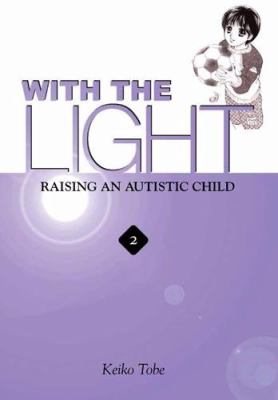
#21: With the Light, Vol. 2

With the Light: Raising an Autistic Child, Vol. 2, by Keiko Tobe (New York: Yen Press, 2008)

Summary:
"Sachiko and Masato Azuma have overcome numerous obstacles in dealing with their firstborn son Hikaru's autism. Having saved their marriage from ending in ruins, the young couple has welcomed a healthy baby girl, Kanon, into their tight-knit family. But with the obvious differences between Hikaru's and Kanon's developmental abilities, it becomes apparent that social prejudices against Hikaru's disability are never far away. As Hikaru moves into fourth grade, Sachiko encounters a new student, Miyu, whose mother has completely given up on her daughter's life, and her own. With the help of Hikaru's beloved teacher, Aoki-sensei, Sachiko aims to bring hope back to Miyu's family. But when Aoki-sensei transfers to a different school and Hikaru's special education class is thrown into upheaval by yet another tragedy, can Sachiko continue to hold onto her own hope for her son's future?"


Opening Line:
"In a corner of the room filled with the orange light of the sunset, Hikaru is looking at a Hina doll."

My Take:
Vol. 2 picks up where Vol. 1 left off, and remains about as compelling. Here, the Azumas delight in seeing their healthy baby daughter, Kanon, grow alongside big brother Hikaru ... squabbling, of course, as siblings will, but for the most part, loving and learning together. Change is inevitable, though, and (if you didn't know it before, you'll remember from Vol. 1) is always really tough on folks with autism. Here, if the marriage and resulting transfer of Hikaru's beloved teacher, Aoki-sensei, wasn't bad enough, the school's stellar principal suddenly disappears, and the special ed class is assigned to the badly burned-out, near-to-retirement Gunji-sensei. Despite the protests of the Azumas, Miyu's mother, and several others, their cherished school becomes nearly unrecognizable. Add in the inevitable missing-kid and bullying problems that all parents must confront, colored by the challenges unique to Hikaru's autism, and we've got ourselves another fine story.

#20: With the Light, Vol. 1

With the Light: Raising an Autistic Child, Vol. 1, by Keiko Tobe (New York: Yen Press, 2007).

Summary:
"Born during the sunrise -- an auspicious beginning -- the Azumas' newborn son is named Hikaru, which means 'light.' But during one play date, his mother notices that her son is slightly different from the other children. In this alternately heartwarming and bittersweet tale, a young mother tries to cope with both the overwhelming discovery of her child's autism and the trials of raising him while keeping her family together. This is a story that resonates not only for those whose families have been affected by autism, but also for all past, present, and future parents."

Opening Line:


My Take:
Usually, we in the House of Hazel follow a flexible but predictable division of labor ... or at least, of recreation. And typically, Filbert (formerly dba Mr. Hazel) and Sprig have the graphic novels covered. I've got my own genres to read up on; manga, in a word, is NotMyJob.

And then things happen. Like, ferinstance, a family trip to the library in the middle of this weekend's snowstorm (yeah, we really do know how to live it up). Having already maxed out my 20-book quota, I decided while waiting for Sprig to finish her own wanderings to sneak up on Filbert in the (ahem) comic book section. Real mature, I know. Well, these books caught my eye. At first I was sure they were mis-shelved; Raising an Autistic Child certainly didn't belong in the manga section. Shows what I and my linear, 20th-century brain know. Turns out With the Light is a sweet, touching, and surprisingly compelling portrait of autism from a mother's view. The books are set in Tokyo and some of the details definitely reflect Japanese culture, but I was amazed at how universal most of the story line and characters were.

Volume 1 opens with Hikaru's birth, and follows his growth and family up through his year in third grade. While I've certainly crossed paths with autistic kids before, With the Light makes their own and especially their parents' experiences seem realer and easier to understand in some ways. We see Sachiko and Masato's marriage strained almost to the breaking point during Hikaru's infancy. Before Sachiko receives and then comes to accept Hikaru's diagnosis, friends and family blame her for his odd behavior, convinced he's slow or naughty because she lets him watch TV or doesn't make all his food from scratch. (Like I said, some aspects of competitive parenting are universal.) Masato, torn between wanting to provide for his family and resenting the long hours required to stay on the fast track for promotion, seems to need more time and energy than he has just to get ahead at work, let alone provide Sachiko with the help and respite she so desperately needs.

Ultimately, they emerge from their struggles as better parents and partners alike, but many more struggles lie ahead. While the classes and helpful staff at the local welfare facility help the Azumas cope with and care for Hikaru, they eventually realize he needs more ... specifically, he needs to learn to interact with other children. After pounding the pavement, they select a day care facility, and Sachiko is able to return to work as an accountant. Time passes, and the family embarks on a similar quest to find the right elementary school -- ultimately landing Hikaru in the special ed classroom of a truly inspired young teacher, Aoki-sensei. Despite regular hiccups, including resentment and misunderstanding on the part of several classmates and their parents, he thrives there ... even as Sachiko becomes pregnant again, and works valiantly to juggle her job, her son's needs, and her changing body. This volume ends shortly after she gives birth to a daughter, Kanon ... during a typhoon, while Masato is out of town, and with some unexpected assistance from the Filipina nightclub girls in the apartment downstairs.

Highly recommended, both to fans of manga and to anyone interested in learning or helping others learn more about autism and its impact on families.


Monday, January 10, 2011

#4: Cum Laude

Cum Laude, by Cecily von Ziegesar (New York: Hyperion, 2010).

Jacket Summary: "Dexter College is a small liberal arts college in the quiet town of Home, Maine. But it won't stay quiet for long with this group of freshmen. There's Shipley -- blonde and beautiful, the object of envy and more than a little lust. Determined to assert herself and to shed her good-girl image, she buys cigarettes and condoms, because that's what every self-respecting college girl does. Her edgy roommate, Eliza, came to Dexter to get noticed, and she has the attitude and the mouth to prove it. There's Tom. Handsome, privileged, used to getting his own way, he's a jock-turned-artist who thinks his paintings will change the world. Sensitive Nick, Tom's wake-and-bake pot-smoking roommate, wants to follow in the footsteps of his boarding-school hero. And then there's brother and sister Adam and Tragedy Gatz. The freckle-faced farm boy lives at home with his parents and his little sister, who does all she can to stop him from being a wuss.

"As Shipley, Eliza, Tom, Nick, and Adam find out, that first year of college is more than credits and cramming. Between the lust and the love, the secrecy and the scandal, they'll all receive an unexpected education. It's a time of shifting alliances, unrequited crushes, and coming of age. Find Yourself is Dexter's motto. And they are determined to do just that."

Opening Lines: "College is for lovers. At least, this one was."

My Take:
Not great literature by any means, yet better than it had any right to be.

When a serious relationship ends, conventional wisdom tells us it's better to be alone for a while than to jump right into another one. And when I return from a week's vacation, treating myself to restaurant-sized portions and/or the guilty pleasures of someone else's home cooking, I somehow just want to eat oatmeal and veggies for a while.

In the same vein, sometimes when I've just finished a Really Good Book, I want some white space around it. As I'd hoped, Cum Laude delivers. While the characters themselves aren't particularly deep or compelling, they're just offbeat enough that this isn't a fatal flaw. Likewise, von Ziegesar's eye for the minute, often ridiculous, but nonetheless realistic details that comprise the freshman experience make the story both familiar and entertaining (in that quasi-awkward, "wow, I'm glad that part of my life's over" sort of way). Some examples: Eliza taking a work-study job as a nude art model, and milking every minute of it. Patrick, the homeless, Dumpster-diving Dexter dropout, floating around the edges of the main characters' consciousness. Every straight man in town developing a sudden, simultaneous obsession with the "It" girl du jour (in this case, Shipley). Tom deciding on a whim to be an art major, and going off on week-long, X-fueled painting binges. Shipley, who loses her virginity to Tom their first night on campus, staying with him mostly because he looks like good boyfriend material, even though she really has the hots for loner townie Adam.

Not surprisingly, other parts of the story line strain credibility. It may be that the characters' family relationships are supposed to be over the top, but still -- only Tom's and Eliza's parents seem remotely realistic or sympathetic (and we never actually see Eliza's on screen, anyway). Likewise, it's hard to imagine that even a relatively sheltered, still-lives-at-home freshman like Adam would opt to spend most of his free time with his 15- or 16-year-old sister (though I will say, for the squeamish among you, that von Ziegesar does resist the urge to add an incest plot line to the novel). I also don't buy the Dexter administration's blithely allowing Nick to construct a yurt on campus, or Eliza's blithe willingness to let Shipley's mom foot the bill (albeit unwillingly) for her new clothes.

Still kept me entertained for an evening, though.

Tuesday, January 4, 2011

#94 - Straight Man

Yes, I know I'm not actually posting this till 2011, but my 94th & final book of 2010 was Straight Man, by Richard Russo (New York: Vintage Books, 1997).

Jacket Summary: "In this uproarious new novel, Richard Russo performs his characteristic high-wire walk between hilarity and heartbreak. Russo's protagonist is William Henry Devereaux, Jr., the reluctant chairman of the English department of a badly underfunded college in the Pennsylvania rust belt. Devereaux's reluctance is partly rooted in his character -- he is a born anarchist -- and partly in the fact that his department is more savagely divided than the Balkans. In the course of a single week, Devereaux will have his nose mangled by an angry colleague, imagine his wife is having an affair with his dean, wonder if a curvaceous adjunct is trying to seduce him with peach pits, and threaten to execute a goose on local television. All this while coming to terms with his philandering father, the dereliction of his youthful promise, and the ominous failure of certain vital body functions. In short, Straight Man is classic Russo -- side-splitting and true-to-life, witty, compassionate, and impossible to put down."

Opening Line: "When my nose finally stops bleeding and I've disposed of the bloody paper towels, Teddy Barnes insists on driving me home in his ancient Honda Civic, a car that refuses to die and that Teddy, cheap as he is, refuses to trade in."

My Take: I always enjoy Russo's books and this one didn't disappoint. Straight Man does for second-tier liberal arts colleges what Jane Smiley's Moo did for the gargantuan public universities of the Midwest. Obviously, most back-cover blurbs tend toward the hyperbolic, but here I have to agree: this is either the saddest comic novel or the funniest sad novel I've read in quite a while. The above summary notwithstanding, it's not quite the laugh-a-minute riot you might expect. Rather, the humor here comes in Hank Devereax's, the supporting characters', and the town of Railton's unvarnished warts-and-all humanity.

I've often said that even when a novel's primarily a character study or portrait of a place, I need at least some plot to hold my interest. In Straight Man, Russo's kind enough to oblige me in this regard. The frame story -- Russo's colleagues' efforts to oust him as chair, while at the same time his dean and old friend is trying desperately to throw him a life jacket -- is serviceable, if not particularly meaty in itself. What holds the reader's attention, though, is wanting to know how all the secondary story lines and characters turn out. Will Hank give in and sleep with his alcoholic colleague's lovely adjunct daughter, the peach-eating Meg? Will his daughter Julie ever grow up and turn responsible? Will his wife, Lily, accept a plum out-of-town job -- and what would that mean for his comfortable, if uninspired, small-town academic life?

Probably one of the most interesting and, to me, appealing aspects of the story and Hank's character is his complete refusal to take anything seriously. I've worked with people like this (hell, I've probably been a person like this), and frankly, usually find them as exasperating as Hank's colleagues and family seem to find him. Here, though, I also saw the pathos and loneliness just beneath the surface -- a testament to Russo's subtlety and skill at capturing the nuances of personality.

Entertaining enough to pass muster as a vacation read, but serious enough not to leave you feeling like you've just eaten a bag of M&Ms. If you're looking for an interesting, moving character story, and can accept its somewhat slow pace as part of its charm, I recommend it highly.

Tuesday, October 26, 2010

#76 - The Calculus of Friendship

The Calculus of Friendship: What a Teacher and a Student Learned about Life While Corresponding About Math, by Steven H. Strogatz (Princeton, NJ: Princeton University Press, 2009).

Summary: "The Calculus of Friendship is the story of an extraordinary connection between a teacher and a student, as chronicled through more than thirty years of letters between them. What makes their relationship unique is that it is based almost entirely on a shared love of calculus. For them, calculus is more than a branch of mathematics; it is a game they love playing together, a constant when all else is in flux. The teacher goes from the prime of his career to retirement, competes in whitewater kayaking at the international level, and loses a son. The student matures from high school math whiz to Ivy League professor, suffers the sudden death of a parent, and blunders into a marriage destined to fail. Yet through it all they take refuge in the haven of calculus -- until a day comes when calculus is no longer enough.

"Like calculus itself, The Calculus of Friendship is an exploration of change. It's about the transformation that takes place in a student's heart, as he and his teacher reverse roles, as they age, as they are buffeted by life itself. Written by a renowned teacher and communicator of mathematics, The Calculus of Friendship is warm, intimate, and deeply moving. The most inspiring ideas of calculus, differential equations, and chaos theory are explained through metaphors, images, and anecdotes in a way that all readers will find beautiful, and even poignant. Math enthusiasts, from high school students to professionals, will delight in the offbeat problems and lucid explanations in the letters. For anyone whose life has been changed by a mentor, The Calculus of Friendship will be an unforgettable journey."


Opening Lines: "Calculus thrives on continuity. At its core is the assumption that things change smoothly, that everything is only infintesimally different from what it was a moment before."

My Take: Coming to this as someone who never got calculus in high school but wishes I was in a position to tackle it anew today -- and someone who's always a sucker for a heartwarming, mentor-mentee story. Let's see ...

(Later, after finishing the book) Sigh. Guess this wasn't the book for me, or I wasn't the reader for it. If you either know calculus or are willing to spend a lot of time teaching yourself to follow the detailed, multi-page problems that form the bulk of Strogatz and Joffrey's correspondence, have at it. Sadly, I don't fall into either camp, and when you strip away the mathematical equations, there just wasn't much left. Oh well.

Monday, July 12, 2010

#55 - The Death & Life of the Great American School System.

The Death and Life of the Great American School System: How Testing and Choice Are Undermining Education, by Diane Ravitch (New York: Basic Books, 2010)

Summary: "As an education historian and former assistant secretary of education, Ravitch has witnessed the trends in public education over the past 40 years and has herself swung from public-school advocate to market-driven accountability and choice supporter back to public-school advocate. With passion and insight, she analyzes research and draws on interviews with educators, philanthropists, and business executives to question the current direction of reform of public education. In the mid-1990s, the movement to boost educational standards failed on political concerns; next came the emphasis on accountability with its reliance on standardized testing. Now educators are worried that the No Child Left Behind mandate that all students meet proficiency standards by 2014 will result in the dismantling of public schools across the nation. Ravitch analyzes the impact of choice on public schools, attempts to quantify quality teaching, and describes the data wars with advocates for charter and traditional public schools. Ravitch also critiques the continued reliance on a corporate model for school reform and the continued failure of such efforts to emphasize curriculum. Conceding that there is no single solution, Ravitch concludes by advocating for strong educational values and revival of strong neighborhood public schools. For readers on all sides of the school reform debate, this is a very important book." (-Vanessa Bush, Booklist)


Table of Contents:
  1. What I Learned About School Reform
  2. Hijacked! How the Standards Movement Turned Into the Testing Movement
  3. The Transformation of District 2
  4. Lessons from San Diego
  5. The Business Model in New York City
  6. NCLB: Measure and Punish
  7. Choice: The Story of an Idea
  8. The Trouble with Accountability
  9. What Would Mrs. Ratliff Do?
  10. The Billionaire Boys' Club
  11. Lessons Learned
My take: Fascinating read, especially coming from someone with Ravitch's background. In short, she argues that current fads in school reform (specifically, high-stakes testing, teacher accountability, and charter schools) ain't all they're cracked up to be. Testing, she argues, tends to mean emphasizing those subjects on which students are tested (specifically, elementary math and reading), and neglecting the many others on which they aren't (social studies, arts, science, languages, et al.) Even within math and reading, the emphasis is on multiple choice drills, rather than real in-depth critical thinking and problem-solving. Similarly, teacher accountability (i.e., basing teachers' pay or continued employment on students' test scores) rewards those who teach to the test, is difficult to track anyway, and just plain leaves out anyone who teaches subjects or levels that aren't subject to standardized testing. And charter schools, according to Ravitch, are the very antithesis of accountable, spending public money with little public oversight; skimming off the choicest students and thus leaving the public schools poorer; and producing results (i.e., test scores) that, at best, are about equal to the public schools'. Real reform, she suggests, concerns itself less with the method by which students are taught, and more with the content. While Death and Life ... is more a critique than a prescription, she calls for national or at least strong statewide curricula, similar to those currently in place in Massachusetts.

Again, definitely worthwhile for those interested in public education issues.