About Me

Ithaca, New York
MWF, now officially 42, loves long walks on the beach and laughing with friends ... oh, wait. By day, I'm a mid-level university administrator reluctant to be more specific on a public forum. Nights and weekends, though, I'm a homebody with strong nerdist leanings. I'm never happier than when I'm chatting around the fire, playing board games, cooking up some pasta, and/or road-tripping with my family and friends. I studied psychology and then labor economics in school, and I work in higher education. From time to time I get smug, obsessive, or just plain boring about some combination of these topics, especially when inequality, parenting, or consumer culture are involved. You have been warned.

Wednesday, September 1, 2010

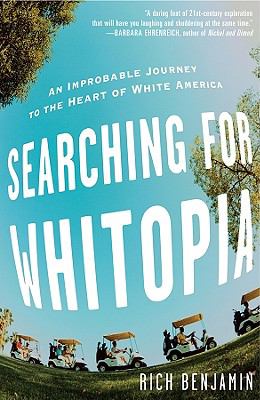
#66 - Searching for Whitopia

So far, this is a welcome change of pace from some of the books I've been slogging through of late: Rich Benjamin's Searching for Whitopia: An Improbable Journey to the Heart of White America (New York: Hyperion, 2009).

Summary: "Widely reported demographic shifts in contemporary America include the increase and diffusion of Latino populations and the relative population decline of Caucasians. Alongside these is a perhaps more subtle corollary, a phenomenon journalist Benjamin calls Whitopia ('white'opia'): disproportionately (generally over 90 percent) white communities that have grown rapidly in recent years, with most of the population growth also white. To learn about such communities, Benjamin here immerses himself in the life, culture, and politics of St. George, UT; Cour d'Alene, ID; Forsyth County, GA; and Manhattan's Upper East Side Carnegie Hill area. A well-traveled black writer from a multiracial family, Benjamin hardly undertakes this venture incognito. But with his tact, genuine interest in people, and zest for golf, real estate, and socializing, Benjamin ingratiates himself nearly everywhere he goes and gains significant insights from residents, businesspeople, and civic leaders. Benjamin's timely journey is surprising and provocative. He critically examines racial and economic segregation, structural racism, hostility to immigration, the rising political power of exurbs, and other sociopolitical realities that bespeak, in his assessment, a growing failure in commitment to the common good -- yet he also demonstrates respect for his interviewees and offers his pointed assessments only after a thoughtful, open-minded exploration. Verdict: Written at the lay reader's level and in highly anecdotal narrative fashion, this is for all readers interested in the sociopolitics of America today. It will also be valued by policymakers and social scientists." (-Janet Ingham Dwyer, Library Journal Review).

My take: An excellent and provocative book, and far more nuanced than I might have expected. Rich does for the lily-white neighborhoods he studies what Self-Made Man tries to do, with far less success, for selected all-male enclaves; namely, without (much) subterfuge, penetrates well enough to give us a balanced, complex portrait of both their appeal and their shortcomings.

Gated communities are an easy target for ridicule in some circles, and I'll admit that I'm not above taking the occasional (metaphorical) swing myself. Rich doesn't do that; he says up front and more importantly, shows us throughout the book that most of the individuals he met were kind, thoughtful people; very welcoming to him individually; and settled where they did because they wanted a safe community in which to raise their kids. And those who know me know I can't not appreciate a writer who pays careful attention to the class factor in the U.S. His distinctions between small towns, boom towns, and dream towns are definitely worth chewing over, and his observations on the tensions between longer-term, working- to middle-class residents and more recently arrived, wealthier transplants were fascinating.

Aside from a sprinkling of eye-rolling at some of the more-moneyed-than-tasteful architectural and design elements he encounters in his real estate searches, Rich is almost religious about not poking fun at or even condescending to the exurban residents he gets to know -- which makes the book far stronger and more compelling. He also avoids the obvious East Coast/ West Coast and Northern/ Southern states finger-pointing by visiting Carnegie Hill, Manhattan and Warren County, New Jersey, as well as Forsyth County, Georgia and St. George, Utah. I do wish he'd devoted more time and space to the final section on why we should care, as it seemed a bit cursory -- but that's a fairly minor complaint overall.

#65 - Summertime

Moving right along, #65 was Summertime, by J. M. Coetzee (New York: Viking, 2009).

Summary: "In the Nobel Laureate's latest novel, a young English writer is in pursuit of first-person testimony to write a biography of an esteemed novelist named J. M. Coetzee. The Englishman wants to focus on the years 1971-77, a period just before Coetzee's importance was recognized, a time the hopeful biographer finds oddly neglected by other biographers; he sees it as seminal because the novelist was finding his feet. From Coetzee's lover, his cousin, the mother of a pupil to whom Coetzee gave English lessons, a cohort who co-taught a college course with him, and another professional affiliate, the biographer elicits details about the man's relationships, amorous and otherwise. These personal accounts are the material from which readers draw a picture of Coetzee and upon which the writer will draw for his future composition. The Coetzee emerging here is an emotionally dessicated man never easy with intercourse of any shade, sexual or social. Assumptions on the reader's part of a parallel between the fictitious Coetzee and the actual one are best left alone, because the result can only be confusion and distraction. It is best, then, to simply see the character as just that and then to recognize the author of the admirable builder of character that he is." (-Brad Hooper, Booklist)

My take: Probably would have been more compelling if I were familiar either with Coetzee's other work or with the Afrikaans experience in South Africa, but this is nonetheless an interesting format for a story and, gradually, one through with a fascinating if less-than-likable portrait of a character emerges.

#64 - Choke

#64 was Choke, by Chuck Palahniuk (New York: Anchor, 2001).

Summary: "Victor Mancini, a medical-school dropout, is an antihero for our deranged times. Needing to pay elder care for his mother, Victor has devised an ingenious scam: he pretends to choke on pieces of food while dining in upscale restaurants. He then allows himself to be 'saved' by fellow patrons who, feeling responsible for Victor's life, go on to send checks to support him. When he's not pulling this stunt, Victor cruises sexual addiction recovery workshops for action, visits his addled mom, and spends his days working at a colonial theme park. His creator, Chuck Palahniuk, is the visionary we need and the satirist we deserve."

Opening line: "If you're going to read this, don't bother."

My take: This is only my second Palahniuk book, but I think I should have taken the narrator's advice above. Pygmy, at least, had some places where I could see and appreciate the humor, but Choke -- meh. At least some reviewers seem to love Palahniuk, brilliant satirist, blah blah blah, so maybe it's just me that Doesn't Get It.

But hey, it's just me reading these books and writing this blog, and Choke was a week of my life I won't get back. (It's a slim book, too, but it didn't call to me the way some others do.) Funny parts, yes, but overall, the characters are thoroughly repulsive, and the book left me feeling like I needed a shower afterwards. I don't mind books that unsettle, but don't feel the need to be disgusted for no reason.

Wednesday, August 18, 2010

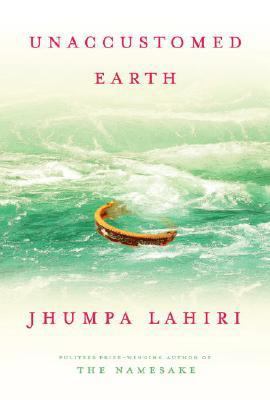
#63 - Unaccustomed Earth

Offspring of vacation roundup. #63 was Jumpa Lahiri's Unaccustomed Earth (New York: Knopf, 2008).

Summary: "From the internationally best-selling, Pulitzer Prize-winning author, a superbly crafted new work of fiction: eight stories -- longer and more emotionally complex than any she has yet written -- that take us from Cambridge and Seattle to India and Thailand as they enter the lives of sisters and brothers, fathers and mothers, daughters and sons, friends and lovers. In the stunning title story, Ruma, a young mother in a new city, is visited by her father, who carefully tends the earth of her garden, where he and his grandson form a special bond. But he's harboring a secret from his daughter, a love affair he's keeping all to himself. In "A Choice of Accommodations," a husband's attempt to turn an old friend's wedding into a romantic getaway weekend with his wife takes a dark, revealing turn as the party lasts deep into the night. In "Only Goodness," a sister eager to give her younger brother the perfect childhood she never had is overwhelmed by guilt, anguish, and anger when his alcoholism threatens her family. And in "Hema and Kaushik," a trio of linked stories -- a luminous, intensely compelling elegy of life, death, love, and fate -- we follow the lives of a girl and boy who, one winter, share a house in Massachusetts. They travel from innocence to experience on separate, sometimes painful paths, until destiny brings them together again years later in Rome. Unaccustomed Earth is rich with Jhumpa Lahiri's signature gifts: exquisite prose, emotional wisdom, and subtle renderings of the most intricate workings of the heart and mind. It is a masterful, dazzling work of a writer at the peak of her powers."

My take: Can't possibly do this one justice, but in a word: gorgeous. The one thing tying these stories together is that they're all about Bengali families from Calcutta who are raising or have raised their children in the U.S., so there's that particular cultural note to it -- but the stories also speak to all manner of familial and intimate relationships in ways that are universal. Not usually a short story fan, but for these, I'll gladly make an exception.

#62 - Into the Wild

Yes, indeedy, friends; it's Vacation Roundup Redux. #62 was Into the Wild, by Jon Krakauer (New York: Villard Books, 1996). I saw the movie with a group of girlfriends several years ago, but hadn't yet gotten around to reading the book, despite having the paperback sitting on a bookshelf for quite some time. But that's what vacations are for, right?

Summary: "In April 1992 a young man from a well-to-do family hitchhiked to Alaska and walked alone into the wilderness north of Mt. McKinley. His name was Christopher Johnson McCandless. He had given $25,000 in savings to charity, abandoned his car and most of his possessions, burned all the cash in his wallet, and invented a new life for himself. Four months later, his decomposed body was found by a moose hunter. How McCandless came to die is the unforgettable story of Into the Wild. Jon Krakauer constructs a clarifying prism through which he reassembles the disquieting facts of McCandless's short life. Admitting an interest that borders on obsession, he searches for the clues to the drives and desires that propelled McCandless. Digging deeply, he takes an inherently compelling mystery and unravels the larger riddles it holds: the profound pull of the American wilderness on our imagination; the allure of high-risk activities to young men of a certain cast of mind; the complex, charged bond between fathers and sons."

Opening line: "Jim Gallien had driven four miles out of Fairbanks when he spotted the hitchhiker standing in the snow beside the road, thumb raises high, shivering in the gray Alaska dawn."

My take:
This is a (reasonably) true historical narrative, but reads like a novel. That's not a bad thing, and Krakauer's journalism creds seem pretty solid; I didn't get the impression he was taking a lot of liberties with the story line. In particular, he doesn't take the approach Truman Capote did in In Cold Blood, inventing certain scenes (i.e., private thoughts of and conversations among the Clutter family) he couldn't possibly have been privy to for the sake of moving the narrative forward. Here, in contrast, he sticks to the facts, presenting only those conversations he could reconstruct through interviews with one of the parties. I'd say more were I not so behind, but if you haven't seen the movie -- and even if you have -- this is a fascinating and heartbreaking story, and well-written to boot. Read it.

#61 - This Land is Their Land

Yee haw! Giddyap, folks, it's time again for the semi-annual vacation roundup. #61, finished in transit on ye olde Shortline bus (long story, but see previous post on the badly damaged Matrix and draw your own conclusions), was Barbara Ehrenreich's This Land is Their Land: Reports from a Divided Nation (New York: Metropolitan Books, 2008).

Summary: "America in the "aughts" -- hilariously skewerd, brilliantly dissected, and darkly diagnosed by the bestselling social critic hailed as 'the soul mate' of Jonathan Swift. Barbara Ehrenreich's first book of satirical commentary, The Worst Years of Our Lives, about the Reagan era, was received with bestselling acclaim, The one problem was the title: couldn't some prophetic fact-checker have seen that the worst years of our lives -- far worse -- were still to come? Here they are, the 2000s, and in This Land is Their Land, Ehrenreich subjects them to the most biting and incisive satire of her career. Taking the measure of what we are left with after the cruelest decade in memory, Ehrenreich finds lurid examples all around. While members of the moneyed elite can buy congressmen, many in the working class can barely buy lunch. While a wealthy minority obsessively consumes cosmetic surgery, the poor often go without health care for their children. And while the corporate C-suites are now nests of criminality, the less fortunate are fed a diet of morality, marriage, and abstinence. Ehrenreich's antidotes are as sardonic as they are spot-on: pet insurance for your kids; Salvation Army fashions for those who can no longer afford Wal-Mart; and boundless rage against those who have given us a nation scarred by deepening inequality, corroded by distrust, and shamed by its official cruelty. Full of with and generosity, these reports from a divided nation show once again that Ehrenreich is, as Molly Ivins said, 'good for the soul.'" (from The Times (London).

Table of Contents:
  • Introduction
Chasms of Inequality
  • This Land is Their Land
  • Miami Vice: The Class Analysis
  • Home Depot's CEO-Size Tip
  • Going to Extremes: CEOs vs. Slaves
  • Banish the Bloated Overclass
  • Got Grease?
  • Class Struggle 101
  • Minimum Wage Rises, Sky Does Not Fall
  • Could You Afford to Be Poor?
  • Desperately Seeking Stimulus
  • Smashing Capitalism
  • The Communist Manifesto Hits 160
Meanness on the Rise
  • Pension or Penitentiary?
  • Where the Finger's Pointing
  • The Cheapskate Warfare State
  • Are Illegal Immigrants the Problem?
  • The Shame Game
  • The New Cosby Kids
  • What America Owes Its "Illegals"
  • The Suicide Solution
Strangling the Middle Class
  • Freshperson, Welcome to Debt!
  • Party On
  • Fastest-Growing Jobs of '06: Are You Handy with Bedpans and Brooms?
  • Your Local News -- Dateline Delhi
  • That Sinking Feeling
  • What's So Great about Gated Communities?
  • World's Designated Shoppers Drop
Hell Day at Work
  • Circuit City Slaughter
  • Blood in the Chutney
  • Workplace Bullies
  • Big (Box) Brother
  • Invasion of the Cheerleaders
  • Fake Your Way to the Top!
  • Challenging the Workplace Dictatorship
  • Gap Kids: New Frontiers in Child Abuse
  • French Workers Refuse to Be "Kleenex"
  • Truckers Protest, the Resistance Begins
Declining Health
  • We Have Seen the Enemy -- and Surrendered
  • Gouging the Poor
  • The High Cost of Doing without Universal Health Care
  • Health Care vs. the Profit Principle
  • Children Deserve Veterinary Care Too
  • Our Broken Mental Health System
  • What Causes Cancer: Probably Not You
  • Liposuction: The Key to Energy Independence
  • A Society That Throws the Sick Away
Getting Sex Straight
  • Fear of Restrooms
  • Let Them Eat Wedding Cake
  • Opportunities in Abstinence Training
  • Opening Up to Abortion
  • How Banning Gay Marriage Will Destroy the Family
  • Do Women Need a Viagra?
  • A Uterus Is Not a Substitute for a Conscience
  • Who's Wrecking the Family?
  • Bonfire of the Princesses
False Gods
  • The Secret of Mass Delusion
  • Who Moved My Ability to Reason?
  • All Together Now
  • The Faith Factor
  • Follies of Faith
  • Pastors Go Postal
  • Is It Safe to Go Back to Church?
  • God Owes Us an Apology
  • Postscript: Rich Get Poorer, Poor Disappear
My take: An entertaining and, for those new to the subject, illuminating collection of essays on the socioeconomic disparities in contemporary America. If this wasn't already a soapbox issue of mine, and I wasn't already a fan of Ehrenreich's work, I'd probably be thrilled to hear someone write pieces like this in my local newspaper. But it is, and I am. Consequently, the book seemed a little lightweight -- not nearly up to the author's usual level of detail or journalistic ability. Still worthwhile for those who find that the issues cited resonate with them, and would like a primer of sorts to get angry about.

Sunday, August 1, 2010

And now, a very special Cafe Hazelthyme

With apologies to Visa, a random 40th-birthday-inspired list:
  • 08 Toyota Matrix, 30k, April 2010 - $12,000.
  • Taughannock Park pavillion rental - $40.00.
  • Wegman's heart sushi tray - $54.99.
  • Lucas Cabernet Franc - $12.99.
  • Value of damage to 08 Toyota Matrix, 32k, en route to 40th b-day party - $11,999.95.
  • Year in which I'll next need to buy soda, beer, or wine - at least 2012.
  • Lovely, heartfelt cards now gracing the mantel - 17.
  • Facebook b-day wishes - 42
  • Fancy coffee drinks I'll be enjoying, courtesy of one of my best friends - at least 10.
  • Oldest party guest - 71.
  • Youngest party guest - 3 months.
  • Grade schoolers who helped the 3 month-old's big sister have the time of her life getting wet and dirty - 3.
  • People around the world who share my birthday - about 18 million.
  • People who received the King Zucchini as a present - probably just me.
  • Celebrating a milestone with the perfect crazy-quilt mosaic of cherished family and friends - priceless.

Thank you, everyone.