About Me

Ithaca, New York
MWF, now officially 42, loves long walks on the beach and laughing with friends ... oh, wait. By day, I'm a mid-level university administrator reluctant to be more specific on a public forum. Nights and weekends, though, I'm a homebody with strong nerdist leanings. I'm never happier than when I'm chatting around the fire, playing board games, cooking up some pasta, and/or road-tripping with my family and friends. I studied psychology and then labor economics in school, and I work in higher education. From time to time I get smug, obsessive, or just plain boring about some combination of these topics, especially when inequality, parenting, or consumer culture are involved. You have been warned.
Showing posts with label immigrants. Show all posts

Wednesday, October 3, 2012

#82: The Reeducation of Cherry Truong

The Reeducation of Cherry Truong, by Aimee Phan
New York: St. Martin's Press, 2012
 Summary:
"Cherry Truong’s parents have exiled her wayward older brother from their Southern California home, sending him to Vietnam to live with distant relatives.  Determined to bring him back, twenty-one-year-old Cherry travels to their homeland and finds herself on a journey to uncover her family’s decades-old secrets—hidden loves, desperate choices, and lives ripped apart by the march of war and currents of history.

"The Reeducation of Cherry Truong tells the story of two fierce and unforgettable families, the Truongs and the Vos: their harrowing escape from Vietnam after the war, the betrayal that divided them, and the stubborn memories that continue to bind them years later, even as they come to terms with their hidden sacrifices and bitter mistakes. Kim-Ly, Cherry’s grandmother, once wealthy and powerful in Vietnam, now struggles to survive in Little Saigon, California without English or a driver’s license. Cherry’s other grandmother Hoa, whose domineering husband has developed dementia, discovers a cache of letters from a woman she thought had been left behind. As Cherry pieces their stories together, she uncovers the burden of her family’s love and the consequences of their choices.

"Set in Vietnam, France, and the United States, Aimee Phan’s sweeping debut novel reveals a family still yearning for reconciliation, redemption, and a place to call home."

Opening Line:
"Cherry releases the grip around her brother, steadying her trembling feet onto the hot, bright concrete."

My Take:
A decent immigrant saga and family story, but would have been better if the title character hadn't been so much of a cipher. All we know is that she's a good student and curious about her family history, but we don't ever get much insight into what she's thinking and feeling as the events of the book unfold (or as she discovers what and how events unfolded in the past).

Wednesday, February 29, 2012

#13: The Namesake

The Namesake, by Jhumpa Lahiri (New York: Random House Audio, 2003)

Summary:
"Jhumpa Lahiri's Interpreter of Maladies established this young writer as one of the most brilliant of her generation. Her stories are one of the few debut works -- and only a handful of collections -- to have won the Pulitzer Prize for fiction. Among the many other awards and honors it received were the New Yorker Debut of the Year award, the PEN/ Hemingway Award, and the highest critical praise for its grace, acuity, and compassion in detailing lives transported from India to America.

"In The Namesake, Lahiri enriches the themes that made her collection an international bestseller: the immigrant experience, the clash of cultures, the conflicts of assimilation, and, most poignantly, the tangled ties between generations. Here again Lahiri displays her deft touch for the perfect detail -- the fleeting moment, the turn of phrase -- that opens whole worlds of emotion.

"The Namesake takes the Ganguli family from their tradition-bound life in Calcutta through their fraught transformation into Americans. On the heels of their arranged wedding, Ashoke and Ashima Ganguli settle together in Cambridge, Massachusetts. An engineer by training, Ashoke adapts far less warily than his wife, who resists all things American and pines for her family. When their son is born, the task of naming him betrays the vexed results of bringing old ways to the new world. Named for a Russian writer by his Indian parents in memory of a catastrophe years before, Gogol Ganguli knows only that he suffers the burden of his heritage as well as his odd, antic name.

"Lahiri brings great empathy to Gogol as he stumbles along the first-generation path, strewn with conflicting loyalties, comic detours, and wrenching love affairs, With penetrating insights, she reveals not only the defining power of the names and expectations bestowed upon us by our parents, but also the means by which we slowly, sometimes painfully, come to define ourselves. The New York Times has praised Lahiri as 'a writer of uncommon elegance and poise.' The Namesake is a fine-tuned, intimate, and deeply felt novel of identity."


Opening Line:
"On a sticky August evening two weeks before her due date, Ashima Ganguli stands in the kitchen of a Central Square apartment, combining Rice Krispies and Planters peanuts and chopped red onion in a bowl."

My Take:
Simply exquisite. Listened to this one on CD on a drive downstate and back, somewhere in between 11/22/63 and State of Wonder, and wow ... what a gorgeous book. Perhaps it's that Gogol is just 2 years older than I am and so much of his coming of age mirrors my own, maybe it's Lahiri's seemingly effortless combination of those challenges unique to the child of immigrants with those common to all American (or hyphenated American) adolescents. Or the perfection with which the novel captures tiny but telling details; if I warmed to Ashima on the first page, trying to re-create a favorite Calcutta street food in Boston circa '68 in the last few weeks of pregnancy cravings, I absolutely adored her by page 8, when she looks back on the day 2 years earlier on which she first laid eyes on Ashoke:
"Glancing at the floor where visitors customarily removed their slippers, she noticed, beside two sets of chappals, a pair of men's shoes that were not like any she'd ever seen on the streets and trams and buses of Calcutta, or even in the windows of Bata. They were brown shoes with black heels and off-white laces and stitching. There was a band of lentil-sized holes embossed on either side of each shoe, and at the tips was a pretty pattern pricked into the leather as if with a needle. Looking more closely, she saw the shoemaker's name written on the insides, in gold lettering that had all but faded: something and sons, it said, She saw the size, eight and a half, and the initials U.S.A. And as her mother continued to sing her praises, Ashima, unable to resist a sudden and overwhelming urge, stepped into the shoes at her feet. Lingering sweat from the owner's feet mingled with hers, causing her heart to race: it was the closest thing she had ever experienced to the touch of a man."
You (or at least I) can't help but feel the same tenderness for Gogol, Ashoke, and even some of the more minor characters like Ruth, Gogol's first real girlfriend, and Moushumi, who he eventually marries. (I did not, however, ever warm to his post-college love interest, the spoiled rich Manhattanite Maxine.)

I could go on, and on, and on ... but truly, this is one of those books I was sad to finish because I didn't want to let the characters go.

Friday, October 28, 2011

#92: Absurdistan

Absurdistan, by Gary Shteyngart (New York: Random House, 2006)

Summary:
"From the critically acclaimed, bestselling author of The Russian Debutante's Handbook comes the uproarious and poignant story of one very fat man and one very small country.

"Open Absurdistan and meet outsize Misha Vainberg, son of the 1,238th-richest man in Russia, lover of large portions of food and drink, lover and inept performer of rap music, and lover of a South Bronx Latina whom he longs to rejoin in New York City, if only the American INS will grant him a visa. But it won't, because Misha's late Beloved Papa whacked an Oklahoma businessman of some prominence. Misha is paying the price of exile from his adopted American homeland. He's stuck in Russia, dreaming of his beloved Rouenna and the Oz of NYC.

"Salvation may lie in the tiny, oil-rich nation of Absurdistan, where a crooked consular officer will sell Misha a Belgian passport. But after a civil war breaks out between two competing ethnic groups and a local warlord installs hapless Misha as Minister of Multicultural Affairs, our hero soon finds himself covered in oil, fighting for his life, falling in love, and trying to figure out if a normal life is still possible in the twenty-first century.

"Populated by curvaceous brown-eyed beauties, circumcision-happy Hasidic Jews, a loyal manservant who never stops serving, and scheming oil execs from a certain American company whose name rhymes with Maliburton, Absurdistan is a strange, oddly true-to-life look at how we live now, from a writer who should know.

"With the enormous success of The Russian Debutante's Handbook, Gary Shteyngart established himself as a central figure in today's literary world -- 'one of the most talented and entertaining writers of his generation,' according to The New York Observer. In Absurdistan, he gives an even funnier and wiser literary performance. In Misha Vainberg, he has invented a hero for the new century, a glimmer of humanity in a world of lost hope."

Opening Lines:
"This is a book about love. The next 338 pages are dedicated with that cloying Russian affection that passes for real warmth to my Beloved Papa, to the city of New York, to my sweet impoverished girlfriend in the South Bronx, and to the United States Immigration and Naturalization Service (INS)."


My Take:
Very funny, but drags a bit in the middle once Vainberg gets stuck in the title republic.

I can't really overstate the first part. Absurdistan is crammed with wry, sometimes irreverent, usually hilarious observations about the United States, Russia, the former Soviet republics, and contemporary western culture. The reader gets an early taste of what she's in for in the first chapter, as Misha and college roommate Alyosha-Bob dine out in St. Petersburg with Misha's girlfriend Rouenna (visiting all too briefly from the South Bronx) and his very young stepmother, Lyuba. Observes Rouenna, on learning that Lyuba, too, was poor before marrying Misha's infamous, soon-to-be-murdered father Boris:
"[A]s far as I can tell, all of you Russians are just a bunch of n----z. ... All I'm saying is, you know ... your men don't got no jobs, everyone's always doing drive-bys whenever they got beefs, the childrens got asthma, and y'all live in public housing."
After this dinner is interrupted by police who've come to tell Misha of his father's assassination, Misha reflects on his first trip to New York and how he met Rouenna (after an unfortunate encounter with the circumcision-happy Hasidic Jews mentioned on the dust jacket, which leaves the otherwise-unapologetic Misha with at least one thing to feel self-conscious about).

Rouenna remains in St. Petersburg for Boris's funeral, but returns to New York and Hunter College soon thereafter ... where Misha fears that she's getting a little too close with her writing professor (and his own former college classmate) Jerry Shteynfarb, a lothario of a "perfectly Americanized Russian emigre (he came to the States as a seven-year-old) who managed to use his dubious Russian credentials to rise through the ranks of the Accidental creative writing department and to sleep with half the campus in the process" and who's still enjoying some degree of fame from his novel, The Russian Arriviste's Hand Job. (I never stopped chuckling at Shteyngart's dig at himself here.) His fears do indeed prove founded, though the rich and perhaps overly big-hearted Misha continues to pay Rouenna's tuition anyway.

Eventually, Misha comes to realize there's no way in heck he's going to get a U.S. travel visa through legitimate means. Even with his father dead, the whole murder thing's apparently still on his records, and the authorities aren't going to let Boris's son into the country, no way, no how. The only solution is to visit Absurdistan, where a crooked official at the Belgian consulate is reportedly selling Belgian passports for the asking (well, that and a goodly sum of cash).

Unfortunately, his timing couldn't be worse. Misha arrives in Svani City, and bribes his way through just about every airport and customs official he can find (in an eventually-tedious ritual where the Absurdi welcomes him with a speech like this:
"The Jewish people have a long and peaceful history in our land. They are our brothers, and whoever is their enemy is our enemy also. When you are in Absurdisvani, my mother will be your mother, my wife your sister, and you will always find water in my well to drink."
... only to inform him, moments later, that "our mother is in the hospital with a collapsed liver and a keloid scar on the left ear" and a few generous U.S. dollars would be much appreciated, and by the way, let me now introduce you to my colleague in the visa application line. Shortly after he settles into the penthouse suite at the Park Hyatt and gets his shiny new Belgian passport in hand, the Absurdi leader's plane is shot down, and the national borders sealed. Aside from seeing a decent young activist shot to death before his eyes, this doesn't make much difference in Misha's day-to-day life; the high-end food and drink seem to keep flowing at the Park Hyatt (and pretty much anywhere there are Haliburton staff), and his new (ahem) friendship with Nana Nanabragovna, daughter of a local warlord-cum-businessman ensures that he'll always have the best of whatever there is for the taking ... but, well, he still can't leave.

From here on, as noted above, the book seems to drag a bit. There are still plenty of apt and humorous observations, which keeps it readable, but not much happens, either in terms of visible action or in Misha's state of mind. Sure, I chuckled at the apparent feud between the two
ethnic groups in Absurdistan, the Sevo and the Svani, which seems to center on which direction the footrest should tilt on their version of the cross, and at the ridiculous but spot-on rap lyrics Misha's so fond of quoting, but that only takes you so far. I'll probably still read The Russian Debutante's Handbook if I can get my hands on it, but would have liked a stronger wrap-up to the story line here.

Sunday, September 25, 2011

#71 - How to Read the Air

How to Read the Air, by Dinaw Mengestu (New York: Riverhead Books, 2010)

Summary:
"One September afternoon, Yosef and Marian, young Ethiopian immigrants who have spent all but their first year of marriage apart, set off on a road trip from their new home in Peoria, Illinois, to Nashville, Tennessee, in search of a new identity as an American couple. Just months later, their son, Jonas, is born in Illinois. Thirty years later, Yosef has died, and Jonas is desperate to make sense of the volatile generational and cultural ties that have forged him. How can he envision the future without knowing what has come before? Leaving behind his marriage and job in New York, he sets out to retrace his parents' trip and, in a stunning display of imagination, weaves together a family history that takes him from the war-torn Ethiopia of his parents' youth to a brighter vision of his life in the America of today, a story -- real or invented -- that holds the possibility of reconciliation and redemption."


Opening Line:
"It was four hundred eighty-four miles from my parents' home in Peoria, Illinois, to Nashville, Tennessee, a distance that in a seven-year-old red Monte Carlo driving at roughly sixty miles an hour could be crossed in eight to twelve hours, depending on certain variables such as the number of road signs offering side excursions to historical landmarks, and how often my mother, Mariam, would have to go to the bathroom."

My Take:
I really, really wanted to fall in love with this book. It didn't happen -- in fact, I practically had to force myself to keep reading it -- and I closed the back cover wondering if the reviews were pretentious or I Just Didn't Get It.

Mengestu's language is, indeed, lovely, poetic, even (cliche though it is) luminous. Trouble was, there wasn't much to the story said language was telling. Yosef and Mariam are recently reunited after a three-year separation, but scarcely know each other; Yosef also happens to be brutally, inexplicably abusive. Mariam thinks about leaving and makes several false starts throughout Jonas's childhood, but doesn't until much later (perhaps not until after Jonas is grown). Yosef has died before the novel opens; Mariam lives, proudly independent, in a series of small towns on the northern Atlantic coast.

Thirty years after the road trip that represents their story, Jonas's fairly young marriage to Angela has fallen apart not with a bang, but with a whimper, and he's set out to retrace his parents' trip. Most of his story, though, recalls his crumbling marriage to Angela (he says and feels almost nothing, and their entire marriage seems to have been based on jokes and invented histories) and his growing love for his job as a part-time English teacher at a private high school -- despite the fact that after his fathers' death, he spends a week or so telling his students an imaginary story about his father's life.

It could be an interesting story, but it's all so spare and clinical. Sure, I get that Jonas's past seems to have made him an utter emotional cripple (like his parents before him), but it's hard to see enough personality or feeling under the surface anywhere to care. And other than the (interesting but totally made-up) story Jonas tells his students about his father's trip to America, Nothing. Happens. Here. His parents' trip to Nashville is aborted when they get into a fight, Yosef lashes out to strike Mariam, and Mariam grabs the steering wheel and drives the car into a ditch. Jonas and Angela decide to end their marriage (I think) because there's no real substantive connection between them. OK, and ... ?

I dunno. Maybe after a week of Jodi Picoult and John Grisham, my brain's just too atrophied for Good Literature.

Monday, September 5, 2011

#65: World and Town

World and Town, by Gish Jen (New York: Alfred A. Knopf, 2010).

Summary:
"Hattie Kong -- the spirited offspring of a descendant of Confucius and an American missionary to China -- has, in her fiftieth year, lost both her husband and her best friend to cancer. It is an utterly devastating loss, of course, and also heartbreakingly absurd: a little, she thinks, 'like having twins. She got to book the same church with the same pianist for both funerals and did think she should have gotten some sort of twofer from the crematorium.'

"But now, two years later, it is time for Hattie to start over. She moves to the town of Riverlake, where she is soon joined by an immigrant Cambodian family on the run from their inner-city troubles, as well as -- quite unexpectedly -- by a just-retired neuroscientist ex-lover named Carter Hatch. All of them are, like Hattie, looking for a new start in a town that might once have represented the rock-solid base of American life but that is itself challenged, in 2001, by cell-phone towers and chain stores, struggling family farms and fundamentalist Christians.

"What Hattie makes of this situation is at the center of a novel that asks deep and absorbing questions about religion, home, America, what neighbors are, what love is, and, in the largest sense, what 'worlds' are we make of the world.

"Moving, humorous, compassionate, and expansive, World and Town is as rich in character as it is brilliantly evocative of its time and place. This is a truly masterful novel -- enthralling, essential, and satisfying."


Opening Line:
"It's the bai shu you'd notice most -- the thousand-year-old cypresses -- some of them upright, some of them leaning."

My Take:
I've gotten backlogged again (gee, why on earth would it be hard to keep up with a list no one reads?) but this one was pretty good. How does Hattie make a life and find meaning for herself with her husband and best friend gone? How do her new neighbors, Chhung and Sophy and the rest of their family, Cambodian immigrants fleeing the trouble their kids tend to get into in the big city, build their own lives and hold on to some semblance of family when absolutely nothing in this new world makes sense? More a character study (not only of the people but the town in the story) but still pretty satisfying for that -- enough so that I'm looking forward to seeking out other Gish Jen novels in the future.

Wednesday, June 29, 2011

#51: My Hollywood

My Hollywood, by Mona Simpson (New York: Alfred A. Knopf, 2010)

Summary:
"
A wonderfully provocative and appealing novel, from the much-loved author of Anywhere But Here and A Regular Guy, her first in ten years. It tells the story of two women whose lives entwine and unfold behind the glittery surface of Hollywood. Claire, a composer and a new mother, comes to LA so her husband can follow his passion for writing television comedy. Suddenly the marriage -- once a genuine 50/50 arrangement --changes, with Paul working long hours and Claire left at home with a baby, William, whom she adores but has no idea how to care for. Lola, a fifty-two-year-old mother of five who is working in America to pay for her own children's higher education back in the Philippines, becomes their nanny. Lola stabilizes the rocky household and soon other parents try to lure her away. What she sacrifices to stay with Claire and 'Williamo' remains her own closely guarded secret. In a novel at turns satirical and heartbreaking, where mothers' modern ideas are given practical overhauls by nannies, we meet Lola's vast network of fellow caregivers, each with her own story to tell. We see the upstairs competition for the best nanny and the downstairs competition for the best deal, and are forced to ask whether it is possible to buy love for our children and what that transaction costs us all. We look into two contemporary marriages -- one in America and one in the Philippines -- and witness their endangerment, despite the best of intentions. My Hollywood is a tender, witty, and resonant novel that provides the profound pleasures readers have come to expect from Mona Simpson, here writing at the height of her powers."

My Take:
Here I'd hoped for a variation on some of the same themes from The Madonnas of Echo Park -- rather a California-style Nanny Diaries with a bit more racial frisson thrown in. I didn't get it. In short, I found My Hollywood plodding and disappointing, with characters I just couldn't bring myself to care about. If this is Simpson at the height of her powers, I won't be seeking her earlier books out any time soon.

#50: The Madonnas of Echo Park

The Madonnas of Echo Park, by Brando Skyhorse (New York: Free Press, 2010).

Summary:
"'We slipped into this country like thieves, onto the land that once was ours.' With these words, spoken by an illegal Mexican day laborer,
The Madonnas of Echo Park takes us into the unseen world of Los Angeles, following the men and women who cook the meals, clean the homes, and struggle to lose their ethnic identity in the pursuit of the American dream. When a dozen or so girls and mothers gather on an Echo Park street corner to act out a scene from a Madonna music video, they find themselves caught in the crossfire of a drive-by shooting. In the aftermath, Aurora Esperanza grows distant from her mother, Felicia, who as a housekeeper in the Hollywood Hills establishes a unique relationship with a detached housewife. The Esperanzas' shifting lives connect with those of various members of their neighborhood. A day laborer trolls the streets for work with men half his age and witnesses a murder that pits his morality against his illegal status; a religious hypocrite gets her comeuppance when she meets the Virgin Mary at a bus stop on Sunset Boulevard; a typical bus route turns violent when cultures and egos collide in the night, with devastating results; and Aurora goes on a journey through her gentrified childhood neighborhood in a quest to discover her own history and her place in the land that all Mexican Americans dream of, 'the land that belongs to us again.' Like the Academy Award-winning film Crash, The Madonnas of Echo Park follows the intersections of its characters and cultures in Los Angeles. In the footsteps of Junot Díaz and Sherman Alexie, Brando Skyhorse in his debut novel gives voice to one neighborhood in Los Angeles with an astonishing-- and unforgettable--lyrical power."

My Take:
A solid, intriguing book - very enjoyable, and I'll even buy the Junot Diaz parallels. Highly recommended.

Sunday, November 28, 2010

#88 - Esperanza Rising

Esperanza Rising, by Pam Munoz Ryan (New York: Scholastic Press, 2000)

Jacket Summary: "Esperanza Ortega possesses all the treasures a young girl could want: fancy dresses, a beautiful home filled with servants in the bountiful region of Aguascalientes, Mexico, and the promise of one day rising to Mama's position and presiding over all of El Rancho de las Rosas.

"But a sudden tragedy shatters that dream, forcing Esperanza and Mama to flee to California and settle in a Mexican farm labor camp. There they confront the challenges of hard work, acceptance by their own people, and economic difficulties brought on by the Great Depression. When Mama falls ill from Valley Fever, and a strike for better working conditions threatens to uproot their new life, Esperanza must relinquish her hold on the past and learn to embrace a future ripe with the riches of family and community."


Opening Line: "'Our land is alive, Esperanza,' said Papa, taking her small hand as they walked through the gentle slope of the vineyard.

My Take: I think this is a first: I read this book because my daughter recommended it. Not surprisingly, I wasn't disappointed -- not because Twig has such impeccable taste (I am, after all, her mother), but because it combines several themes I usually enjoy reading about: coming of age, poverty and inequality, immigration, and even labor issues. It's a young adult novel, and not a very long one at that; I think I polished it off in about an hour last night. Liked the story itself, liked the chat Twig and I had about it on our walk home from church this morning. (Wow, how middle American does that sound?) Some of our favorite parts, to whet your appetite:
  • The painstaking efforts made by Alfonso and Miguel (the Ortegas' most trusted servants, who decide to emigrate to California in the wake of Sr. Ortega's murder rather than remain on the ranch to work for his brother) to bring a root ball from the Rancho de las Rosas' signature roses to the labor camp that becomes their new home;
  • Esperanza's visceral terror and disgust at having to sit in the peasant car on their train journey;
  • The unexpected generosity of Carmen, an egg seller Mama and Esperanza meet on the train. Though she herself is a poor widow with many children to support, she gives Mama two hens of her own on hearing the Ortegas' story -- and goes on to give an even poorer beggar woman food and coins after they get off the train.
  • The bathing scene, in which the men folk are sent out of the house so that all the women can enjoy the luxury of an all-too-rare hot bath. Esperanza goes from standing with her arms outstretched, automatically expecting Hortensia (Alfonso's wife and Miguel's mother) to undress and bathe her as she's always done before, to enjoying the camaraderie of the steamy room and personally making sure Hortensia has the hottest water.
  • Esperanza and Mama's joy and disbelief at seeing Abuelita again after nearly a year has gone by.
If you are a young adult, have one at home, or just plain like stories like this, do read this one. You won't be disappointed, either.

Wednesday, August 18, 2010

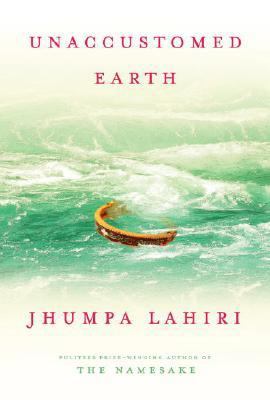
#63 - Unaccustomed Earth

Offspring of vacation roundup. #63 was Jumpa Lahiri's Unaccustomed Earth (New York: Knopf, 2008).

Summary: "From the internationally best-selling, Pulitzer Prize-winning author, a superbly crafted new work of fiction: eight stories -- longer and more emotionally complex than any she has yet written -- that take us from Cambridge and Seattle to India and Thailand as they enter the lives of sisters and brothers, fathers and mothers, daughters and sons, friends and lovers. In the stunning title story, Ruma, a young mother in a new city, is visited by her father, who carefully tends the earth of her garden, where he and his grandson form a special bond. But he's harboring a secret from his daughter, a love affair he's keeping all to himself. In "A Choice of Accommodations," a husband's attempt to turn an old friend's wedding into a romantic getaway weekend with his wife takes a dark, revealing turn as the party lasts deep into the night. In "Only Goodness," a sister eager to give her younger brother the perfect childhood she never had is overwhelmed by guilt, anguish, and anger when his alcoholism threatens her family. And in "Hema and Kaushik," a trio of linked stories -- a luminous, intensely compelling elegy of life, death, love, and fate -- we follow the lives of a girl and boy who, one winter, share a house in Massachusetts. They travel from innocence to experience on separate, sometimes painful paths, until destiny brings them together again years later in Rome. Unaccustomed Earth is rich with Jhumpa Lahiri's signature gifts: exquisite prose, emotional wisdom, and subtle renderings of the most intricate workings of the heart and mind. It is a masterful, dazzling work of a writer at the peak of her powers."

My take: Can't possibly do this one justice, but in a word: gorgeous. The one thing tying these stories together is that they're all about Bengali families from Calcutta who are raising or have raised their children in the U.S., so there's that particular cultural note to it -- but the stories also speak to all manner of familial and intimate relationships in ways that are universal. Not usually a short story fan, but for these, I'll gladly make an exception.

Monday, April 5, 2010

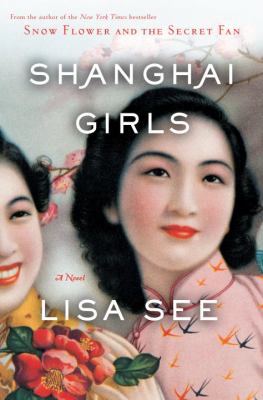
#27 - Shanghai Girls

Lisa See's Shanghai Girls (New York: Random House, 2009) was another pleasant surprise. I'd read Peony in Love, by the same author, and was pretty underwhelmed; maybe it's that I just can't get excited about a story where the main character is a ghost.

Summary: "In 1937, Shanghai is the Paris of Asia, full of great wealth and glamour, home to millionaires and beggars, gangsters and gamblers, patriots and revolutionaries, artists and warlords. Twenty-one-year-old Pearl Chin and her younger sister May are having the time of their lives, thanks to the financial security and material comforts provided by their father’s prosperous rickshaw business. Though both wave off authority and traditions, they couldn’t be more different. Pearl is a Dragon sign, strong and stubborn, while May is a true Sheep, adorable and placid. Both are beautiful, modern, and living the carefree life ... until the day their father tells them that he has gambled away their wealth, and that in order to repay his debts he must sell the girls as wives to suitors who have traveled from Los Angeles to find Chinese brides.

As Japanese bombs fall on their beloved city, Pearl and May set out on the journey of a lifetime, one that will take them through the villages of south China, in and out of the clutch of brutal soldiers, and across the Pacific to the foreign shores of America. In Los Angeles, they begin a fresh chapter, trying to find love with their stranger husbands, brushing against the seduction of Hollywood, and striving to embrace American life, even as they fight against discrimination, brave Communist witch hunts, and find themselves hemmed in by Chinatown’s old ways and rules.

At its heart, Shanghai Girls is a story of sisters: Pearl and May are inseparable best friends, who share hopes, dreams, and a deep connection. But like sisters everywhere, they also harbor petty jealousies and rivalries. They love each other but they also know exactly where to drive the knife to hurt the other sister the most. Along the way there are terrible sacrifices, impossible choices and one devastating, life-changing secret, but through it all the two heroines of this astounding new novel by Lisa See hold fast to who they are – Shanghai girls."

Opening line: "'Our daughter looks like a South China peasant with those red cheeks,' my father complains, pointedly ignoring the soup before him."

My take: Yes, Shanghai Girls is both a sweeping family story and an immigrant's tale ... but these descriptions alone don't do it justice. The characters are complex and believable; the plot compelling with just the right amount of surprise (neither predictable nor preposterous). As the above summary suggests, the story opens in 1937 Shanghai, where narrator Pearl and her less clever, more charming younger sister May are livin' la vida loca, garnering just the right amount of fame and fortune by modeling for the "beautiful girls" calendars that are ubiquitous to Shanghai advertising.

No sooner, however, have we gotten a taste of the girls' world than it starts to crumble, and ultimately shatters. Initially, Pearl and May defy their father's order to settle his debts by marrying the sons of a wealthy businessman, but then the full story emerges: Baba's creditor is a notoriously brutal gangster, and until he is paid, no one in the family is safe. The sisters have no other choice but to go through with the wedding, spending but a single night with their new husbands before the brothers depart for L.A. To their grave embarrassment, their new father-in-law publicly inspects their bedding in the morning, revealing that while Pearl and Sam have consummated their marriage, May and the childlike Vern have not.

As Sam, Vern, and their parents depart, Pearl and May promise to sail for America in 2 weeks to join them, but have no real plans to do so. That is, until the Japanese army invades Shanghai. Unable to find Baba, the girls and their mother try to trade in their tickets and flee to Hong Kong, but by now, they are but three among countless refugees. They end up hiring a wheelbarrow puller to carry their foot-bound mother as far as he can, stopping at the odd farmhouse along the way for food and rest, until ultimately, the soldiers catch up with them. Mama's attempt to protect her daughters, and later, Pearl's effort to save both Mama and May, have grave, life-altering consequences for all three of them.

All in all, an outstanding story, with a not-too-tidy ending (a plus, in my book). Highly recommended.

Monday, March 16, 2009

#25 - The Brief Wondrous Life ... Wow!

As I notes last night, my 25th book o' the year, The Brief Wondrous Life of Oscar Wao, by Junot Diaz, deserves the Pulitzer (as if I'm fit to judge!) and all the other accolades it received. A high-octane, wholly original novel of contemporary Dominican history and culture, the immigrant experience, and one boy's coming of age, this one doesn't stop ... and you don't want to stop reading it. Chapter One is titled "GhettoNerd at the End of the World 1974-1987," and that pretty much sums up who Oscar is. "Our hero was not one of those Dominican cats everybody's always going on about -- he wasn't no home-run hitter or a fly bachatero, nor a playboy with a million hots on his jock." A few pages later, Diaz describes him as "the neighborhood pariguayo," defined in 1 of 33 rambling, colloquial footnotes on Dominican culture and history as "pariguayos -- a word that in contemporary usage describes anybody who stands outside and watches while other people scoop up the girls. The kid who don't dance, who ain't got game, who lets other people clown him -- he's the pariguayo. If you looked in the Dictionary of Dominican Things, the entry for pariguayo would include a wood carving of Oscar."

Oscar, a fat Dominican growing up in New Jersey who loves comic books and science fiction, and "wore his nerdiness like a Jedi wore his light saber ... Couldn't have passed for Normal if he'd wanted to" aspires to become the Dominican J.R.R. Tolkien, and aches to find love, but this is not primarily an ugly duckling story. It leapfrogs from New Jersey to the Dominican Republic, and from the 1940s to the late 1990s, presenting the stories of Oscar's family as a microcosm of the Dominican and immigrant experiences. His sister Lola struggles wildly against her role as "the perfect Dominican daughter, which is just a nice way of saying a perfect Dominican slave," running away to a no-good Jersey Shore boyfriend and eventually to her grandmother's bakery in the DR in hopes of finding love and belonging. Their mother Belicia, orphaned in infancy and maltreated by the distant relations who took her in, parlays her beauty and courage into what she thinks is lasting love with the Gangster, a Trujillo henchman ... only to learn, in a heartbreaking and brutal fashion, that not only is he married, but his wife is Trujillo's sister. Diaz then takes us even further back, to the story of Belicia's father Abelard, a wealthy doctor whose favored status with the Trujillo regime goes tragically wrong when he refuses to introduce his beautiful eldest daughter to the lecherous dictator.

Themes of fate, cursedness, and familial influence vs. individual choice abound throughout the novel. Central to these is fuku, which the book's narrator, Yunior (Oscar's college roommate, and Lola's one-time boyfriend), explains thus:

Fuku americanus, or more colloquially, fuku -- generally a curse or a doom of some kind; specifically the Curse and the Doom of the New World. ...
[F]uku doesn't always strike like lightening. Sometimes it works patiently, drowning a nigger by degrees ... Sometimes it's slow and sometimes it's fast. It's doom-ish in that way, makes it harder to put a finger on, to brace yourself against. But be assured, like Darkseid's Omega Effect, like Morgoth's bane, no matter how many turns and digressions this shit might take, it always -- and I mean always -- gets its man. ... It's perfectly fine if you don't believe in these "superstitions." In fact, it's better than fine -- it's perfect. Because no matter what you believe, fuku believes in you.

Do we choose our own destinies, or are we compelled to follow in our elders' footsteps, forever haunted by their choices and experiences? Are some settings (i.e., the DR under Trujillo's regime, which Diaz elucidates in both footnotes and the main text "for those of you who missed your mandatory two seconds of Dominican history") so horrific as to beg for a supernatural explanation? The novel raises but, fittingly, never answers these questions; instead, it leaves you thinking and wondering long after you turn the last page.

My one quibble, and it's a fairly minor one, is with the female characters. Diaz devotes plenty of screen time to Lola and Beli -- together, they probably get at least as much as Oscar -- but we see a lot more of their physical attributes than I might have liked, and not quite as much of what's inside their heads making them tick, particularly in Beli's case. This may just be one of my own issues -- perhaps Beli's only option for surviving and escaping was to trade on her, um, generous physical assets, and little else about her mattered -- but there it is.

Will write more if and when it occurs to me, and I think it will -- I'll be absorbing this one for a while. In the meantime, it's an excellent read ... both enjoyable and provocative. Highly recommended.