About Me

Ithaca, New York
MWF, now officially 42, loves long walks on the beach and laughing with friends ... oh, wait. By day, I'm a mid-level university administrator reluctant to be more specific on a public forum. Nights and weekends, though, I'm a homebody with strong nerdist leanings. I'm never happier than when I'm chatting around the fire, playing board games, cooking up some pasta, and/or road-tripping with my family and friends. I studied psychology and then labor economics in school, and I work in higher education. From time to time I get smug, obsessive, or just plain boring about some combination of these topics, especially when inequality, parenting, or consumer culture are involved. You have been warned.

Thursday, May 26, 2011

#44: Jane Austen's Guide to Dating

Jane Austen's Guide to Dating, by Lauren Henderson (New York: Hyperion, 2005).

Summary:
"For two hundred years Jane Austen's witty, perceptive, and romantic books have delighted millions of readers. Inspired by Austen's acute observations of the hits and near-misses of love, Lauren Henderson has created Jane Austen's Guide to Dating to bring Austen's Regency wisdom into a twenty-first century perspective, complete with very modern lists of do's and don'ts.

"Jane Austen's Guide to Dating is a pithy book of concrete advice and strategies that show how honesty, self-awareness, and forthrightness do win the right man and weed out the losers, playboys, and toxic flirts. Offering an approach to dating that will never make you act against your own best instincts, Jane Austen's Guide to Dating includes insightful personality quizzes that reveal which Jane Austen character you -- and your love interest -- most resemble, and will help you find answers to your most pressing dating questions.

"The only dating guide based on stories that have truly stood the test of time, Jane Austen's Guide to Dating uses both wit and charm to help readers overcome the nonsense and find the sense (and sensibility) to succeed in a lasting relationship. No need to have read Jane Austen, either -- Jane Austen's Guide to Dating summarizes all the love stories in the books so you can dive right into the benefits of her great advice. Fans of Jane Austen and newcomers to her novels alike will delight in this fun, fresh, and audacious guide."

Table of Contents:
  • Introduction
  • About the Structure of This Book and How to Use It
  1. If You Like Someone, Make It Clear That You Do
  2. Don't Put Your Feelings on Public Display, Unless They're Fully Reciprocated
  3. Don't Play Games or Lead People On
  4. Have Faith in Your Own Instincts
  5. Don't Fall for Superficial Qualities
  6. Look for Someone Who Can Bring Out Your Best Qualities
  7. Don't Settle -- Don't Marry for Money, or Convenience, or Out of Loneliness
  8. Be Witty If You Can, but Not Cynical, Indiscreet, or Cruel
  9. Be Prepared to Wait for the Right Person to Come Along
  10. If Your Lover Needs a Reprimand, Let Him Have It
  • Which Jane Austen Character Are You?
  • Which Jane Austen Character Is the Man You Like?
  • Compatibility Chart
  • Book Summaries
  • Characters
My Take:
Was looking for something else in the same general shelving area, and this one caught my eye on the title alone. So far it's pretty darned funny; I've only read Pride & Prejudice (and seen movie versions of Emma and Sense and Sensibility), but I can still enjoy a self-help book that doesn't take itself too seriously.

(Afterwards) As I suspected, entertaining with a few grains of truth in there. Not that I expect to be on the dating market again any time soon (i.e., ever), but still fun.

#43: Freedom

Freedom, by Jonathan Franzen (New York: Farrar, Straus & Giroux, 2010)

Summary:
"Patty and Walter Berglund were the new pioneers of old St. Paul -- the gentrifiers, the hands-on parents, the avant-garde of the Whole Foods generation. Patty was the ideal sort of neighbor, who could tell you where to recycle your batteries and how to get the local cops to actually do their job. She was an enviably perfect mother and the wife of Walter's dreams. Together with Walter -- environmental lawyer, commuter cyclist, total family man -- she was doing her small part to build a better world.

"But now, in the new millenium, the Berglunds have become a mystery. Why has their teenaged son moved in with the aggressively Republican family next door? Why has Walter taken a job working with Big Coal? What exactly is Richard Katz -- outre rocker and Walter's college best friend and rival -- still doing in the picture? Most of all, what happened to Patty? Why has the bright star of Barrier Street become 'a very different kind of neighbor,' an implacable Fury coming unhinged before the street's attentive eyes?

"In his first novel since The Corrections, Jonathan Franzen has given us an epic of contemporary love and marriage. Freedom comically and tragically captures the temptations and burdens of liberty: the thrills of teenage lust, the shaken compromises of middle age, the wages of suburban sprawl, the heavy weight of empire. In charting the mistakes and joys of Freedom's characters as they struggle to learn how to live in an ever more confusing world, Franzen has produced an indelible and deeply moving portrait of our time."


Opening Line:
"The news about Walter Berglund wasn't picked up locally -- he and Patty had moved away to Washington two years earlier and meant nothing to St. Paul now -- but the urban gentry of Ramsey Hill were not so loyal to their city as not to read The New York Times."

My Take:
Cautiously optimistic after the first 150 pages, though I was underwhelmed by The Corrections and often end up disappointed by any book that gets half the hype this one did when it came out last year.

OK, after the fact -- probably not one of my all-time favorites, but a solid book and, dare I say, worthy of at least most of the acclaim it received. Complex, interesting characters, PLUS had a lot to say about the world and culture of the US over the last 30 years or so. A bit too much back story on our principal characters, Walter and Patty, for my tastes, which made it drag a bit up front. Sure, I guess we needed to know something of their childhoods and adolescences to understand the people they'd become by the time the novel opens, but a little bit of this goes a long way. Also, given that we learned as much about the Berglunds' son Joey as we did about his parents (sure, he gets less screen time, but he is younger with less back story to reveal), and almost as much about Walter's best friend and Patty's one-that-got-away Richard, the absence of any real detail about their daughter Jessica seems conspicuous. Fairly minor quibbles, though -- still a good read.

#42: Bridget Jones: The Edge of Reason

Bridget Jones: The Edge of Reason, by Helen Fielding (New York: Penguin, 1999).

Summary:
"In the phenomenally popular Bridget Jones's Diary, which spent 17 weeks on The New York Times best-seller list, Helen Fielding created the voice of an unforgettable young woman. Bridget's hilarious candor captured the hearts of readers around the world.

"Taking up where the Diary left off, The Edge of Reason follows the next year in Bridget's life. Over the months, she juggles her love for Mark Darcy, advice from her friends and rivalry with the willowy Rebecca, who is slyly pursuing Mark. Bridget's arsenal of self-help books reminds her to be an 'assured, receptive, responsive woman of substance.' But Chardonnay and chocolate are much more accessible.

"Although Bridget Jones has been widely imitated no other's work can match her off-beat charm. Veteran narrator Barbara Rosenblat, who won an Audie Award for her performance of Bridget Jones's Diary, adds a special zest to the whirlwind year."


Opening Line:
"7:15 a.m. Hurrah! The wilderness years are over."

My Take:
To quote our intrepid narrator, GAH! I checked the audiobook version of this one out over the weekend, as I had a long-ish solo road trip to make and wanted something light to enjoy on the way. I've found through experience that just as not all films lend themselves equally well to the drive-in, not all books lend themselves well to being enjoyed on CD, especially if you're in the car. I wanted something engaging enough to a) pass the time, and b) keep me from getting too stressed out about the interview I was driving to, but not so complex that I'd be irreparably lost if a big, noisy truck passed by at an inopportune time.

Let's just say that the original Bridget Jones's Diary, which I read several years back and really enjoyed, would have fit the bill perfectly. While Edge of Reason did make a good road trip book, that's only because it kept me from indulging my strong desire to chuck the book across the room in disgust. I just read an Amazon review suggesting that this book parallels Persuasion the way BJD did Pride and Prejudice, and perhaps if I'd read Persuasion, I'd have enjoyed this one more. Somehow, though, I kinda doubt it.

Admittedly, sequels are tricky. The author needs to keep the characters true enough to what she created in the first book to be recognizable, yet make them grow or change enough to give the reader something new to enjoy and wonder about. Fielding manages the first here, but not the second. The constant obsessing over weight (which, Bridget's oh-so-slimming sojourn in a Thai prison notwithstanding, fluctuates between 129 and 131 pounds -- boo bleeping hoo), counting of cigarettes and alcoholic drinks, and -- gaah! -- self-interruptions may have been endearing in the first book, but wears really thin here. There are funny moments and characters, sure; I think everyone's known a boyfriend-poaching Rebecca or Worst. Boss. Ever. Richard Finch type, and Fielding's versions are so over-the-top as to make our own problems look pretty darned manageable by comparison. And yes, I laughed/groaned at the Thai holiday gone horribly wrong, the not-what-it-looks-like naked Filipino boy Bridget finds in Mark's bed on her first visit to his home, and the results of her CWI (card-writing while intoxicated) ordeal. Bottom line, though, this isn't enough to make up for the irritating light in which Bridget and her two BFFs come off. Sure, I finished the last disc even after I'd arrived home; I knew from the get-go Bridget and Mark would get back together, and had to find out how ... I just wasn't quite sure why.

Thursday, May 19, 2011

#41: Higher Education?

Higher Education? How Colleges Are Wasting Our Money and Failing Our Kids -- and What We Can Do About It, by Andrew Hacker and Claudia Dreifus (New York: Times Books, 2010)

Summary:
"A quarter of a million dollars. It's the going tab for four years at most top-tier colleges. Why does it cost so much and is it worth it?

"In this provocative investigation of what really happens on campus today, the renowned sociologist Andrew Hacker and the New York Times writer Claudia Dreifus make an incisive case that the American way of higher education -- now a $420 billion per year business -- has lost sight of its primary mission: the education of our young people. Going behind the myths and mantras, they probe the true performance of the Ivy League, the baleful influence of tenure, an unhealthy reliance on part-time teachers, and supersized bureaucracies that now have lives of their own.

"As Hacker and Dreifus call for a thorough overhaul of a self-indulgent system, they take readers on a road trip from Princeton and Harvard to Evergreen State and Florida Gulf Coast University, revealing those faculties and institutions that need to adjust their priorities and others that are getting it right, proving that teaching and learning can be achieved -- and at a much more reasonable price.

"For parents wondering if they're getting fair value for their tuition dollars, for students who sense that they are an afterthought to professors and administrators, and for citizens concerned about America's ability to foster innovation and compete in an ever more challenging world, Higher Education? is a wake-up call and a call to arms."


Table of Contents:
  • Introduction: Higher Education?
Part 1: What Went Wrong?
  • The World of the Professoriate
  • Administrative Overload
  • Contingent Education
Part 2: Ideals and Illusions
  • The Golden Dozen
  • Teaching: Good, Great, Abysmal
  • The Triumph of Training
Part 3: Some Immodest Proposals
  • Why College Costs So Much
  • Fireproof: The Tangled Issue of Tenure
  • The Athletics Incubus
  • Student Bodies
Part 4: Facing the Future
  • Visiting the Future in Florida
  • The College Crucible: Add Students and Stir
  • Schools We Like -- Our Top Ten List
My Take:
Not expecting to like this one, maybe 'cause I've been one of the bloated administrators the book's going to rail about for most of my career and expect it will hit too close to home. We shall see.

End verdict: Flawed, yes, but much better and less polemic than I was expecting. While there is indeed a chapter on the bloating of college administrative staff in recent decades which questions the necessity of many of the newest additions (registrar, yes; "assistant student success coordinator" and the like, not so much), this isn't the authors' main point. What is is a fairly controversial one: The tenure system, as it currently stands, drives the cost of college education way up without doing much to directly benefit the undergrads whose tuition (at least in part) pays faculty salaries. Lifetime tenure + profs who (in some cases) teach only 2-3 classes per year + generous sabbaticals = the bulk of student course-hours, and nearly all large intro-level classes at many schools, end up taught by adjuncts or grad students anyway. Moreover, Hacker and Dreifus argue that most faculty research contributes little to undergrad education; rather, it tends to be so arcane and specialized that you need to be a grad student (or perhaps a bright upper-level undergrad) to understand it anyway.

I'm not sure I buy all the authors' arguments about the sorry state of modern undergrad education; at least not to the extent that they're advanced here. The too many entitled profs teaching too few courses, too many indentured adjuncts teaching for poverty-level wages argument is interesting, as is the chapter on college athletics (too costly, with too little benefit for either the students or institution) and the one on the "Golden Dozen" (the Ivy League, Stanford, Duke, Amherst, and Williams) and why these schools are neither the only nor a surefire ticket to a successful, lucrative future. But their attack on "training," i.e., colleges offering and students electing anything more than a classical liberal arts education, seems over the top. I'll concede that some specialized schools and majors may be overly narrow, and not worth shelling out $50,000 per year for. But to lump all non-liberal arts majors in this camp seems a bit much. Engineering and architecture, for example, aren't quite the same as (say) fashion merchandising or resort management. Sure, it's possible in any of these cases that a student who choses a specialized major at 18 will decide a year or 2 later that it's not really for her ... but I'm not sure more philosophy and English majors are really the answer here. A generation or 2, 18 or 19 was considered plenty old enough to choose either college or a job, and start trying to make a living. Yes, changes in the economy have made the straight-to-work route far less viable, but I don't know that this justifies postponing the selection of a profession or academic interest still further. Besides, the anti-training bias seems to directly contradict the authors' argument against many of the frills that drive up the price tag of college (moving away from home to live in the dorms, fancy food courts and fitness centers, et al.) If one way to keep college costs manageable is to axe those frills that don't contribute directly to an undergrad's degree, is it unreasonable to want that degree to be worth something and help you get a decent, non-dead-end job when your four years are done?

Also, the authors' closing Top Ten list of schools they like seems random at best, and disingenuous at worst. Arizona State University makes the list even though it's guilty of some pretty egregious adjunct exploitation, and their undergrad education doesn't seem to be all that remarkable ... because they make a positive economic contribution to an otherwise-depressed region of the country, even though the authors have complained in multiple other places about colleges offering institutes for the study of this, that, or the other thing but not actually instructing students. MIT also makes the list because it pays its adjuncts particularly well, with the explicit suggestion that other colleges should be able to do the same ... even though MIT has a tremendous endowment and far more resources than the vast majority of colleges.

For a more detailed review I mostly agree with, check out Richard Kahlenberg's piece in The New Republic. Worth a read, but best to borrow and not buy this one -- especially as I don't think it'll stand the test of time.

REALITY CHECK #000: What They Still Don't Teach You at Harvard Business School

Ended up never finishing this one and returning it half-read after renewing it once. Oh well.

What They Still Don't Teach You at Harvard Business School
, by Mark H. McCormack (New York: Bantam Books, 1989).


Summary:
"The key to executive success is innovation, and if you want to keep up with the times in today's fast-paced global economy, you'd better keep up with Mark McCormack. One of America's hottest entrepreneurs and the author of the million-copy bestseller What They Don't Teach You at Harvard Business School, Mark McCormack is back with an advanced course in street-smart business tactics for the executive headed for the top. What They Still Don't Teach You at Harvard Business School is a book of powerful new strategies designed to help you write your own success story for the 1990s.

"Mark McCormack didn't tell readers everything he knew in What They Don't Teach You at Harvard Business School. In part, that's because the best executives stay open to innovation, constantly seeking out systems and strategies that work better and people who have something new to teach them. Using his proven method of applied people sense, McCormack explodes conventional wisdom and teaches the skills that have contributed to his own stunning success and that of the many senior executives with whom he's worked. The result is a straight-talking practical guide to getting organized, getting ahead, and gaining and keeping the competitive edge. Here are all the winning strategies of buying, selling, managing, and negotiating that will give you the advantage no matter what the situation -- in even the toughest business environments.

"McCormack takes you inside the top corporations to reveal the secrets of supersalesmanchip and match-tough negotiating: how to handle questions you don't want to answer, get more information than you give, and make the kind of offer no one can refuse. Learn how to evaluate a client so that you know what he wants before he asks for it, direct a meeting and set the agenda, write a persuasive memo, and time phone calls for maximum effect -- even how to make business travel easier ... and more productive. What They Still Don't Teach You at Harvard Business School offers telling new insights into:
  • How to land your first great job and make a big impact with limited opportunities
  • How to get the job done in the office or on the road
  • The five attributes of a winner
  • Ten ways careers get stalled -- and how to get them started again
  • Four ways to prove you're worth a higher salary
  • The seven most dangerous people in your company
  • The Ten Commandments of Street Smarts
  • And much, much more
"Written in hard-hitting, no-nonsense language that echoes Mark McCormack's uniquely successful management style, here is savvy advice for executives and executives-to-be on every rung of the corporate ladder. Now you no longer have to struggle to keep up with the competition -- they'll be fighting to keep up with you!"

Table of Contents:
(OK, this is an abridged ToC. The real one is about 6 pages long and I Just Wasn't Gonna Do It.)
Introduction: The Ten Commandments of Street Smarts
1: Selling
2: Negotiating
3: Managing
4: Getting Ahead
5: Getting Organized
6: Communicating
7: Getting the Job Done on the Road
8: Entrepreneuring
Epilogue: Do I Follow My Own Advice?


My Take:

It's always interesting to read books of leadership and management advice, most of which are aimed primarily at those who work in the corporate sector, and see which pieces of the author's wisdom do and don't apply to colleges and universities (and possibly to other non-profits, too). In this case, it'll be interesting to see which pieces of McCormack's advice seem to have stood the test of time, 22 years on, and which haven't. Clearly, I'm not expecting any discussion of e-mail, the internet, or smart phones, which is likely to make the chapters on organization and business travel rather quaint. I'll admit, though, that the introductory chapter, at least, seems plain-spoken and fairly apropos even today. Stay tuned.

Monday, May 16, 2011

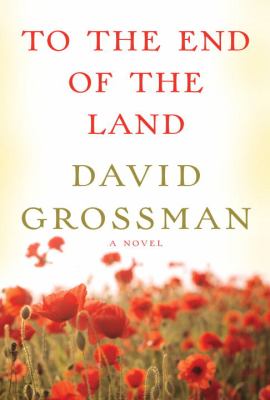
#39: To the End of the Land

To the End of the Land, by David Grossman (translated by Jessica Cohen) (New York: Alfred A. Knopf, 2010)

Summary:
"From one of Israel's most acclaimed writers comes a novel of extraordinary power about family life -- the greatest human drama -- and the cost of war.

"Ora, a middle-aged Israeli mother, is on the verge of celebrating her son Ofer's release from army service when he returns to the front for a major offensive. In a fit of preemptive grief and magical thinking, she sets out for a hike in the Galilee, leaving no forwarding information for the 'notifiers' who might darken her doorstep with the worst possible news. Recently estranged from her husband, Ilan, she drags along an unlikely companion: their former best friend and her former lover Avram, once a brilliant artistic spirit. Avram served in the army alongside Ilan when they were young, but their lives were forever changed one weekend when the two jokingly had Ora draw lots to see which of them would get the few days' leave being offered by their commander -- a chance act that sent Avram into Egypt and the Yom Kippur War, where he was brutally tortured as a POW. In the aftermath, a virtual hermit, he refused to keep in touch with the family and has never met the boy. Now, as Ora and Avram sleep out in the hills, ford rivers, and cross valleys, avoiding all news from the front, she gives him the gift of Ofer, word by word: she supplies the whole story of her motherhood, a retelling that keeps Ofer very much alive for Ora and for the reader, and opens Avram to human bonds undreamed of in his broken world. Their walk has a 'war and peace' rhythm, as their conversation places the most hideous trials of war next to the joys and anguish of raising children. Never have we seen so clearly the reality and surreality of daily life in Israel, the currents of ambivalence about war within one household, and the burdens that fall on each generation anew.

"Grossman's rich imagining of a family in love and crisis makes for one of the great antiwar novels of our time."

Opening Lines:
"Hey, girl, quiet!
"Who is that?
"Be quiet! You woke everyone up!
"But I was holding her
"Who?
"On the rock, we were sitting together
"What rock are you talking about? Let us sleep
"Then she just fell
"All this shouting and singing
"But I was asleep
"And you were shouting!
"She just let go of my hand and fell
"Stop it, go to sleep
"Turn on a light
"Are you crazy? They'll kill us if we do that"


My Take:
Still a bit confused, which usually means cranky about not understanding exactly what's going on -- but I'm hanging in there, hoping there's some meta-intentionality to this on Grossman's part and that all will be revealed in time. The opening sequence above is an extreme example, though it does go on for four pages ... hard to figure out, but as it's a conversation whispered in the dark between 2 fever-stricken patients/ prisoners in an Israeli military hospital/ prison, circa 1967, its disorienting nature can be forgiven.

I'm almost 200 pages into the book now, though, and while subsequent parts are a bit more lucid, there's still a lot I don't know. I do know some of what's been explained on the dust jacket: Ora's still reeling from the collapse of her marriage and the defection of her older son, Adam, so Ofer's being recalled to the army at the eleventh hour really is the last straw. Avram was the victim of horrific torture at Egyptian hands some 33 years earlier, and has lived a marginal, hermit's existence since. It's not fully clear how Ora ended up marrying Ilan rather than Avram, whether this happened before or after Avram was sent to war, and whether Avram is indeed Ofer's father. I guess I'll find out eventually, or discover that it doesn't really matter.

(Later, Thurs., 5/19). Just finished. Yes, you do find out pretty much everything you need to know if you stick with it. I just described the story to Mr. Hazelthyme and from the back story, it sounds rather soap operatic ("You see, Ora, Ilan, and Avram all met as teenagers, and were inseparable. Both of the men were in love with Ora and she with them, though in slightly different ways, and she actually dated both at the same time for a while ... but then by chance, ended up marrying one will the other ended up a POW on the wrong side of the Six Day War and survived, but came back Different.") It's not, though. Mostly, the book follows Ora and Avram on their long hike through the Galilee, during which the two fill each other in on all that's happened in their lives these past 20 years. The pacing is much like many long hikes I've been on -- slow-going at once, but ultimately rewarding for the effort. The short afterward from the author is eerily devastating, as well. If you're interested in an Israeli anti-war voice and in literary fiction, check this one out.

#38: Little Girls Can Be Mean

Little Girls Can Be Mean: Four Steps To Bully-Proof Girls in the Early Grades, by Michelle Anthony and Reyna Lindert (New York: St. Martin's Griffin, 2010).

Summary:
"In
today's world, girls are facing myriad friendship issues, including bullying and cliques. As a parent, you are likely wondering how to guide your daughter through these situations effectively. Little Girls Can Be Mean is the first book to tackle the unique social struggles of elementary-aged girls, giving you the tools to help your child become stronger, happier, and better able to enjoy friendships and handle social cruelty.

"Michelle Anthony and Reyna Lindert's simple, four-step plan will help you become a problem-solving partner with your daughter. They also offer tips for educators and insights that girls can use to confront social difficulties in an empowered way. Whether your daughter is just starting kindergarten or is on her way to middle school, you'll learn how to:
  • observe the social situation with new eyes
  • connect with your child in a new way
  • guide your child with simple, compassionate strategies
  • support your daughter to act more independently to face the social issue.
"By focusing squarely on the issues and needs of girls in the years before adolescence, Little Girls Can Be Mean is the essential go-to guide for any parent, counselor, or educator of girls in grades K-6."

Table of Contents:

I. Laying the Foundation: The Four-Step Approach


1. The Rise of Social Cruelty

2. How Can I Help My Daughter or Student?

  • What Is Bullying?
  • Building the Foundation
  • Facing Tough Situations
  • Following the Four-Step Plan
  • Step 1: Observe
  • Step 2: Connect
  • Step 3: Guide
  • Step 4: Support to Act
  • Integrating the Four Steps
  • How Long Will This All Take?
3. Think, Share, Do ... Activity Bank for Part I

II. The Heart of the Matter: Applying the Four Steps to Real Situations Faced by Real Girls

4. Side by Side: Best Friends, Worst Enemies
  • Dealing with a Turf War
  • When Best Friends Pull Away
  • Yo-Yo Friendships
5. Going Along with the Gang
  • When Girls Struggle to Fit In
  • When Girls Struggle with Feeling "Different"
  • When Girls Struggle with Going Along with the Group
  • When the Group Turns Against Your Child
6. All Girls Can Be Mean: When Your Daughter Is Acting Like a Mean Girl
  • There Are Two Sides to Every Story
  • The Power Rush of Popularity
  • When Girls Struggle with Following the Group
7. Think, Share, Do ... Activity Bank for Part II

III. Wrapping Up: Using the Four Steps in Your Home, School, or Office
  • The Difference Between "Younger" and "Older" Girls
  • Facing All Kinds of Issues, Together
  • She Is Not Alone
My Take:
Meh. Is my guilty love of self-help manuals finally drawing to a close? I guess this one's a useful reminder, or introduction to the principles involved if you're not familiar with the subject, but there didn't seem to be a lot of meat (or non-animal protein, for my vegetarian friends) here. In brief, pay attention to what's going on with your kid even before she explicitly tells you about it; use active listening to draw out both the facts and her feelings; and help her brainstorm about what to do without going all Mama Bear and taking over. Next.