My Name Is Memory, by Ann Brashares (New York: Riverhead Books, 2010)
Summary:
"Lucy Broward is an ordinary girl growing up in the Virginia suburbs, soon to head off to college. As she prepares for her last high school dance, she allows herself to hope that this might be the night her elusive crush, Daniel Grey, finally notices her. As the events of the night unfold, though, Lucy discovers that Daniel is much more complicated than she imagined, and perceives that there's something going on here that she really doesn't understand. Why does he call her Sophia? And why does it make her feel so strange?
"Daniel Grey is no ordinary young man. Daniel has 'the memory,' the ability to recall past lives and recognize the souls of those he's previously known. And he has spent centuries falling in love with the same girl. Life after life, crossing continents and dynasties, he and Lucy (despite her changing name and form) have been drawn together -- and he remembers it all. It is both a gift and a curse. For all the many times they have come together throughout history, they have also been torn painfully, fatally, apart. A love always too short.
"As we watch Daniel and Lucy's relationship unfold during the present day, interwoven are glimpses of their history together. From 552 Asia Minor to 1918 England and 1972 Virginia, the two souls share a long and sometimes torturous path of seeking each other time and again. But just when Lucy begins to awaken to the secret of her past, to understand her relationship to Sophia, and to understand the true reason for the strength of her attraction to Daniel, the mysterious force that has torn them apart in the past reappears. Ultimately, they must confront not just their complicated history, but a persistent adversary as well, if they are ever to spend a lifetime together."
Opening Lines:
"I have lived more than a thousand years. I have died countless times."
My Take:
Brashares is still a writer of young adult novels at heart, but this one was stronger and more grown-up than, say, Sisterhood Everlasting, or than The Last Summer (of You & Me), which I remember reading and being disappointed by, though it must have been before I started the book blog.
Here, as the jacket suggests, Daniel is an old soul -- he's been around since at least the 6th century, in a sequence of different bodies and locations. What's uncommon about this is the fact that he remembers many of his past lives; most people, we're given to understand, have been around a few times before but are blissfully unaware of the fact. Daniel, on the other hand, has spent more than a millenium finding, falling in love with, and ultimately losing the same woman, always trying to make up for burning her house and village in a misdirected military raid in Asia Minor some time around 550 A.D. As you might guess, that girl/ woman is living in 21st-century Virginia as Lucy, a college-bound high school graduate who's had a crush on this mysterious Daniel guy all through senior year, and whose own sense of loss and isolation seems at first to stem (understandably) from the death of her older sister Dana from a drug overdose some years before the novel begins.
The novel's central questions are pretty much what you'd expect: Will Lucy ever remember knowing and loving Daniel in a past life? Will the two of them finally get it together on this go-round? And will Daniel's one-time older brother, Joaquin, a sinister dude who's been looking for revenge on Daniel and Sophia/ Lucy ever since Daniel stole his wife (guess who?) a couple of lifetimes ago, track them down and spoil everything?
Where the book falls short is in making the past-life romance between Sophia and Daniel seem believable. We're convinced by Daniel's recollections of the past that the two knew each other, and it's not too much of a stretch to imagine that a basically decent guy could still be carrying around guilt over having massacred the young Sophia's entire family ... but other than that, we don't really see anything in their past that helps us understand how or why they fell in love. I'm not convinced that proximity itself is enough; if it were, those folks I seem to see in the grocery store or library every week might just as well be my own soul mates. However, for someone who likes a little other-worldly mystery with their romance, and even a few interesting observations on life and death and love, you could do worse.
About Me
- Hazelthyme
- Ithaca, New York
- MWF, now officially 42, loves long walks on the beach and laughing with friends ... oh, wait. By day, I'm a mid-level university administrator reluctant to be more specific on a public forum. Nights and weekends, though, I'm a homebody with strong nerdist leanings. I'm never happier than when I'm chatting around the fire, playing board games, cooking up some pasta, and/or road-tripping with my family and friends. I studied psychology and then labor economics in school, and I work in higher education. From time to time I get smug, obsessive, or just plain boring about some combination of these topics, especially when inequality, parenting, or consumer culture are involved. You have been warned.
Showing posts with label fantasy. Show all posts
Monday, April 23, 2012
#35: My Name Is Memory
Labels:
fantasy,
fiction,
historical,
love,
Southern US,
US regional,
Virginia
Saturday, March 24, 2012
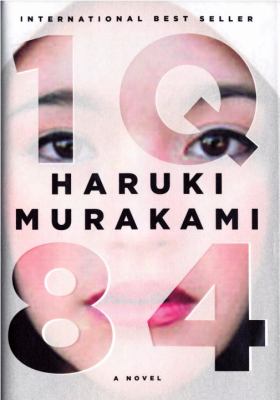
#24: 1Q84
1Q84, by Haruki Murakami, translated by Jay Rubin and Philip Gabriel (New York: Alfred A. Knopf, 2011)Summary:
"The year is 1984 and the city is Tokyo.
"A young woman named Aomame follows a taxi driver's enigmatic suggestions and begins to notice puzzling discrepancies in the world around her. She has entered, she realizes, a parallel existence, which she calls 1Q84 -- 'Q' is for "question mark." A world that bears a question.' Meanwhile, an aspiring writer named Tengo takes on a suspect ghostwriting project. He becomes so wrapped up with the work and its unusual author that, soon, his previously placid life begins to come unraveled.
"As Aomame's and Tengo's narratives converge over the course of this single year, we learn of the profound and tangled connections that bind them ever closer: a beautiful, dyslexic teenage girl with a unique vision; a mysterious religious cult that instigated a shootout with the metropolitan police; a reclusive, wealthy dowager who runs a shelter for abused women; a hideously ugly private investigator; a mild-mannered yet ruthlessly efficient bodyguard; and a peculiarly insistent television-fee collector.
"A love story, a mystery, a fantasy, a novel of self-discovery, a dystopia to rival George Orwell's -- 1Q84 is Haruki Murakami's most ambitious undertaking yet: an instant bestseller in his native Japan, and a tremendous feat of imagination from one of our most revered contemporary writers."
Opening Line:
"The taxi's radio was tuned to a classical FM broadcast."
My Take:
Interesting in the way it combines a fantasy world/ parallel universe, a mystery/ suspense story, and even a little bit of a love story ... but it wasn't worth the almost 950 pages it took to get there (or else this just isn't my genre, or something was lost in translation, any of which are possible). The concept of a parallel world with 2 moons where everything's just slightly different was interesting, but the whole Air Chrysalis novella that Tengo is ghostwriting and the Little People who featured prominently therein just left me cold. I can appreciate the positive reviews the book got, but it didn't really speak to me personally.
Friday, May 1, 2009
#41 - Melting Stones
Hot on the heels of #40, Queen of Babble in the Big City, was #41 - Melting Stones, by Tamora Pierce (2008, Scholastic Press). This was my (technically our, as I read it with Littlehazel) first foray into the works of this popular and prolific YA fantasy author, and I have to say, we were both pretty impressed.
The story opens with Evvy -- Evumeimei Dingzai, a young stone mage established Pierce fans may recognize from Street Magic -- enroute to the Battle Islands with her mentor, prickly plant mage Rosethorn, to investigate the mysterious deaths of the local plants and animals. They are accompanied by the noisome but ultimately useful Myrrhtide (a/k/a Fusspot), a water mage, and Luvo, the heart of a mountain (read: talking rock that looks like a teddy bear) who is Evvy's familiar. Surprisingly, Evvy discovers the cause of the mysterious dying-off in fairly short order, but what to do about it and how to save the people and animals of Starns is another matter.
While the other reviews I read for this book were mixed, both Littlehazel and I enjoyed it. It did take me awhile to fully get into the characters and their universe; this is consistent with other readers' suggestion that Melting Stones is more accessible to those who are already Pierce fans, and may even have read others in the Circle of Magic universe ... as opposed to someone like me, who's not usually a big fantasy reader. I also found many of the detailed descriptions of stones and geology a bit tedious, though young science fiends (including the one I gave birth to) may well eat it up. That said, the book has a lot to recommend it. It's an interesting, unusual story, and Pierce manages to make the characters learn and grow and change over the course of the book without being preachy and heavy-handed about it. There's also a good deal here for tween and teen readers to chew on: the environmental and emotional aftermath of war, responsibility to oneself vs. one's friends vs. the collective good, balancing courage and caution. Additionally, I appreciated the subtle diversity of the cast; it's not overemphasized, but their names and descriptions paint a picture of a very varied community, they don't appear to be limited or stereotyped based on gender, and there's no gratuitous romance thrown in to tie the ending together neatly. (Don't get me wrong, I love me my chick lit sometimes, but I'd hate for my 9 year old to get the idea that the only things to look forward to as she grows up are boyfriends and designer clothes.)
In short, a decent read, either to read with your tween or give as a gift. If this isn't one of Pierce's better works, I think Littlehazel's in for a treat.
The story opens with Evvy -- Evumeimei Dingzai, a young stone mage established Pierce fans may recognize from Street Magic -- enroute to the Battle Islands with her mentor, prickly plant mage Rosethorn, to investigate the mysterious deaths of the local plants and animals. They are accompanied by the noisome but ultimately useful Myrrhtide (a/k/a Fusspot), a water mage, and Luvo, the heart of a mountain (read: talking rock that looks like a teddy bear) who is Evvy's familiar. Surprisingly, Evvy discovers the cause of the mysterious dying-off in fairly short order, but what to do about it and how to save the people and animals of Starns is another matter.
While the other reviews I read for this book were mixed, both Littlehazel and I enjoyed it. It did take me awhile to fully get into the characters and their universe; this is consistent with other readers' suggestion that Melting Stones is more accessible to those who are already Pierce fans, and may even have read others in the Circle of Magic universe ... as opposed to someone like me, who's not usually a big fantasy reader. I also found many of the detailed descriptions of stones and geology a bit tedious, though young science fiends (including the one I gave birth to) may well eat it up. That said, the book has a lot to recommend it. It's an interesting, unusual story, and Pierce manages to make the characters learn and grow and change over the course of the book without being preachy and heavy-handed about it. There's also a good deal here for tween and teen readers to chew on: the environmental and emotional aftermath of war, responsibility to oneself vs. one's friends vs. the collective good, balancing courage and caution. Additionally, I appreciated the subtle diversity of the cast; it's not overemphasized, but their names and descriptions paint a picture of a very varied community, they don't appear to be limited or stereotyped based on gender, and there's no gratuitous romance thrown in to tie the ending together neatly. (Don't get me wrong, I love me my chick lit sometimes, but I'd hate for my 9 year old to get the idea that the only things to look forward to as she grows up are boyfriends and designer clothes.)
In short, a decent read, either to read with your tween or give as a gift. If this isn't one of Pierce's better works, I think Littlehazel's in for a treat.
Wednesday, January 7, 2009
What can I get you to drink?
Hi, welcome to Cafe Hazelthyme! Come on in! Can I take your coat? What can I get you to drink?
Yep, I guess I've finally joined the blogosphere. Never mind that everyone this side of my mother-in-law has had a blog for aeons, or that I've kept a pen-and-paper journal (off and on, anyway) since the Carter administration. When it comes to technology, I'm not an early adapter. I'm no Luddite either, but eh, computers are a means, not an end. Organizing my bazillion photos? Reading those reams of journal articles I went through in grad school, without needing to run from one library and photocopier to the next tracking 'em down? E-mailing or Skype-ing overseas friends who I'd never get to talk to otherwise? I'm in. But whiling away the hours downloading, cataloguing, researching, and commenting on more iTunes than I'll ever have the chance to listen to (hi, Mrhazel!)? Compulsively updating my Facebook status? (Yes, I'm well aware that anyone old enough to remember the Carter administration is way too old to be loitering about on Facebook. Guess I'm the e-quivalent of the creepy old neighborhood guy everyone recognizes but no one knows, hanging around the playground.) Keeping a cyber-journal like Father McKenzie, "writing the words to a sermon that no one will hear"? Not so much my thing.
Yet here I am nonetheless. Mostly, I started the blog to keep track of my reading. I'm a voracious reader, and have issued a challenge of sorts -- though so far, only I know about it -- to see if I can read 100 books this year. Trouble is, I get most of my reading material from libraries, and the downside of churning through 'em as fast as I do (well, aside from not getting much else done) is that I don't always remember the details afterwards. (OK, sometimes I don't even remember the full title, or the author's name.) It's been ages since I've written a proper book review, and I don't know that's my intent anyway. At any rate, here's the 2009 tally so far:
Yep, I guess I've finally joined the blogosphere. Never mind that everyone this side of my mother-in-law has had a blog for aeons, or that I've kept a pen-and-paper journal (off and on, anyway) since the Carter administration. When it comes to technology, I'm not an early adapter. I'm no Luddite either, but eh, computers are a means, not an end. Organizing my bazillion photos? Reading those reams of journal articles I went through in grad school, without needing to run from one library and photocopier to the next tracking 'em down? E-mailing or Skype-ing overseas friends who I'd never get to talk to otherwise? I'm in. But whiling away the hours downloading, cataloguing, researching, and commenting on more iTunes than I'll ever have the chance to listen to (hi, Mrhazel!)? Compulsively updating my Facebook status? (Yes, I'm well aware that anyone old enough to remember the Carter administration is way too old to be loitering about on Facebook. Guess I'm the e-quivalent of the creepy old neighborhood guy everyone recognizes but no one knows, hanging around the playground.) Keeping a cyber-journal like Father McKenzie, "writing the words to a sermon that no one will hear"? Not so much my thing.
Yet here I am nonetheless. Mostly, I started the blog to keep track of my reading. I'm a voracious reader, and have issued a challenge of sorts -- though so far, only I know about it -- to see if I can read 100 books this year. Trouble is, I get most of my reading material from libraries, and the downside of churning through 'em as fast as I do (well, aside from not getting much else done) is that I don't always remember the details afterwards. (OK, sometimes I don't even remember the full title, or the author's name.) It's been ages since I've written a proper book review, and I don't know that's my intent anyway. At any rate, here's the 2009 tally so far:
- Wicked: The Life and Times of the Wicked Witch of the West, by Gregory Maguire. Meaning to read this one for a while, finally got around to it while visiting the 'rents over Christmas. (OK, I technically started it in '08, but as I finished it on the 1st, I think it counts.) Enjoyed it, though not as much as I'd expected to. Thought there was both more to it and less than I'd expected. More in that I guess I expected something fluffier, and the story has a lot to say about the roots and nature of good and evil, about family relationships, the significance of physical beauty, and so on. I'm usually a sucker for books that tell a familiar story from a different perspective; Mists of Avalon and The Red Tent are among my all-time favorites. Less in that somehow, I just couldn't connect with any of the characters the way I like to. Perhaps that's deliberate; Maguire lets us see just enough of Elphaba, Galinda, Nessarose, Dorothy, the wizard, et al. to suggest that there's much more to them -- to all of us -- than Baum's original series would ever admit, but we still don't and can't really know them. In the interest of full disclosure, I also admit that I read a good chunk of this while on vacation, with Mom's chatter, Dad's TV, and other distractions going in the background ... and in the time it took me to realize it was a bit weightier than the typical vacation book and needed more attention, I may well have missed stuff. I'll probably go back and re-read it at some point, and may read its sequels (Son of a Witch and A Lion Among Men) if I come across them ... but I don't think it'll make my all-time favorites list.
- Little Men, by Louisa May Alcott. Started this one way back in 2008, reading a chapter here & there with Littlehazel at bedtime for God knows how many months. I'd read Little Women repeatedly as a child, but never either of its sequels. This one was first published in 1871, and it shows. By today's standards, the moralizing is a bit heavy-handed, the plot and characters rather predictable, and the constant marveling at the wonders Jo and Fritz work on their boys with their own brand of loving firmness gets a little repetitious, even sickening, at times. It's also hard not to chafe at some of what today would be horribly sexist -- especially if you were ever a little girl who adored and wanted to be Jo March. That said, there are some interesting characters, many parts that made me laugh ... and frankly, it's fun to catch up with the characters from Little Women and see what's become of them. There's far less to the story and I didn't enjoy it nearly as much as LW, but it was a good read, especially for a parent-child read-aloud, and we'll probably pick up Jo's Boys next time we have the chance.
- American Therapy: The Rise of Psychotherapy in the United States, by Jonathan Engel. I also read a good deal of non-fiction, though it usually takes me longer to slog through and I'm more likely to get to the point where I wonder if I'm reading something because I want to, or just think I should. This one wasn't quite like that as it was a pretty quick read, but I didn't find it all that interesting or new, either. The first 4 chapters are pretty much strict history, from Freud and his earliest followers, through the growth of psychiatry, psychology, and social work during and after WWII, to the advent of humanist, cognitive, and behavioral schools of thought. Interesting stuff, but really just a refresher for anyone who's had a college course or 2 in psychology, without much new insight or material. Liked the chapter on how American views and treatments of alcoholism have changed in the last half-century, and thought this was probably the strongest part of the book. From there, it almost seemed like Engel was either rushing to meet a deadline or struggling to flesh out what was really only half a book's worth of material, because the latter half of the book seems to have a lot less substance (the first part wasn't that meaty to begin with), and the writing is much weaker. The narcotics chapter spends too long digressing about the evils of marijuana and heroin and their impacts on society (I'm not sure I buy the former, but regardless, it's a different book), and the final chapter (titled "Biology," but "Psychopharmacology" would be more accurate) seems a little too glib about the wonders of modern pharmaceuticals, to the point that I wonder if the author has business dealings with one of the pharmaceutical companies. In a nutshell, it was an OK book -- I didn't dislike it enough not to finish -- but I'm glad I borrowed it from the library and don't think I'd bother recommending it to anyone else.
- currently reading Peripheral Vision, by Patricia Ferguson. A novel of interconnected stories, set in and around London: in 1995, a successful opthamologist with a much-older husband who doesn't know what to make of her newborn daughter, and a single, unemployed 30-something man who lives a life of quiet desparation caring for his dying, elderly mother; in 1954, a kind nurse engaged to an upper-class med student whose mother disapproves of her working-class background, and a housewife guilty and shattered after an accident injures her young son's eyes and leaves him permanently disfigured. I'm only a quarter of the way through it, but so far, the characters are compelling and believable, and the individual stories interesting enough to make me want to keep reading and see what happens next and how they all end up tying together.
Labels:
1800s,
children's lit,
family,
fantasy,
historical,
nonfiction,
psychology
Subscribe to:
Posts (Atom)